 Save
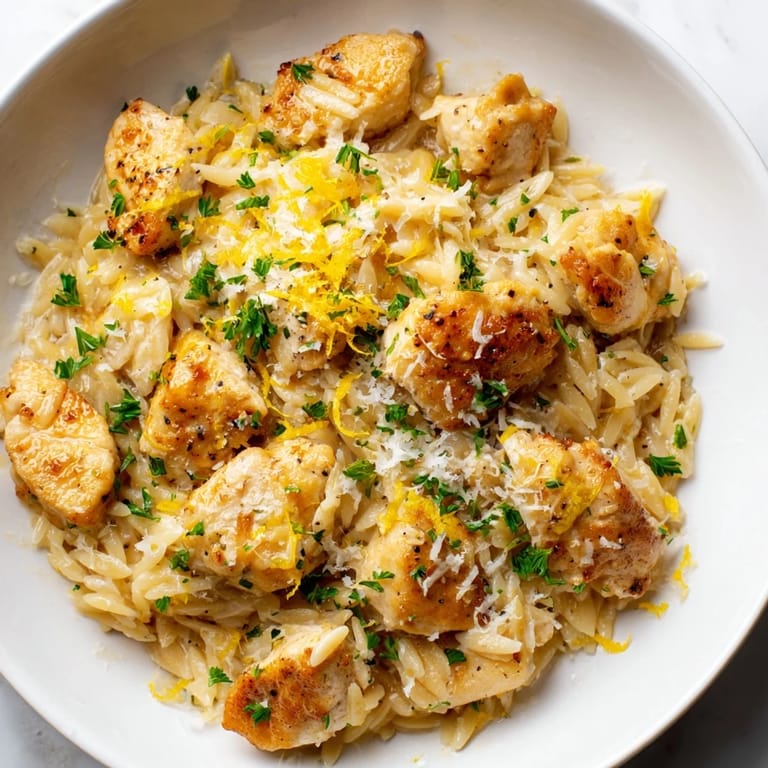
Save There's something about a weeknight when you've got chicken thawing and thirty minutes before everyone's hungry—that's when this dish saved me. I'd been stress-cooking for years, convinced I needed complicated techniques, until a friend casually threw together lemon, cream, and orzo in one pan and I realized simplicity could taste this good. The brightness of the lemon cuts through the richness so perfectly that it doesn't feel heavy, even though it's genuinely creamy. Now it's the first thing I make when I want to feel like I've got it all together.
I made this for my partner when they came home absolutely exhausted, and watching their face when that first spoonful hit—the creaminess, the tang, the tender chicken—reminded me that comfort food doesn't need to be complicated to work magic. We sat there saying almost nothing, just eating, and it became the meal we now request without shame.
Ingredients
- Boneless, skinless chicken breasts (2 large, about 500 g): Cut into bite-sized pieces so they cook evenly and soak up the sauce—I learned the hard way that uneven chunks mean some pieces are rubbery while others are perfect.
- Salt and freshly ground black pepper: Season the chicken generously before searing; this is where flavor actually starts building.
- Olive oil (1 tablespoon): Use good quality for the sear—it affects how golden and flavorful the chicken becomes.
- Unsalted butter (1 tablespoon): This softens the onions and adds richness without overwhelming the dish.
- Yellow onion (1 small): Finely chopped so it melts into the sauce and releases its natural sweetness.
- Garlic (3 cloves, minced): Fresh is non-negotiable here; jarred garlic gets bitter under heat.
- Orzo pasta (1 cup, 200 g): This tiny pasta is the star—it drinks up sauce like nothing else and creates that creamy texture naturally.
- Low-sodium chicken broth (2 cups, 480 ml): Low-sodium matters because the cream and Parmesan add salt, and you want control.
- Heavy cream (½ cup, 120 ml): This is where the luxurious mouthfeel comes from, stirred in gently so it doesn't break.
- Lemon zest and juice (1 lemon): The zest goes in early for subtle flavor throughout; the juice balances everything at the end.
- Dried thyme (½ teaspoon): Just enough to whisper Mediterranean vibes without announcing itself.
- Crushed red pepper flakes (¼ teaspoon, optional): A quiet heat that makes people ask what that complexity is without detecting spice.
- Grated Parmesan cheese (½ cup, 50 g): Adds umami and helps the sauce cling to the orzo; fresh grated makes a difference.
- Fresh parsley (2 tablespoons, chopped): Brightness at the end, and it looks intentional.
- Lemon slices (for garnish): They're pretty and let people add extra tartness if they want it.
Tired of Takeout? 🥡
Get 10 meals you can make faster than delivery arrives. Seriously.
One email. No spam. Unsubscribe anytime.
Instructions
- Season and sear the chicken:
- Pat your chicken pieces dry with paper towels—damp chicken won't brown properly. Season generously with salt and pepper, then set a large skillet over medium-high heat with the olive oil until it shimmers slightly and smells rich, not burnt.
- Build a golden foundation:
- Working in batches if needed, place chicken in the hot pan and let it sit undisturbed for a minute or two before stirring; this creates a golden crust that keeps the meat tender inside. You're looking for a light golden exterior and an internal temperature of about 165°F, which takes roughly five to seven minutes depending on your pan.
- Coax out the aromatics:
- Pour the seared chicken onto a clean plate, then reduce heat to medium and add butter to the same skillet. Watch it foam slightly, then add your chopped onion and stir occasionally for about three minutes until it's soft and starting to turn translucent.
- Toast the orzo gently:
- Add minced garlic and stir for maybe thirty seconds until fragrant, then toss in the dry orzo and let it cook for a minute or two. You want to hear a soft clicking sound of the pasta tumbling, and you'll notice it turning very slightly golden—this toasting builds nuttiness.
- Create the sauce:
- Pour in the chicken broth slowly, scraping the bottom of the pan with a wooden spoon to lift all those caramelized bits. These little brown flecks are concentrated flavor and they're why one-pan cooking tastes so good.
- Bring it to life with cream and citrus:
- Stir in the heavy cream slowly so it distributes evenly, then add the lemon zest, lemon juice, thyme, and red pepper flakes if using. Bring everything to a gentle simmer and return the chicken to the pan; the bubbles should be lazy and intermittent, not a rolling boil.
- Let it come together:
- Leave it mostly alone for ten to twelve minutes, stirring occasionally so the orzo doesn't stick to the bottom. The pasta will gradually absorb the liquid and transform it into something creamy and luxurious; you'll notice the pan getting quieter as the sauce thickens.
- Finish with umami and herbaceous brightness:
- Taste a spoonful of orzo to make sure it's tender, then stir in the Parmesan and fresh parsley. Adjust the seasoning with a pinch more salt and pepper if it needs it—lemon juice amounts vary, so taste before adding extra.
- Serve immediately:
- Divide among bowls while everything is steaming and creamy, and top with extra parsley and a lemon slice for people to squeeze over if they want more brightness.
 Save
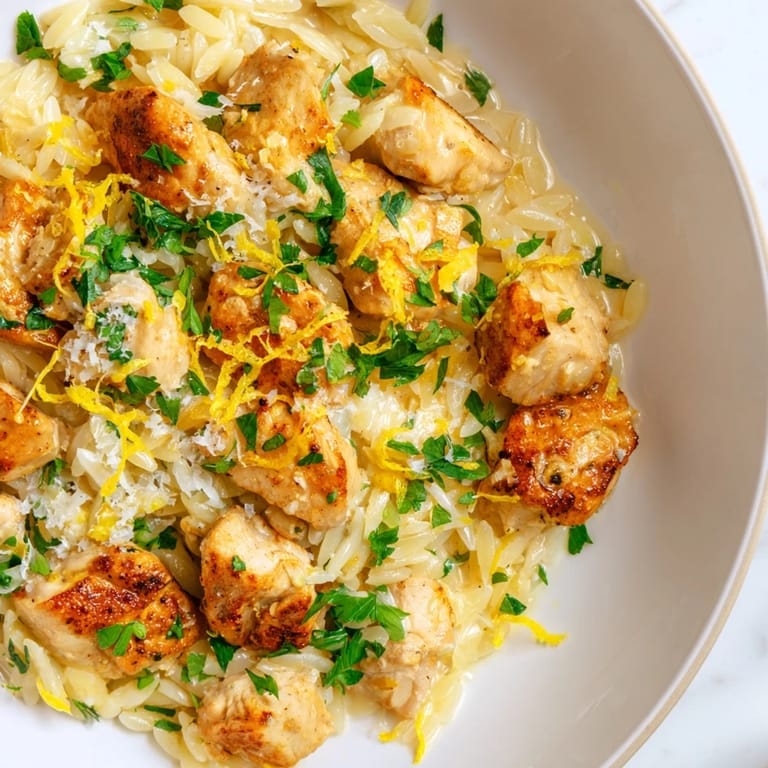
Save My neighbor smelled this cooking one evening and knocked on the door asking what it was, and I got to watch her face light up when she tasted it. That moment reminded me that the best meals aren't the ones with the longest ingredient lists—they're the ones that make people stop and pay attention.
Why This Deserves a Spot in Your Regular Rotation
This recipe exists in this exact form because it refuses to apologize for being simple, and that confidence is infectious. The Mediterranean simplicity means it pairs beautifully with almost any vegetable side or green salad, and the cooking method is forgiving enough that even if your timing is slightly off, the dish still comes together gracefully. I've made it dozens of times now and it hasn't disappointed once, which is rare enough that it deserves acknowledgment.
Variations That Feel Just as Good
The beauty of this formula is that it invites gentle substitution without falling apart. I've added baby spinach and halved the cream with chicken broth for a lighter version that still felt creamy, swapped in prosciutto for the chicken one evening when I had it hanging around, and even tried half Parmesan and half Gruyère when that's what I had open. Each time it worked because the lemon and orzo structure is strong enough to hold together whatever you're building inside it.
Getting It on the Table Without Theater
The secret to weeknight cooking is setting expectations that don't require theater. Pour yourself something cold while things simmer, notice how good it smells, resist the urge to fuss with it every thirty seconds—the dish knows what it's doing. Clean as you go if you're the type, or don't; by the time bowls are out, you're minutes away from eating something genuinely delicious and genuinely creamy.
- If you've got dried cranberries or sun-dried tomatoes lying around, they're gorgeous stirred in at the very end for color and a little sweetness against the lemon.
- A pinch of nutmeg in the cream before it goes in rounds out the flavor in a way nobody can identify but everyone loves.
- Leftovers reheat gently on the stovetop with a splash of broth, and they're somehow better the next day when the flavors have gotten to know each other.
 Save
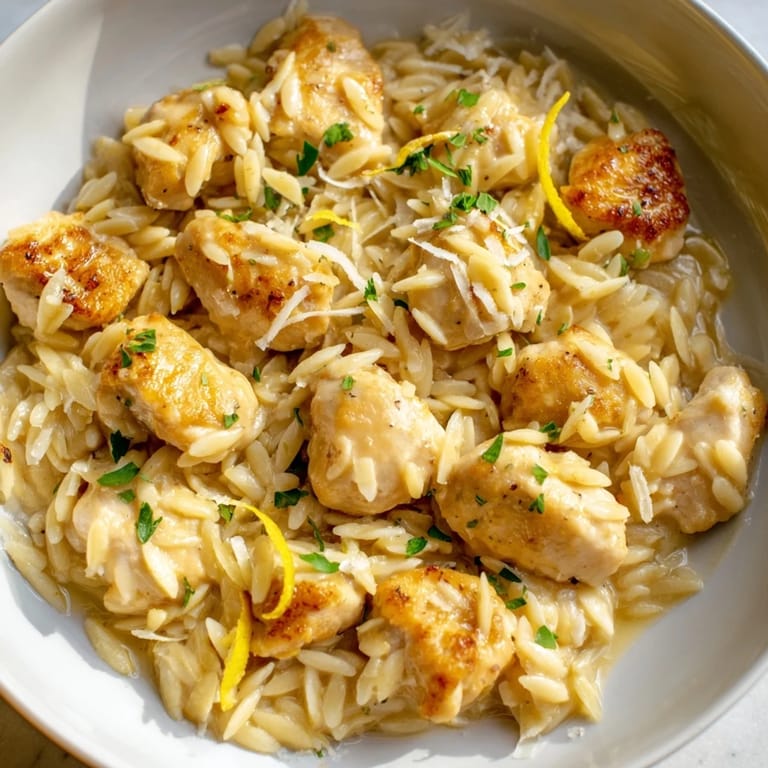
Save This is the meal I come back to when I want to remember why I cook at all. It's humble enough not to require ceremony, but good enough to feel special.
Saffron Brook Recipe Q&As
- → Can I substitute the heavy cream for a lighter option?
Yes, half-and-half or whole milk can be used instead of heavy cream for a lighter, yet still creamy texture.
- → What is the best way to cook the chicken pieces evenly?
Cook the chicken in a hot skillet with olive oil until golden and cooked through, about 5–7 minutes, stirring occasionally for even browning.
- → How can I add extra vegetables to this dish?
Stir in baby spinach or peas during the last few minutes of cooking to add color and nutrition without affecting texture.
- → What type of pasta is orzo and can it be substituted?
Orzo is a rice-shaped pasta that cooks quickly and pairs well with sauces. Small pasta shapes like acini di pepe or small elbows can be used if orzo isn't available.
- → How do lemon zest and juice enhance the dish?
Lemon zest provides a bright citrus aroma, while juice adds a tart, fresh note that balances the creamy sauce beautifully.
- → Is it important to toast the orzo before simmering?
Yes, lightly toasting the orzo before adding liquids brings out a nutty flavor and prevents it from becoming mushy.