 Save
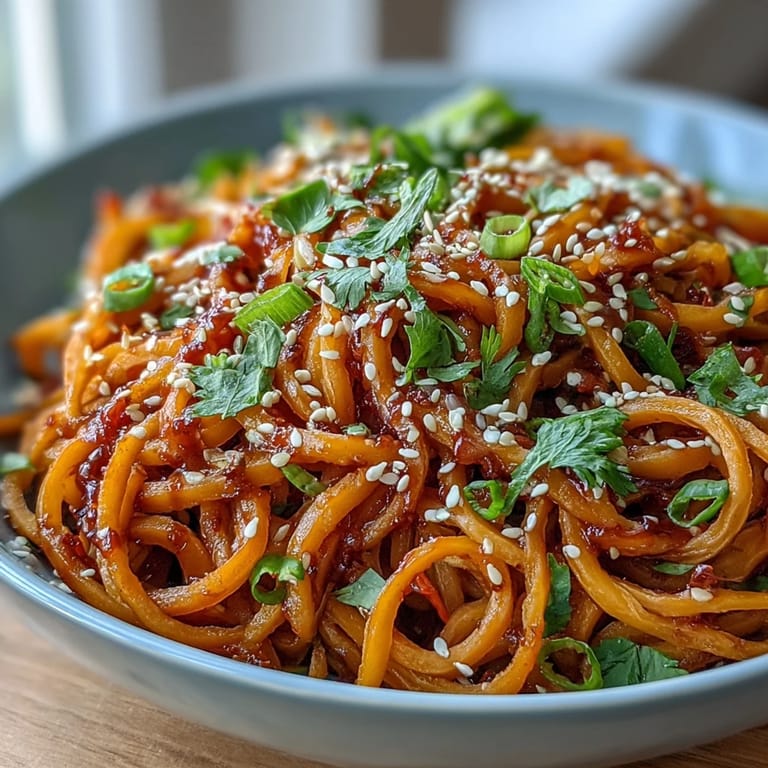
Save My neighbor brought back a jar of gochujang from a trip to Seoul, and I stared at it for weeks before finally opening it. I had a swede sitting in the crisper drawer, already peeled and wrapped, that I kept forgetting to use. One night I just decided to roast it into ribbons and toss it with whatever spicy thing I could find. That jar became the star, and the swede turned sweet and caramelized in a way I never expected.
I made this for a small dinner party where half the guests were vegan and the other half were skeptical about swede as a main ingredient. By the end of the night, everyone had gone back for seconds, and one friend asked if I could teach her how to julienne vegetables properly. It became the dish that proved root vegetables dont have to be boring or just a side thought.
Ingredients
- Swede (rutabaga): When roasted into ribbons, it caramelizes beautifully and soaks up the dressing while keeping a slight bite.
- Rice noodles: Use the flat kind if you can find them, they hold onto the sauce better than the round ones and dont clump as much.
- Gochujang: This fermented chili paste brings umami, sweetness, and heat all at once, make sure its well stirred before measuring.
- Maple syrup: It tames the spice and adds a subtle warmth that honey sometimes lacks, though either works just fine.
- Toasted sesame oil: A little goes a long way, and it gives the dish that nutty aroma that makes your kitchen smell like a street food stall.
- Spring onions: Slice them thin and toss them in raw, they add a sharp freshness that cuts through the richness.
- Sesame seeds: Toast them yourself in a dry pan for a minute, the difference in flavor is worth the extra step.
- Fresh cilantro: I know its divisive, but it brightens everything up, swap for Thai basil if youre not a fan.
Tired of Takeout? 🥡
Get 10 meals you can make faster than delivery arrives. Seriously.
One email. No spam. Unsubscribe anytime.
Instructions
- Roast the swede:
- Preheat your oven to 220°C and toss the swede ribbons with oil, salt, and pepper until theyre lightly coated. Spread them out on a baking sheet without crowding, then roast for 25 to 30 minutes, flipping halfway so they get golden and slightly crispy on the edges.
- Cook the noodles:
- Boil the rice noodles according to the package directions, usually just a few minutes in hot water. Drain them and rinse under cold water to stop them cooking further and to keep them from sticking together.
- Mix the dressing:
- Whisk together the gochujang, soy sauce, maple syrup, rice vinegar, sesame oil, garlic, ginger, and chili flakes in a bowl. Add a bit of water to loosen it up until it pours easily but still clings to a spoon.
- Toss everything together:
- In a large bowl, combine the roasted swede, noodles, spring onions, carrot, and bean sprouts if using. Pour the dressing over and toss gently but thoroughly so every ribbon and noodle gets coated.
- Garnish and serve:
- Plate it up while its still warm, then sprinkle toasted sesame seeds and fresh cilantro on top. Serve immediately while the swede still has a bit of warmth and the noodles havent absorbed all the dressing.
 Save
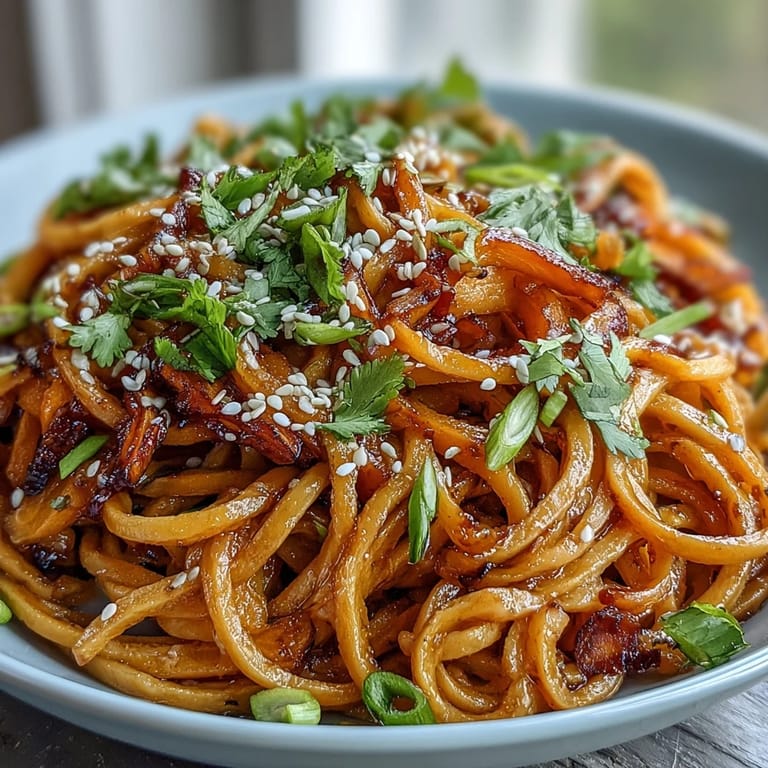
Save There was a rainy Thursday when I had this in the fridge as leftovers, and I ate it cold straight from the container while standing by the window. The flavors had melded overnight, and the noodles had soaked up even more of that spicy sweetness. It tasted better than it did fresh, which almost never happens with noodle dishes.
How to Prep the Swede
Peeling a swede can feel like a workout, so use a sharp knife to cut off the ends first, then slice down the sides in strips to remove the thick skin. Once its peeled, you can use a vegetable peeler to make long ribbons, or if you have a mandoline, set it to a thin julienne setting and run the swede through carefully. The ribbons dont have to be perfect, uneven pieces actually roast up with more interesting textures.
Making It Your Own
I started adding pan fried tofu after the first time I made this, just cubed and crisped up in a hot pan with a little oil and salt. It turns the dish into something more filling without changing the flavor profile. You can also throw in edamame, roasted chickpeas, or even leftover rotisserie chicken if you want to make it heartier.
Storage and Reheating
This keeps well in the fridge for up to three days, though the noodles will soak up more dressing as they sit. I actually prefer it the next day when everything has had time to mingle. If you want to reheat it, do it gently in a pan with a splash of water or eat it cold, both ways work surprisingly well.
- Store in an airtight container and keep the garnishes separate until serving.
- If the noodles dry out, toss them with a tiny bit of sesame oil before reheating.
- You can make the dressing up to a week ahead and keep it in a jar in the fridge.
 Save
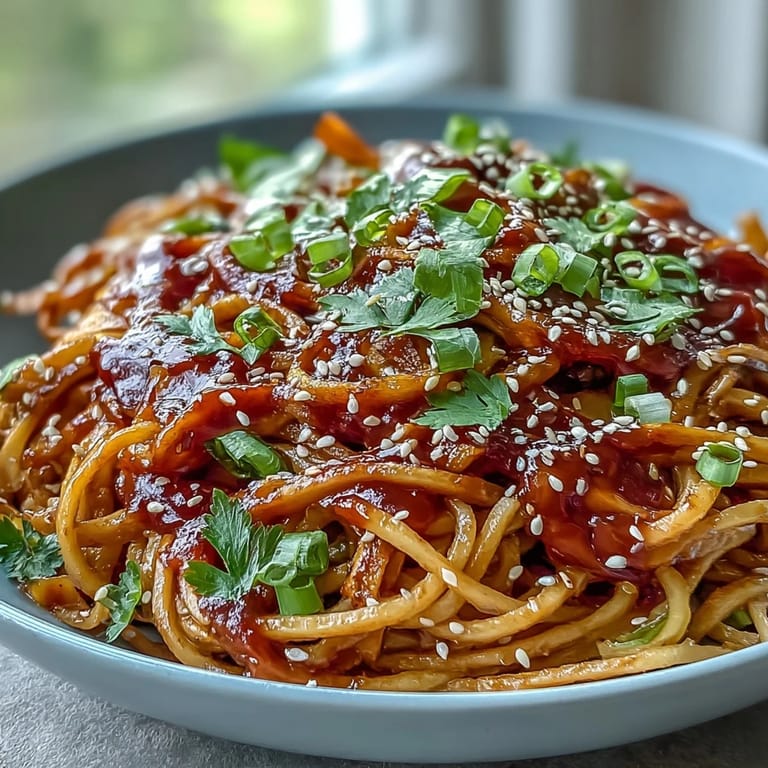
Save This dish taught me that swede deserves more attention than it usually gets, and that sometimes the best meals come from using what you have and trusting your instincts. I hope it becomes one of those recipes you come back to on nights when you want something warming, vibrant, and just a little bit unexpected.
Saffron Brook Recipe Q&As
- → Can I substitute swede with another vegetable?
Yes, you can use sweet potato, butternut squash, or daikon radish cut into ribbons. Adjust roasting time based on the vegetable's density.
- → How spicy is this dish?
The heat level is moderate from the gochujang. Control spiciness by adjusting the amount of gochujang or omitting the optional chili flakes.
- → Can I make this ahead of time?
The components can be prepared separately and stored for up to 2 days. Toss with dressing just before serving to maintain the best texture.
- → What can I use instead of gochujang?
Try sriracha mixed with a bit of miso paste, or sambal oelek combined with a touch of sugar. The flavor profile will differ but still be delicious.
- → How do I cut swede into ribbons?
Use a vegetable peeler for wide ribbons or a mandoline for uniform thin strips. You can also julienne with a sharp knife for thicker noodle-like pieces.
- → Is this dish gluten-free?
It can be made gluten-free by using tamari instead of soy sauce and ensuring your gochujang brand is certified gluten-free.