 Save
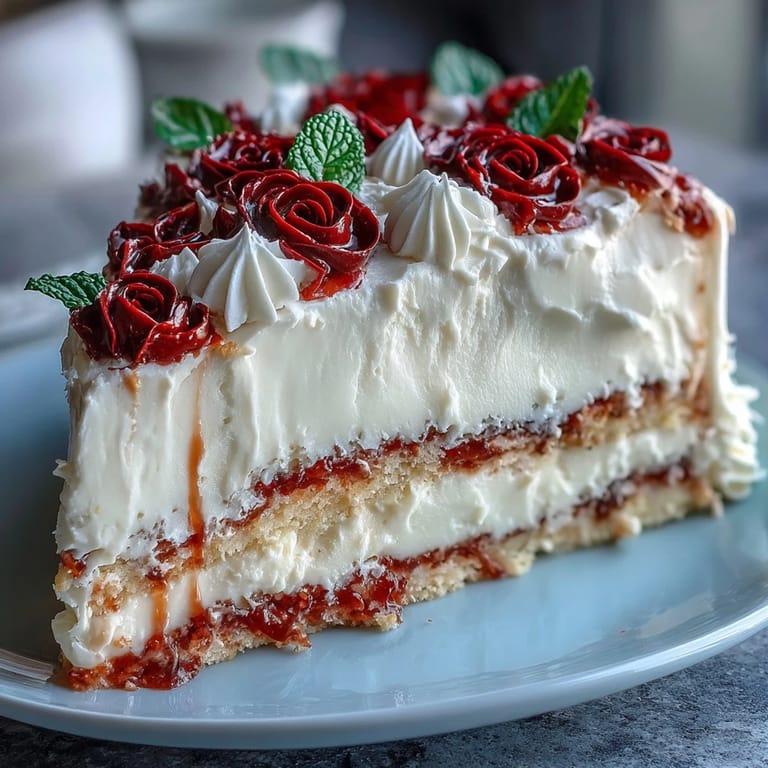
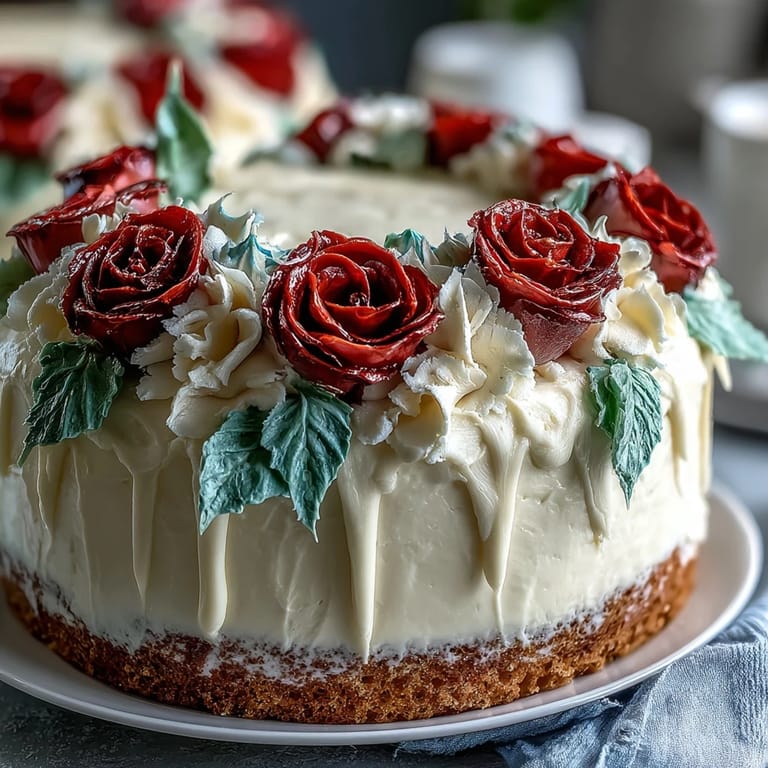
Save My cousin called me three weeks before her graduation asking if I could bake something special for her celebration dinner. She wanted it elegant but not intimidating, and honestly, I was nervous about piping roses for the first time. But then I remembered watching my grandmother steady her hands while decorating cakes decades ago, and something just clicked. This sheet cake became my answer—a soft vanilla canvas that lets buttercream roses steal the show without requiring years of pastry training.
I'll never forget the moment my cousin saw the finished cake sitting on her dining room table. Her friends gathered around it like it was a piece of art, and someone actually asked if I'd ordered it from a bakery. The pride I felt wasn't just about the cake looking beautiful—it was knowing I'd made something that became the centerpiece of her celebration.
Ingredients
- All-purpose flour (3 cups): Room temperature flour blends more smoothly into the batter, so I learned to leave it out on the counter for an hour before baking.
- Baking powder and baking soda (2½ tsp and ½ tsp): These are your cake's best friends for creating that tender crumb—whisk them into the flour so they distribute evenly.
- Salt (½ tsp): Even in a sweet cake, salt rounds out flavors and makes everything taste less one-dimensional.
- Unsalted butter (1 cup for cake, 1½ cups for buttercream): Room temperature butter creams properly and creates the fluffy texture that makes this cake special; cold butter will fight you.
- Granulated sugar (2 cups): The sweetness here is balanced by the vanilla and the slight saltiness, so don't skip creaming it properly with butter.
- Eggs (4 large): Room temperature eggs emulsify better with the butter and sugar, creating a smoother batter that you'll feel the difference in immediately.
- Vanilla extract (1 tbsp for cake, 2 tsp for buttercream): Use real vanilla extract, not imitation—the flavor carries through especially in the buttercream where it's tasted directly.
- Whole milk (1¼ cups for cake, ¼ cup for buttercream): Room temperature milk alternates with flour to keep the batter from becoming dense; this is the secret to keeping it tender.
- Powdered sugar (6 cups, sifted): Sifting removes lumps before you mix, so your buttercream ends up silky instead of grainy.
- Gel food coloring: Gel coloring keeps your buttercream the right consistency, unlike liquid food coloring which thins it out and makes piping harder.
Tired of Takeout? 🥡
Get 10 meals you can make faster than delivery arrives. Seriously.
One email. No spam. Unsubscribe anytime.
Instructions
- Prepare your workspace:
- Preheat your oven to 350°F and grease a 12x18-inch sheet pan, then line it with parchment paper so the cake releases cleanly. Having everything ready before you start mixing is the move that stops you from panicking later.
- Mix your dry ingredients:
- Whisk flour, baking powder, baking soda, and salt together in a medium bowl until they're evenly distributed. This dry mix is your foundation, so take thirty seconds to do it right instead of rushing.
- Cream butter and sugar:
- Beat room temperature butter and sugar together for 3 to 4 minutes until it looks pale and fluffy, like clouds. You'll hear the mixer sound change when it's ready—it gets quieter and fluffier.
- Add eggs carefully:
- Add eggs one at a time, beating well after each addition so each one incorporates fully before the next arrives. This patience pays off in a batter that's smooth instead of broken.
- Add vanilla and alternate wet and dry:
- Mix in vanilla, then alternately add flour mixture and milk beginning and ending with flour, mixing just until combined. The alternating method keeps you from overmixing, which would toughen the cake.
- Bake until golden:
- Pour batter into your prepared pan and smooth the top, then bake for 30 to 35 minutes until a toothpick inserted in the center comes out clean. The kitchen will smell incredible by minute 20.
- Cool completely:
- Let the cake cool in the pan on a wire rack until it's completely room temperature before frosting. This step feels slow but prevents your frosting from melting into a puddle.
- Make buttercream:
- Beat room temperature butter until creamy, then gradually add sifted powdered sugar, milk, and vanilla, beating for about 5 minutes until it's smooth and fluffy. Stop and scrape the bowl halfway through so no lumps hide at the bottom.
- Color your buttercream:
- Divide buttercream into bowls and tint with gel food coloring—reds and pinks for roses, green for leaves, white as your base. A toothpick dipped in gel coloring goes further than you'd think.
- Frost and pipe:
- Spread a thin layer of white buttercream over the cooled cake as your base, then fit piping bags with petal tips for roses and leaf tips for leaves. Start piping in one corner and work your way across like you're decorating as you go, not trying to finish perfectly the first time.
- Add your message:
- Use a small round tip to pipe a congratulations message or graduation year across the top. You can always touch up any wobbly letters with a small offset spatula dipped in warm water.
 Save
Save What started as nervousness about piping roses turned into my cousin's friends asking for my recipe and my contact information. She still has a photo of that cake on her graduation day mantle, and it reminds me that the best recipes are the ones that become part of someone's celebration.
Why Sheet Cakes Win for Big Crowds
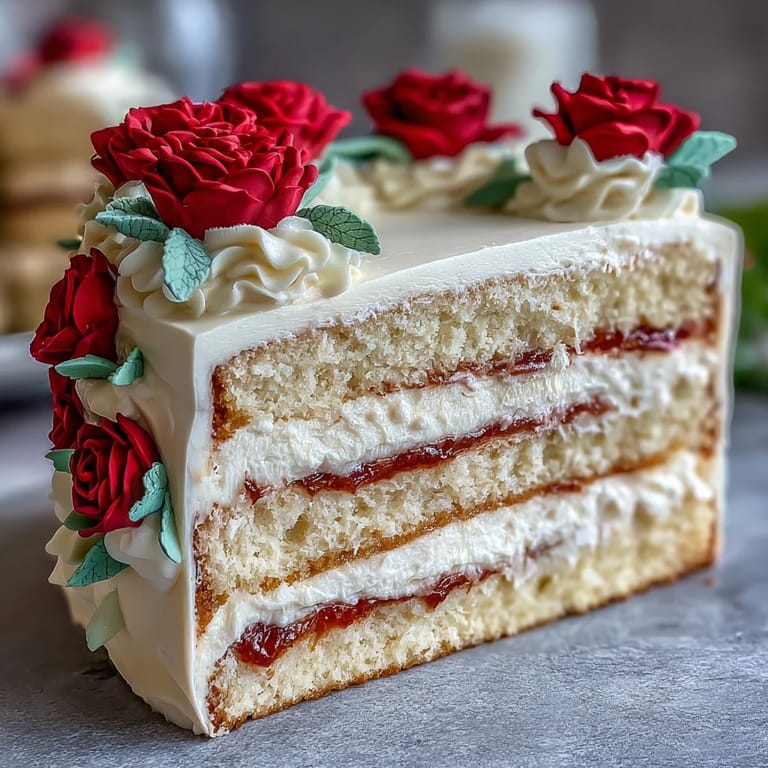
Sheet cakes are the unsung heroes of celebrations because they feed more people than a traditional layer cake while staying just as moist and flavorful. One pan, minimal fussing with stacking layers, and your oven isn't running for hours trying to bake multiple rounds. The rectangular shape also gives you way more surface area for decoration, which is why this vanilla cake became my go-to for graduation parties and bridal showers.
The Art of Piping Without Panic
Piping buttercream roses sounds like you need years of training, but honestly it's mostly about having the right piping tip and not overthinking it. The first rose never looks perfect, the second one is slightly better, and by the time you're halfway across the cake, your hand knows what it's doing. I started with petal tips because they're forgiving, and the imperfect roses actually looked more organic and beautiful than anything symmetrical could have.
Storage, Flavor Variations, and Serving Ideas
This cake stays fresh at room temperature for two days and refrigerated for up to five days, so you can bake it the day before your event without worry. The vanilla base is perfect as is, but if you want chocolate, swap three-quarters cup of flour for three-quarters cup unsweetened cocoa powder for a richer version. Pair it with sparkling lemonade for a fresh contrast or champagne for something celebratory.
- Store covered at room temperature for up to 2 days, or refrigerate for longer keeping.
- For chocolate variation, substitute flour with unsweetened cocoa powder in the same amount.
- Gel food coloring creates vibrant colors that won't thin your buttercream like liquid coloring does.
 Save
Save This cake became my signature dish not because it's complicated, but because it delivers every single time and makes celebrations feel special. If you're nervous about decorating, remember that homemade is always more beautiful than perfect.
Saffron Brook Recipe Q&As
- → What flour type is best for this cake?
All-purpose flour provides the ideal texture and structure, ensuring a soft yet sturdy crumb.
- → How can I achieve vibrant buttercream colors?
Use gel food coloring for rich, vivid hues without altering the frosting’s consistency.
- → What is the recommended baking temperature?
Baking at 350°F (175°C) allows the cake to cook evenly and maintain moisture.
- → Can the cake be stored after decorating?
Store covered at room temperature for up to 2 days or refrigerate for up to 5 days to preserve freshness.
- → Is there a variation to add chocolate flavor?
Replace ¾ cup flour with unsweetened cocoa powder for a chocolate twist while keeping the moisture intact.