 Save
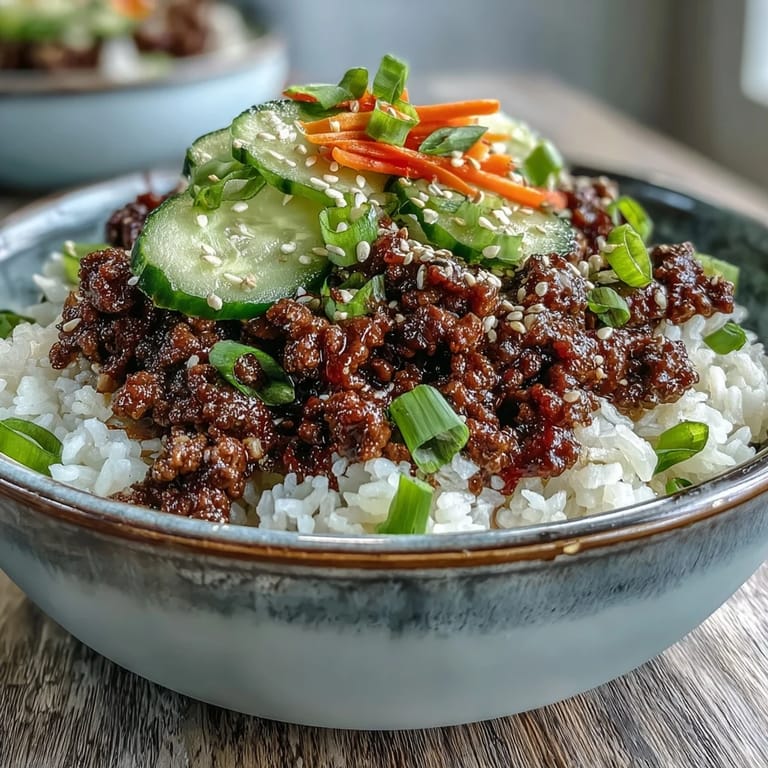
Save My colleague brought this Korean beef bowl to our office potluck on a gray Tuesday, and I watched three people go back for seconds before the first batch was even half gone. The magic wasn't just the savory, ginger-kissed beef—it was that bright pop of pickled vegetables cutting through the richness, making each bite feel intentional and alive. I pestered her for the recipe that afternoon, and she laughed, saying it was her quick weeknight solution when she didn't have time to order takeout. Now it's become my own emergency dinner, the kind I can pull together faster than delivery arrives.
I made this for my sister after she mentioned craving something Korean but feeling overwhelmed by long recipes, and she sat at my kitchen counter eating straight from the bowl while I cleaned up, which is her highest form of compliment. The way the warm beef mingles with the cool vegetables and the nuttiness of sesame oil—it felt restaurant-quality without any pretension, and that's when a dish truly becomes something you'll make again and again.
Ingredients
- Lean ground beef (500 g): Use the leanest you can find; it browns better without excessive oil and absorbs the seasoning more cleanly.
- Soy sauce (2 tablespoons): This is your umami backbone—don't skip it or substitute unless you're going gluten-free, in which case tamari works beautifully.
- Toasted sesame oil (1 tablespoon): The toasted variety has all the flavor; regular sesame oil tastes like disappointment by comparison.
- Brown sugar (1 tablespoon): It rounds out the salty and savory notes with just enough sweetness to make the beef taste complex rather than one-dimensional.
- Fresh ginger (2 teaspoons grated): Grate it right before cooking so you catch all those aromatic oils; pre-grated loses its brightness.
- Garlic (3 cloves minced): Fresh is non-negotiable here; the garlic should feel fragrant enough to fill your kitchen.
- Gochujang or sriracha (1 teaspoon optional): Add this only if you want heat and depth, but the dish is perfectly balanced without it if you prefer milder flavors.
- Green onions (2 sliced): Keep some raw in the mixture and save some for garnish—the contrast between cooked and fresh matters.
- Sesame seeds (1 tablespoon plus more): Toast them lightly in a dry pan first if you have time; it brings out their nuttiness and makes them pop visually.
- Rice base (4 cups cooked): Jasmine rice feels more authentic and aromatic, but cauliflower rice works if you're watching carbs or want to eat lighter.
- Rice vinegar (1/2 cup): This is sharper and cleaner than regular vinegar; it's worth seeking out in the Asian section.
- Quick pickle vegetables (carrot, cucumber, radish): Cut them thin so they soften quickly and absorb the vinegar—chunky vegetables turn the bowl from refined to rustic in an unintended way.
Tired of Takeout? 🥡
Get 10 meals you can make faster than delivery arrives. Seriously.
One email. No spam. Unsubscribe anytime.
Instructions
- Start the pickles while you gather everything else:
- Mix rice vinegar, sugar, and salt in a bowl until the sugar dissolves completely. Toss in your julienned carrot, sliced cucumber, and radish, then let them sit and soften for at least 15 minutes—this is the bowl's backbone, so don't rush it.
- Get your rice warm and ready:
- Cook jasmine or cauliflower rice according to package directions and keep it warm while you work on the beef. If it sits too long and cools, you can always warm it gently in a pan or microwave it right before serving.
- Brown the beef until it's deeply golden:
- Heat your skillet over medium-high and add the ground beef, breaking it apart with a spoon as it cooks for about 5 to 7 minutes. You want it fully cooked through and no longer pink, with a bit of browning on the edges for flavor.
- Build the sauce right in the pan:
- Add soy sauce, sesame oil, brown sugar, ginger, garlic, and gochujang (if using) to the cooked beef. Stir constantly for 2 to 3 minutes until the mixture smells absolutely irresistible and the beef is coated in a glossy, savory coating.
- Finish with fresh brightness:
- Remove from heat and fold in your sliced green onions and sesame seeds, reserving a little of both for garnish. The raw green onion adds a sharp contrast that keeps the bowl from feeling too heavy.
- Assemble your bowl like you mean it:
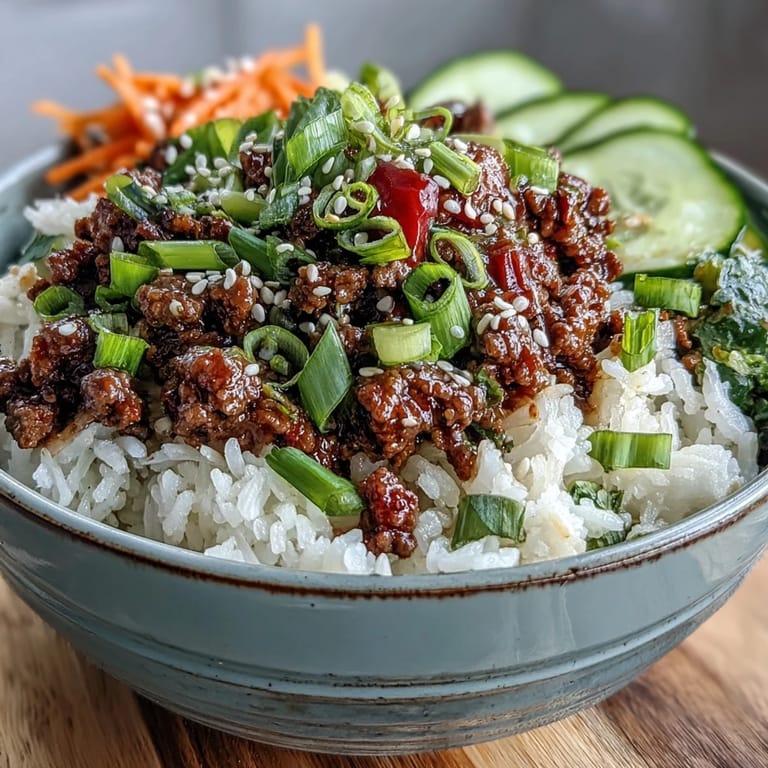
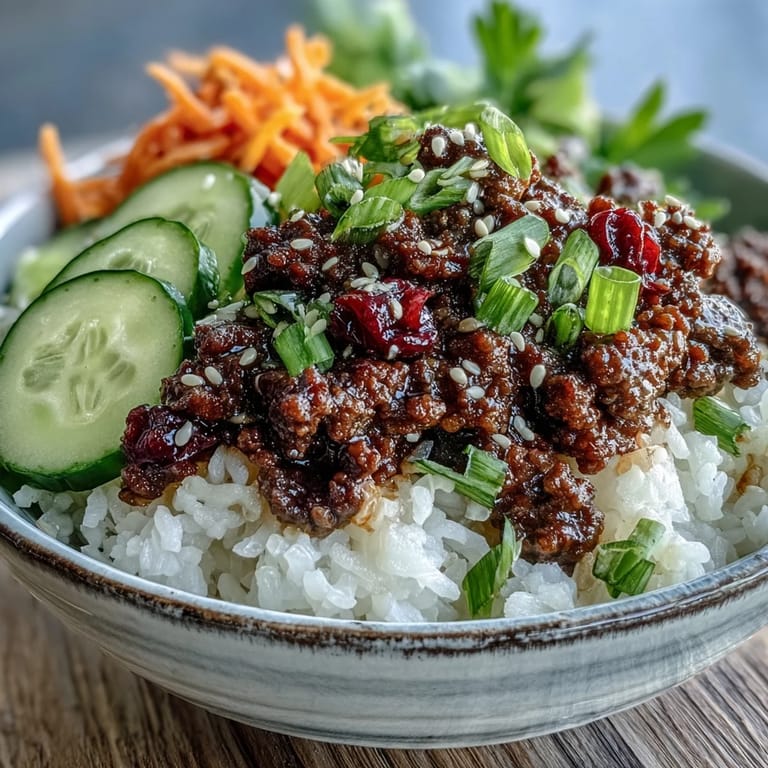
- Divide warm rice among bowls, then pile seasoned beef on top and add a generous handful of those pickled vegetables. Finish with extra green onions and sesame seeds, then serve immediately while the beef is still warm and everything feels fresh and alive.
 Save
Save My partner and I discovered we could make this on Sunday nights and eat it for two lunches without it feeling repetitive, which is saying something about its balance and flavor structure. There's something about a bowl that lets you control each bite—some people want more pickles, others more beef—and that kind of flexibility feels like freedom on a plate.
Variations That Work
This bowl is forgiving and adaptable in ways that make it feel less like a strict recipe and more like a template you can trust. Swap the beef for ground turkey or chicken and you'll notice the bowl tastes lighter but still deeply satisfying; swap jasmine rice for cauliflower rice and it becomes a weeknight keto dinner that doesn't feel like a sacrifice. I've even crumbled crispy tofu in place of beef for vegetarian friends, and the pickled vegetables carry the dish so well that no one felt like anything was missing.
Toppings That Elevate It
The beauty of a bowl is that you can keep adding layers of flavor and texture without it becoming chaotic or overwhelming. A fried egg on top adds richness and protein, turning lunch into something almost decadent, while a drizzle of gochujang mayo (if you make it) brings heat and creaminess at the same time. Some mornings I add crispy fried onions or roasted peanuts just to hear something crunch, and other times I keep it minimal and let the beef and pickles do all the talking.
- A soft-boiled egg adds protein and creaminess without weighing down the brightness of the vegetables.
- Kimchi or any fermented vegetables can replace the quick pickles if you want something with more funk and depth.
- Drizzle with a touch of mayo mixed with gochujang and lime juice for a spicy, creamy counterpoint to the savory beef.
 Save
Save This Korean beef bowl has quietly become my answer to the question 'what should we make tonight,' and I think it's because it feels both special and manageable, never fussy but never boring. It's the kind of dish that makes you feel competent in the kitchen and generous when you're feeding other people.
Saffron Brook Recipe Q&As
- → Can I make this dish spicier?
Yes, add more gochujang or sriracha to the beef mixture while cooking. You can also serve with additional chili paste on the side for customizing heat levels.
- → How long do the pickled vegetables last?
The quick-pickled vegetables will keep in an airtight container in the refrigerator for up to 1 week. They actually develop more flavor after sitting for a day or two.
- → Can I prepare the components ahead?
Absolutely. The pickled vegetables can be made up to a week in advance. The seasoned beef can be cooked and stored for 3-4 days, then reheated when ready to serve.
- → What other proteins work well?
Ground turkey, chicken, or crumbled tofu make excellent substitutes for beef. Adjust cooking time slightly as turkey and chicken may cook faster than beef.
- → Is cauliflower rice as filling?
Cauliflower rice is lighter but still satisfying, especially with the protein-rich beef topping. Add extra vegetables or a fried egg for more substance if desired.
- → Can I freeze the cooked beef?
Yes, the cooked seasoned beef freezes well for up to 3 months. Thaw overnight in the refrigerator and reheat gently before serving over freshly cooked rice.