 Save
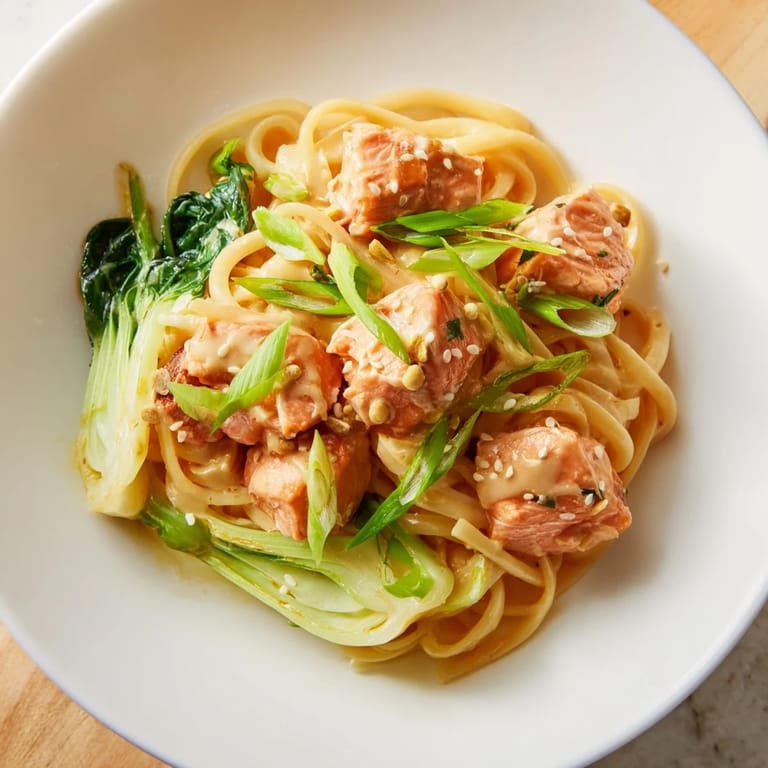
Save I discovered this dish on a quiet Tuesday when I had salmon thawing and a jar of white miso sitting in my fridge, both begging to be used before I left for a work trip. The combination felt risky at first—miso and Italian pasta seemed like they were from different culinary worlds—but the moment that buttery, umami-rich sauce came together, I understood why Japanese and Italian cooking share so much common ground. My partner walked in mid-preparation and immediately asked what smelled so good, which is always the sign I'm onto something.
The first time I served this to dinner guests, I was genuinely nervous about combining Japanese and Italian flavors so directly. But watching them twirl pasta, salmon, and bok choy onto their forks while making those satisfied sounds? That's when I knew this recipe had crossed from experiment to keeper.
Ingredients
- Salmon fillets: Buy them fresh if possible, and don't skip cutting them into bite-sized pieces—it means every forkful gets salmon, not just occasional chunks.
- Linguine or spaghetti: I prefer linguine because it catches the sauce better, but honestly, use whatever you have.
- Baby bok choy: The slight bitterness balances all that richness; if you can't find it, spinach works, though you'll lose a bit of textural contrast.
- Garlic: Fresh and minced, not the jarred stuff—those 2 cloves are your aromatics foundation.
- Scallions: Save these for garnish; they bring a fresh bite that cuts through the cream beautifully.
- Unsalted butter: Use good butter here since it's a starring ingredient, not a background player.
- White miso paste: This is the secret weapon; it gives you that deep umami without the harshness of red miso.
- Soy sauce: A standard one works fine, but check the label if you're gluten-sensitive.
- Mirin: This adds a subtle sweetness that balances the salty miso and soy—don't skip it.
- Heavy cream: The binding ingredient that makes the sauce silky; there's no light version here that tastes right.
- Sesame oil: Just a teaspoon, but it gives you that toasted, warm finish.
- Black pepper: Freshly ground matters more here than anywhere else.
Tired of Takeout? 🥡
Get 10 meals you can make faster than delivery arrives. Seriously.
One email. No spam. Unsubscribe anytime.
Instructions
- Get your pasta water ready:
- Start boiling salted water in a large pot—this is where the magic of finishing pasta sauces happens. The starch in that reserved pasta water is what makes the sauce cling and become silky instead of breaking into greasy puddles.
- Cook pasta until al dente:
- Follow the package time but start checking a minute early; you want a tiny bit of resistance when you bite, not soft noodles. Set aside about half a cup of the cooking water before draining.
- Sauté garlic in butter and sesame oil:
- Medium heat is key here—rush this and your garlic turns bitter instead of fragrant. You're looking for that moment where your kitchen smells toasted and warm.
- Cook salmon gently:
- The pieces should go in once the garlic smells perfect, 2-3 minutes per side depending on thickness. Salmon cooks faster than you think; overcooked salmon gets dry and flaky in all the wrong ways.
- Build the sauce base:
- Remove the salmon and add butter to the same pan, then whisk in miso paste, soy sauce, and mirin until totally smooth. This takes about a minute of real whisking—lumpy miso paste won't dissolve in cream, so get it smooth now.
- Cream and vegetables:
- Pour in heavy cream and black pepper, stir well, then add bok choy. Watch it wilt—2-3 minutes and it goes from crisp to tender.
- Bring everything together:
- Return salmon to the pan, add pasta, and toss gently so the salmon doesn't fall apart. If the sauce looks too thick, add pasta water a splash at a time until it coats the pasta but doesn't pool at the bottom.
- Serve immediately:
- Divide into bowls, top with scallions, sesame seeds, and a lemon wedge. Serve right away while the pasta still has warmth.
 Save
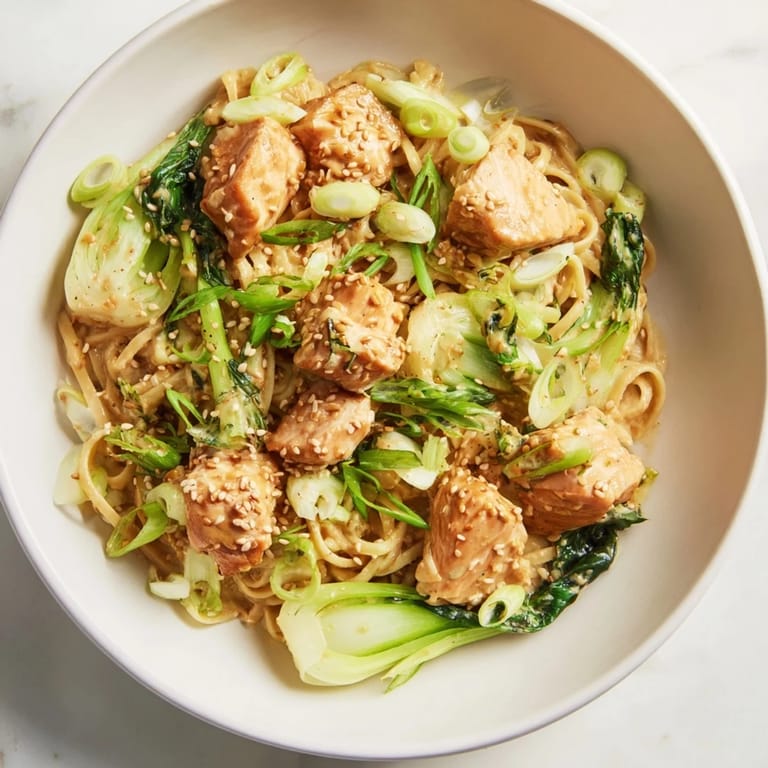
Save There's something special about a dish that feels like it shouldn't work but tastes like it was always meant to be. This pasta became the meal I make when I want to feel like I've done something ambitious in the kitchen without actually stressing about it.
The Miso-Butter Alchemy
The first time I combined miso and butter, I was hesitant—I'd used miso mainly in soups and dressings, never as part of a cooked cream sauce. But miso has this incredible depth that plays beautifully with dairy fat; it doesn't fight it the way aggressive spices sometimes do. The white miso specifically is mild and slightly sweet, which means it won't turn the sauce dark or overpower the delicate salmon. This is one of those moments where understanding why an ingredient works makes you braver about using it in new ways.
Salmon Timing and Temperature
Salmon is forgiving until it isn't, and the line between perfect and overdone happens in about 30 seconds. The trick is recognizing that your salmon will keep cooking once you return it to that hot sauce, so you're aiming for just barely cooked through on the skillet. If you like your fish more done, that's fine, but err on the underdone side initially because you can't un-cook it. The pieces should be opaque on the outside with just the tiniest bit of translucence in the very center.
Making This Your Own
This recipe is solid as written, but it's also a framework for improvisation. I've made it with spinach instead of bok choy on nights when I didn't have Asian vegetables in the house, and it's still delicious. Some people add a splash of lemon juice to the sauce right before serving, which brightens everything. Others swear by finishing with crispy panko breadcrumbs instead of sesame seeds for textural contrast.
- For heat, add chili flakes when you sauté the garlic—a pinch is enough, and it travels through the whole dish.
- If you want more sauce, increase the cream by a quarter cup and reduce the pasta water you add, but taste as you go.
- Leftover pasta can be reheated gently with a splash of water or cream, though it's never quite as good as fresh.
 Save
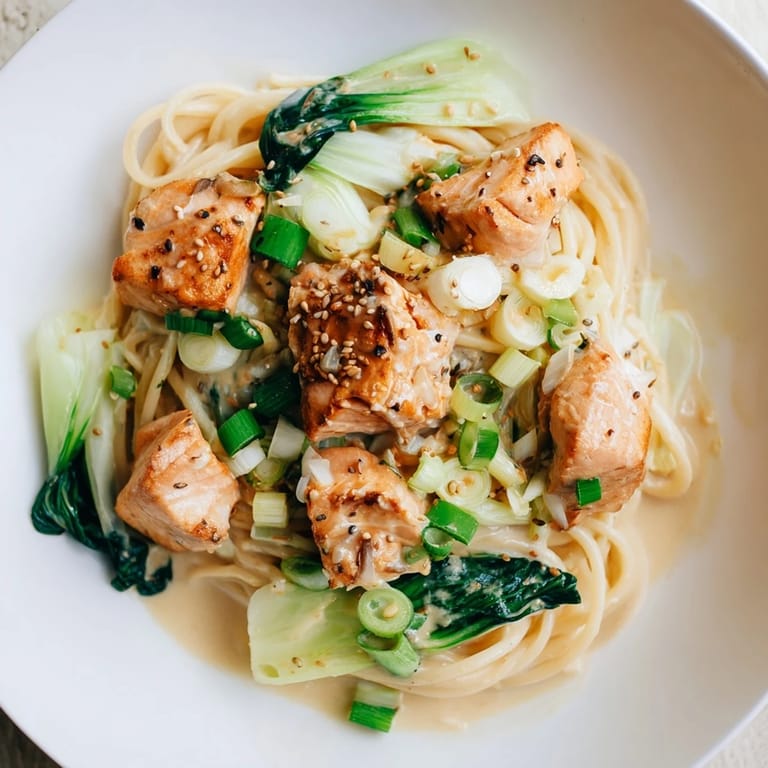
Save This is the kind of dish that makes weeknight cooking feel special without demanding hours in the kitchen. Once you've made it a few times, it becomes the recipe you make when you want to impress without stress.
Saffron Brook Recipe Q&As
- → Can I substitute the salmon with another seafood?
Yes, firm fish like cod or sea bass work well. Adjust cooking times to avoid overcooking.
- → How do I keep the bok choy crisp and vibrant?
Add the bok choy towards the end of cooking, sautéing just until wilted to maintain texture and color.
- → What pasta types suit this dish best?
Linguine or spaghetti complement the creamy sauce and tender salmon with their smooth, long strands.
- → How can I adjust the sauce thickness?
Reserve some pasta water to thin the sauce while tossing; add gradually until desired consistency is reached.
- → Are there variations to enhance the flavor profile?
Try adding a pinch of chili flakes for heat or swapping bok choy with spinach for a different greens texture.
- → Is this dish suitable for gluten-free diets?
Use gluten-free pasta and tamari instead of soy sauce to make this dish gluten-free.