 Save
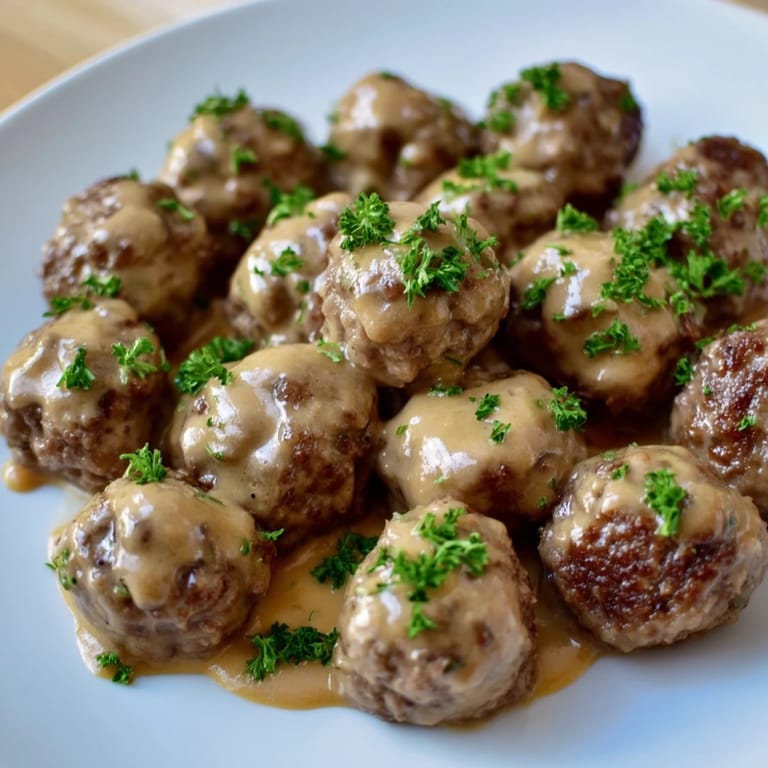
Save There's something about the aroma of Swedish meatballs simmering in cream sauce that instantly transports me back to my grandmother's kitchen on a cold December evening. She'd stand at the stove with a wooden spoon, humming softly while the sauce bubbled away, and I'd sneak tastes of the rich, savory gravy. The spices—that distinctive warmth of allspice and nutmeg—made the whole house smell like home. Over the years, I've learned that the secret isn't in fancy technique but in respecting the simplicity of good ingredients mixed with care. Now, whenever I make these meatballs, I'm cooking with her hands guiding mine.
I'll never forget the first time I made these for my partner's family dinner—I was nervous about impressing people who actually knew Swedish cuisine. But as soon as I set the platter down, a relative leaned over and said, "This tastes like my mother used to make it," and suddenly I wasn't nervous anymore. That moment taught me that food isn't about perfection; it's about generosity and showing up with something made by your own hands.
Ingredients
- Ground beef and pork (250 g each): The combination gives you depth—beef for richness, pork for tenderness—and this ratio keeps them from tasting one-note.
- Fresh breadcrumbs and milk (1/2 cup each): This is your secret weapon for meatballs that stay moist; when the breadcrumbs soak up the milk, they act like a sponge that keeps everything tender.
- Egg (1 large): Your binder, but don't skip it thinking the breadcrumbs alone will hold things together—they won't.
- Allspice and nutmeg (1/2 tsp each): These aren't just background flavors; they're what make people pause and ask, "What is that spice?" with genuine curiosity.
- Beef broth and heavy cream (2 cups and 1/2 cup): The foundation of that silky sauce; good broth makes an enormous difference, so taste yours before adding salt.
- Worcestershire sauce and Dijon mustard (1 tsp each): Just small amounts, but they add umami and subtle tang that make the sauce taste more complex than the ingredients suggest.
- Butter (4 tbsp total): Use unsalted so you control the salt level, and don't skimp—butter is where the flavor lives in this dish.
Tired of Takeout? 🥡
Get 10 meals you can make faster than delivery arrives. Seriously.
One email. No spam. Unsubscribe anytime.
Instructions
- Soak and soften the breadcrumbs:
- Pour milk over breadcrumbs in a small bowl and let them sit for 5 minutes until they're fluffy and almost porridge-like. This step takes patience, but it's the reason your meatballs won't be dense or rubbery.
- Build the mixture gently:
- Combine all meatball ingredients in a large bowl and mix with your hands just until everything is evenly distributed—think of it as coaxing the mixture together, not wrestling it. Overmixing activates the gluten in the breadcrumbs and makes the meatballs tough, which is the opposite of what we're after.
- Shape with damp hands:
- Roll the mixture into 1-inch meatballs; damp hands keep the mixture from sticking and make this part almost meditative. If the mixture feels warm, refrigerate it for 10 minutes first—cold meatballs brown more evenly.
- Brown the meatballs in batches:
- Heat butter in a large skillet over medium heat and fry the meatballs without crowding the pan, turning occasionally, for 6–8 minutes until deeply golden on all sides. Don't rush this step; the browning builds flavor.
- Make the roux:
- In the same skillet, melt butter and whisk in flour to create a paste, cooking it for 1–2 minutes until it smells slightly nutty. You're creating the thickening base for your sauce, and that toasty aroma tells you it's ready.
- Build the sauce:
- Slowly whisk in beef broth while scraping up all those caramelized bits stuck to the bottom of the pan—that's pure flavor. Simmer for 3–4 minutes until it thickens slightly, then stir in cream, Worcestershire, and mustard, tasting and adjusting salt and pepper as you go.
- Finish gently:
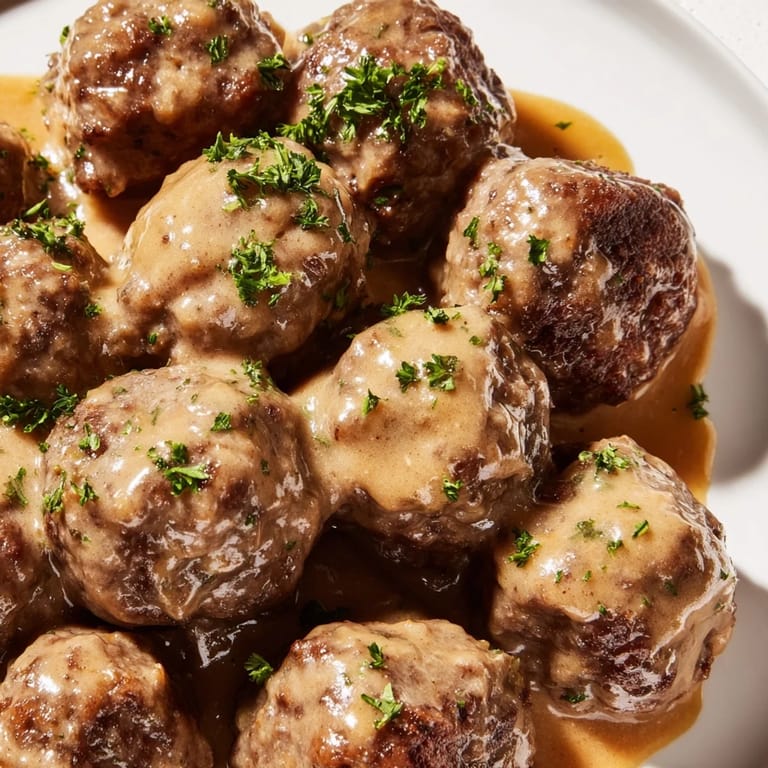
- Return the meatballs to the sauce and simmer gently for 8–10 minutes, letting everything meld without aggressive boiling. The sauce will become silky, and the meatballs will be cooked through and incredibly tender.
 Save
Save There's a quiet satisfaction in watching someone take a second meatball without asking, spooning extra sauce onto their plate with that small smile that says everything. This dish has a way of making people linger at the table longer than they planned, and that's when the real conversation starts.
The Art of Not Overmixing
One of the biggest mistakes I made early on was treating meatball mixture like bread dough, kneading it thoroughly to make sure everything was combined. What I didn't realize was that gentle handling is what keeps meatballs light and tender; the moment you work the mixture too much, you're toughening up the gluten in the breadcrumbs and making everything dense. Now I mix with my hands just until I see no streaks of raw meat, and I stop immediately. The difference between a meatball that feels like a little cloud in your mouth and one that feels like a small hockey puck comes down to that single choice.
Browning: Where the Magic Happens
I used to rush the browning step, impatient to move on to the sauce, but I've since learned that those caramelized edges contribute something irreplaceable to the final dish. When you take the time to brown the meatballs thoroughly on all sides, you're building layers of flavor that no amount of sauce can add retroactively. The butter needs to be hot enough that the meatballs sizzle immediately, but not so hot that the outside burns while the inside stays raw. Listen for that quiet sizzle, and you'll know you're in the right zone.
Serving and Pairing Ideas
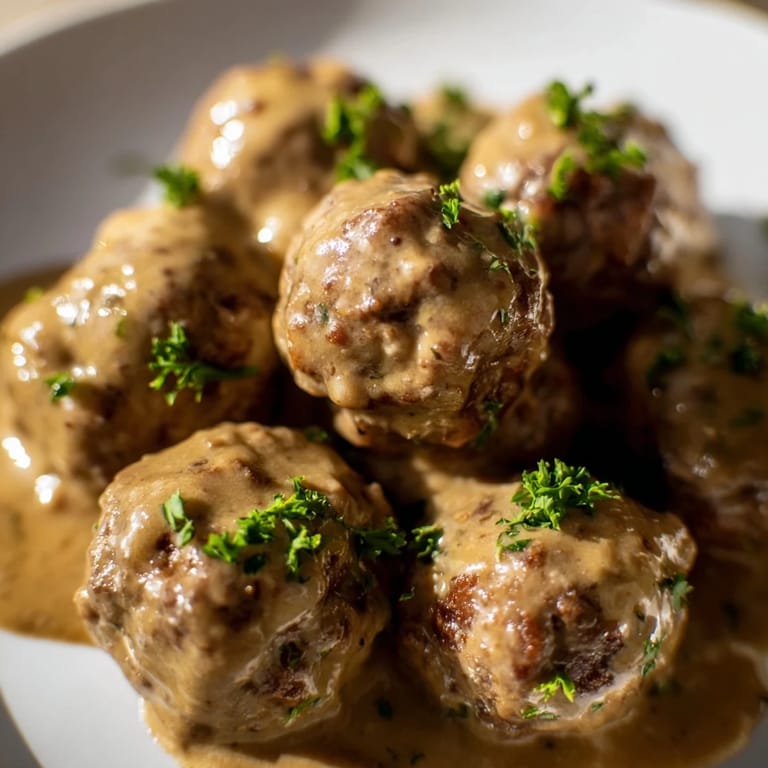
The traditional way is with creamy mashed potatoes and a small spoonful of lingonberry jam on the side—the tartness of the jam cuts through the richness of the sauce in a way that feels almost essential. If you can't find lingonberry jam, cranberry sauce works, but the flavor profile shifts slightly and becomes a bit brighter. A simple green salad with a sharp vinaigrette is lovely as a counterpoint, and fresh parsley scattered over everything adds both color and a hint of freshness that balances the heaviness of the cream sauce.
- Lingonberry jam might seem old-fashioned, but that tartness against creamy sauce is an awakening.
- Mashed potatoes should be buttery and slightly loose so they soak up that gorgeous sauce.
- A light red wine like Pinot Noir pairs beautifully and doesn't overpower the delicate spicing.
 Save
Save There's something deeply nourishing about a dish that tastes like someone cared enough to pay attention to the details. This is the kind of meal that fills you up not just in your belly but in that quieter way where you feel looked after.
Saffron Brook Recipe Q&As
- → What makes Swedish meatballs tender?
Using a mix of ground beef and pork along with soaking breadcrumbs in milk helps keep the meatballs moist and tender during cooking.
- → How is the creamy brown sauce prepared?
Butter and flour are cooked to form a roux, then combined with beef broth, cream, Worcestershire sauce, and Dijon mustard to create a smooth, flavorful sauce.
- → Can I substitute the meats in this dish?
Yes, ground turkey or chicken can be used for a lighter version while retaining a similar texture and taste.
- → What traditional sides complement this dish?
Mashed potatoes and lingonberry jam are classic accompaniments, adding creaminess and a touch of tartness to the plate.
- → How do I avoid overmixing the meatball mixture?
Gently combine ingredients until just mixed to prevent dense meatballs and maintain tenderness.
- → What cooking tools are essential for this preparation?
A large mixing bowl, skillet, whisk, and spatula are key for mixing, frying, and sauce preparation.