 Save
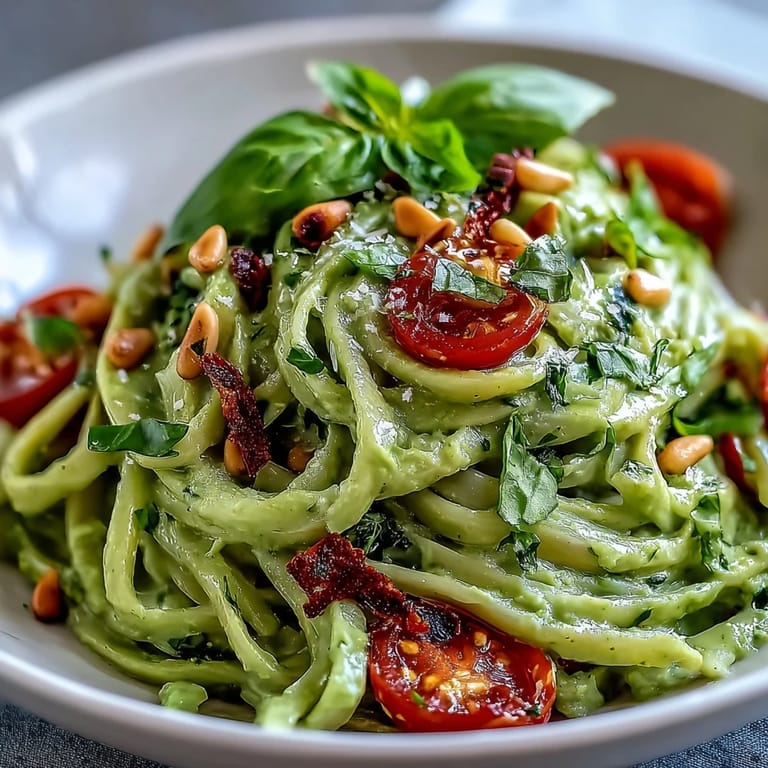
Save There's something about summer evenings that makes me crave pasta that doesn't feel heavy, and this avocado lime creation emerged one night when I was standing in front of my fridge wondering what to do with three perfectly ripe avocados before they turned. I grabbed a lime, some basil, and realized I could make something silky without cream—just green fruit, citrus, and a little plant-based milk doing the real work. The first time I served it, my roommate ate two plates and asked if I'd somehow hidden butter in there, which felt like the highest compliment.
I made this for a potluck once, bringing it in a glass container because I was nervous nobody would touch vegan pasta. By the time dessert came around, there were maybe three bites left, and someone asked if I'd make it again the following week. That moment taught me that food doesn't need to announce what it's missing—it just needs to taste unforgettably good.
Ingredients
- Spaghetti or linguine (350 g): The thinner the pasta, the better it clings to the creamy sauce—I learned this the hard way when thick pappardelle left pockets of sauce at the bottom of the bowl.
- Ripe avocados (2): Press gently near the stem; if it gives slightly, you're in the perfect window where they'll blend into silk, not chalky paste.
- Lime juice (2–3 tbsp from 1 large lime): Fresh juice is non-negotiable here because it's what keeps the sauce bright and stops the avocado from tasting one-dimensional.
- Garlic (2 cloves): Raw garlic brings a subtle bite that prevents this from tasting like guacamole pasta, which I discovered when I once got too cautious with seasoning.
- Extra virgin olive oil (3 tbsp): This isn't just fat; it's helping emulsify the sauce and carry flavor, so don't skimp on quality.
- Fresh basil leaves (1/3 cup): Tear by hand rather than chopping—it bruises less and the flavor stays brighter through the blending.
- Plant-based milk (1/4 cup): This loosens the sauce to a silky consistency; oat milk creates the richest texture, though almond and soy work beautifully too.
- Sea salt and black pepper: Season as you taste, not by memory, because avocado's richness can mask how much salt actually made it in.
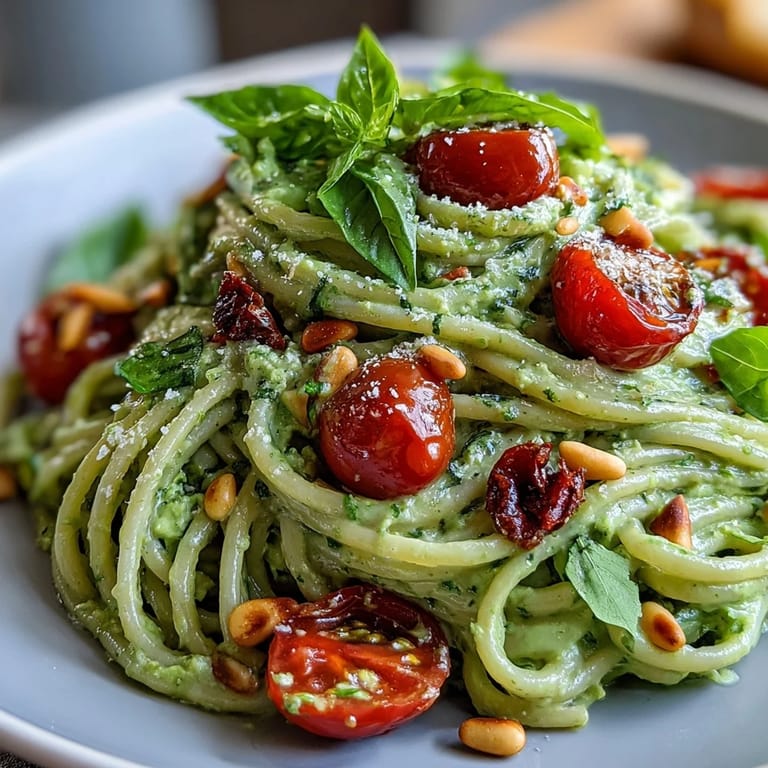
- Cherry tomatoes (250 g): These stay slightly firm when folded in at the end, providing bursts of sweetness against the creamy sauce.
- Toasted pine nuts (2 tbsp, optional): They add a subtle earthiness and crunch that makes each bite feel more intentional.
Tired of Takeout? 🥡
Get 10 meals you can make faster than delivery arrives. Seriously.
One email. No spam. Unsubscribe anytime.
Instructions
- Set the pasta in motion:
- Bring a pot of salted water to a rolling boil and add your pasta, stirring occasionally so it doesn't stick to itself. You'll know it's ready when a strand bends with just a slight snap—that's al dente, the texture that lets the sauce cling instead of sliding off.
- Create the sauce while pasta cooks:
- Scoop your avocado flesh into the food processor along with the lime juice, garlic, olive oil, basil, plant-based milk, salt, and pepper. Blend until completely smooth, pausing to scrape down the sides—the moment it turns from chunky green to silky pale green is when you know you're almost there.
- Bring it together in one bowl:
- Drain the pasta but hold onto that starchy pasta water; it's your secret weapon for getting the sauce to coat every strand. Toss the warm pasta with the avocado sauce, adding a splash of pasta water as you go until it reaches that silky texture where everything moves together.
- Fold in the fresh elements:
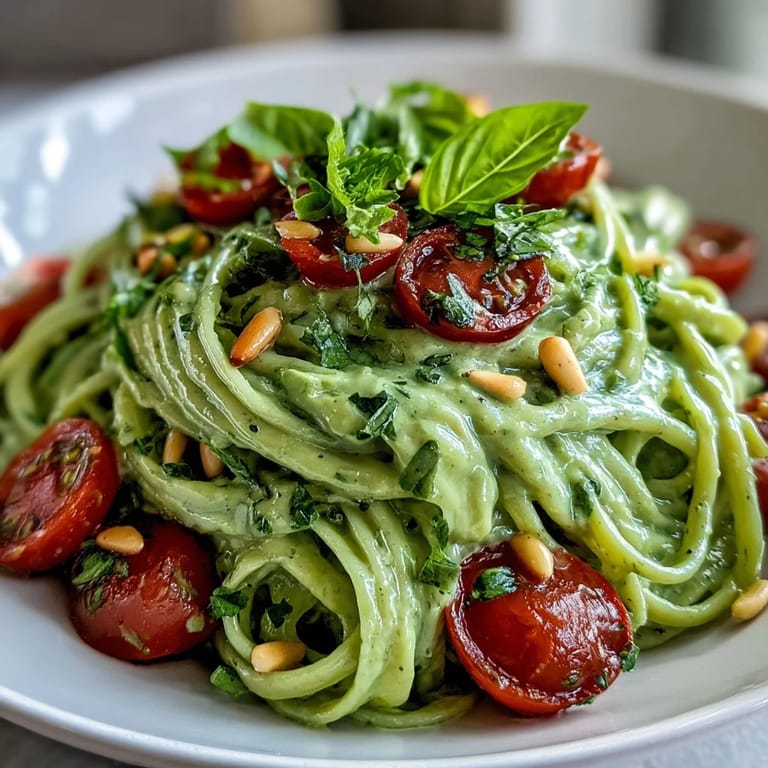
- Gently add the halved cherry tomatoes and stir once or twice until they're scattered throughout—too much stirring and you'll bruise them into nothing.
- Finish and serve immediately:
- This dish is best served the moment you plate it while the pasta is still warm and the sauce hasn't started to separate. Top with toasted pine nuts and a few more basil leaves to signal that this is something you actually put care into.
 Save
Save My sister called me one day asking why restaurant pasta always tastes different, and I realized it's partly because they understand that the pasta water isn't waste—it's part of the dish itself. When I explained this to her while making this recipe together, she watched the transformation happen in real time, the sauce going from almost too thick to something that actually wanted to hug the pasta. It was a small kitchen moment that made her see cooking differently.
When to Add the Pasta Water
The reserved pasta water is starch in liquid form, and it does something that regular water simply cannot—it helps your sauce emulsify without breaking and cling to each strand of pasta like it belongs there. I used to think it was just convenience, a way to thin things out, until I served two versions side by side and realized one was silky and the other was separating. Start with a small splash, mix gently, and add more only if you need it.
Why Avocados Work Better Than Cream
Avocados contain natural fats and an emulsifier called lecithin, which means when you blend them smooth, they naturally want to coat things evenly. Dairy cream does something similar, but avocado brings subtle flavor and a lighter feeling that makes you want to eat more, not less—plus nobody has to sit down afterward wondering why they feel so full. The color is a bonus too; that pale green on your plate is basically an invitation to eat something alive and bright.
Variations and Customizations
Once you understand how this sauce works, it becomes a launching point rather than a fixed recipe. Some nights I add a handful of spinach to deepen the green and slip in extra vegetables, other times I'll use lemon instead of lime when that's what I have on hand and the brightness shifts just slightly in a way that feels new. The core idea—blended avocado, citrus, and plant-based milk creating a creamy coating for pasta—stays constant, but everything around it can bend to what your kitchen holds.
- Stir in cooked chickpeas for protein, or white beans if you want something that disappears more seamlessly into the sauce.
- A small pinch of nutritional yeast brings a subtle savory depth that makes people ask what your secret ingredient is.
- Raw spinach or arugula folded in at the very end adds texture and keeps the whole dish from feeling too rich.
 Save
Save This pasta is proof that simple ingredients treated with attention create something that feels like luxury, and that's a lesson worth remembering in a kitchen and beyond. Make it once when you're just cooking for yourself, then make it again when someone matters enough to share it with.
Saffron Brook Recipe Q&As
- → How do I prevent the avocado sauce from browning?
The lime juice naturally helps preserve the bright green color. For best results, serve immediately after tossing with pasta. The sauce coating the noodles also minimizes air exposure. If preparing ahead, press plastic wrap directly onto the sauce surface and store in an airtight container.
- → Can I make this gluten-free?
Absolutely. Simply substitute gluten-free spaghetti or linguine for the regular pasta. Brown rice, chickpea, or quinoa-based noodles work well and maintain a pleasant texture when cooked al dente.
- → What plant-based milk works best in the sauce?
Unsweetened almond, oat, or soy milk all create excellent results. Oat milk tends to be creamier, while almond milk adds subtle nuttiness. Avoid coconut milk as it may overpower the delicate lime and basil flavors.
- → How can I add more protein to this dish?
Stir in cooked chickpeas, white beans, or lentils when folding in the cherry tomatoes. Hemp seeds or nutritional yeast blended into the sauce also boost protein content while adding extra depth to the flavor profile.
- → Can I serve this dish cold?
Yes, it makes excellent pasta salad. After tossing with sauce, refrigerate for at least 30 minutes to let flavors meld. The avocado sauce thickens when chilled, so toss with a splash of olive oil or lime juice before serving cold.
- → What other toppings work well?
Toasted pine nuts add crunch, while fresh basil enhances the aromatic quality. Consider hemp seeds, diced cucumber, or shaved radish for extra texture. A sprinkle of nutritional yeast provides savory, cheesy notes without dairy.