 Save
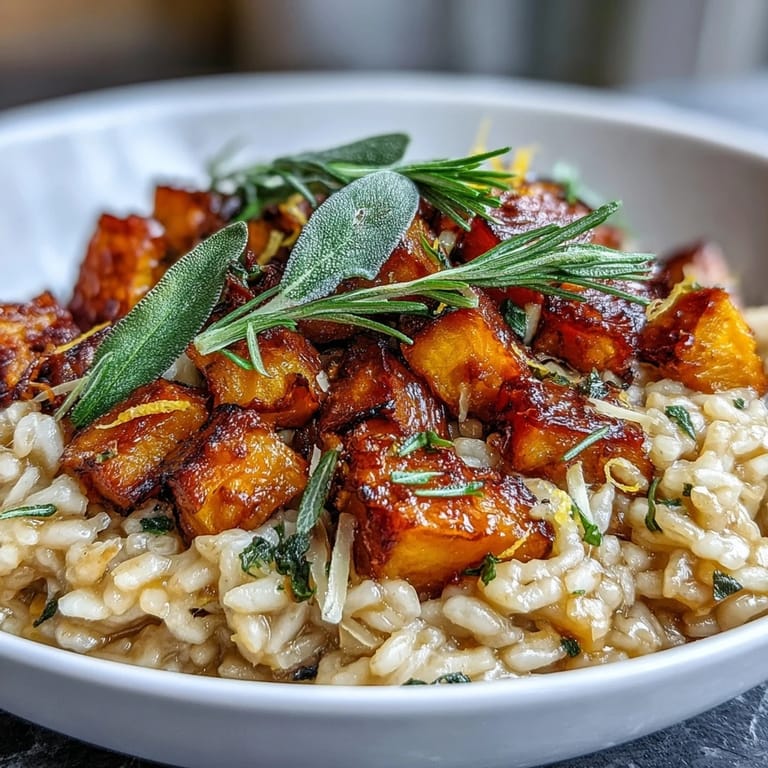
Save The kitchen smelled like October the first time I stirred pumpkin into warm rice, watching the orange melt into cream without a drop of dairy. I'd been skeptical about vegan risotto until a friend served me one that tasted richer than any I'd made with butter. That night, I learned that patience and good broth could do things I hadn't imagined. Now, every fall, I wait for pumpkins to appear at the market so I can make this again.
I made this for a small dinner party on a rainy November evening, and everyone went quiet after the first spoonful. One guest, who usually avoided vegan food, asked for the recipe before dessert even arrived. The crispy sage leaves disappeared faster than I expected, everyone plucking them off the top like little treasures. That night taught me that good food doesn't need labels, it just needs to taste like care.
Ingredients
- Pumpkin: Roasting it first concentrates the sweetness and keeps the cubes from turning to mush in the risotto.
- Arborio rice: The high starch content is what makes risotto creamy, so don't substitute with long-grain rice or you'll lose that texture.
- Vegetable broth: Keep it warm on a back burner so the rice cooks evenly without cooling down each time you add liquid.
- Olive oil: Divided between roasting, sautéing, and frying the sage, it carries flavor into every layer of the dish.
- Fresh sage leaves: They crisp up in seconds and add an earthy, aromatic crunch that defines the dish.
- Nutmeg: Just a hint brings warmth without overpowering the pumpkin's natural sweetness.
- Nutritional yeast: This adds a subtle cheesy, umami depth that makes the risotto feel richer than it is.
- Dry white wine: Optional, but it adds acidity and complexity that balances the sweetness beautifully.
Tired of Takeout? 🥡
Get 10 meals you can make faster than delivery arrives. Seriously.
One email. No spam. Unsubscribe anytime.
Instructions
- Roast the Pumpkin:
- Preheat your oven to 200°C and toss the diced pumpkin with olive oil, salt, and pepper on a baking tray. Roast for 20 to 25 minutes until the edges turn golden and caramelized, filling your kitchen with that unmistakable autumn scent.
- Start the Base:
- Heat olive oil in a large skillet over medium heat, then cook the onion until it softens and turns translucent, about 3 to 4 minutes. Add the garlic and stir for another minute until fragrant.
- Toast the Rice:
- Stir in the arborio rice and let it toast for 2 minutes, coating each grain in oil. This step helps the rice hold its shape and absorb the broth more slowly.
- Deglaze with Wine:
- Pour in the white wine if using, stirring constantly until it's almost completely absorbed. The pan will sizzle and smell bright and fruity.
- Add Broth Gradually:
- Ladle in warm broth one scoop at a time, stirring frequently and waiting until each addition is absorbed before adding more. This slow process, about 18 to 20 minutes, is what creates that signature creamy texture.
- Fry the Sage:
- While the rice cooks, heat the remaining olive oil in a small skillet over medium-high heat and fry the sage leaves for 30 to 60 seconds until they crackle and darken slightly. Transfer them to a paper towel immediately to stay crisp.
- Fold in the Pumpkin:
- When the rice is tender but still has a slight bite, gently stir in the roasted pumpkin, nutmeg, and nutritional yeast. Taste and adjust the seasoning with salt and pepper.
- Serve and Garnish:
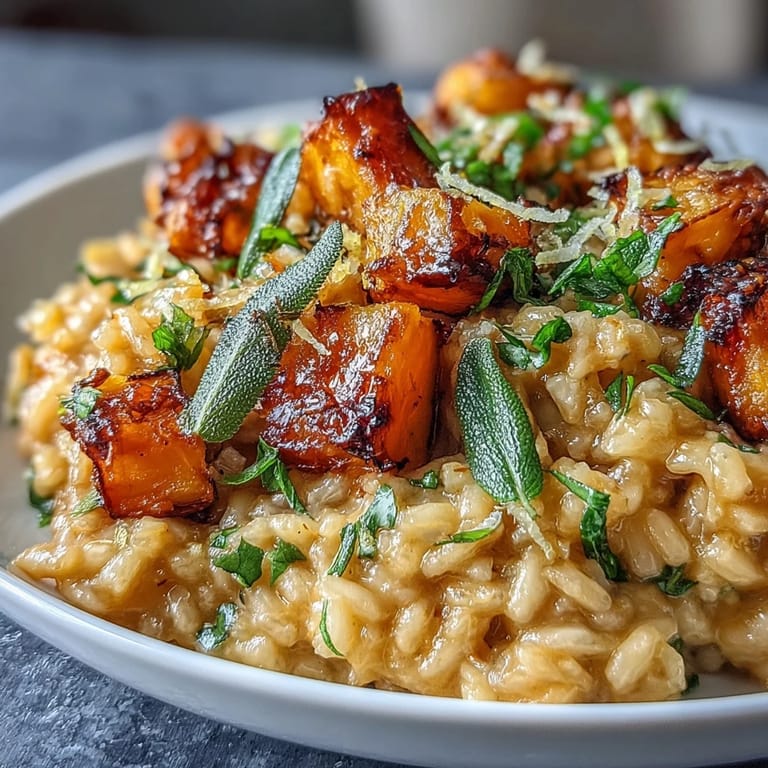
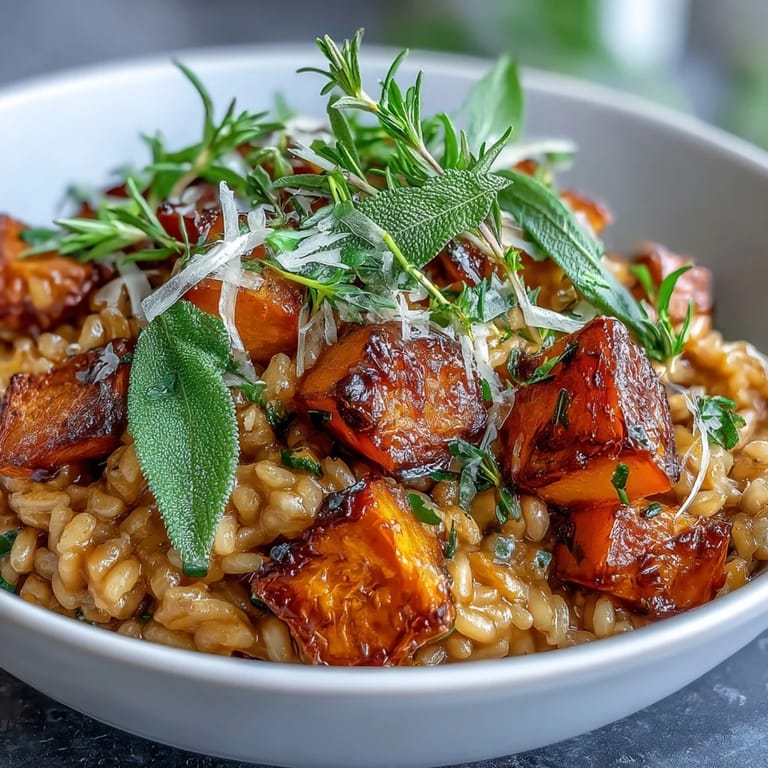
- Spoon the risotto into shallow bowls and top each serving with crispy sage leaves and a touch of lemon zest if you like. Serve immediately while it's hot and creamy.
 Save
Save One evening, I served this to my mom, who grew up making traditional risotto with parmesan and butter. She took a bite, paused, and said it reminded her of the ones she used to make, but lighter somehow. That quiet compliment meant more than any elaborate praise. It was the moment this dish stopped being an experiment and became part of my own tradition.
Choosing Your Pumpkin
Not all pumpkins are created equal for cooking. I learned this after buying a massive carving pumpkin that turned watery and bland in the oven. Look for small sugar pumpkins or kabocha squash, which have denser, sweeter flesh that roasts beautifully. Butternut squash works just as well if pumpkins aren't in season. The key is to cut the pieces evenly so they roast at the same rate and caramelize on the edges.
Getting the Texture Right
Risotto should be creamy but never soupy, with grains that are tender on the outside and still have a slight firmness in the center. I used to add too much broth at once, which turned the rice mushy and made it cook too fast. Now I add just enough to barely cover the rice, stirring often and letting it breathe between additions. If you run out of broth before the rice is done, warm water works in a pinch. The constant stirring releases starch, which is what creates that luscious, creamy texture without any cream at all.
Serving and Storing
Risotto is best eaten immediately, straight from the pan while it's still loose and creamy. Leftovers will thicken as they cool, but you can revive them the next day by adding a splash of warm broth or water and stirring gently over low heat. I've also shaped cold risotto into patties and pan-fried them for crispy rice cakes, which make a surprisingly good lunch. The crispy sage leaves don't store well, so fry them fresh each time for the best crunch and flavor.
- Serve in shallow bowls so the risotto spreads out and cools just enough to eat right away.
- Pair it with a simple arugula salad dressed in lemon juice and olive oil for balance.
- Leftovers keep in the fridge for up to three days in an airtight container.
 Save
Save This risotto has become my answer to cold nights and the need for something that feels like a hug on a plate. I hope it finds a place in your kitchen the way it has in mine.
Saffron Brook Recipe Q&As
- → Can I use a different type of squash instead of pumpkin?
Yes, butternut squash works excellently as a substitute. It has a similar sweetness and texture when roasted. You can also try kabocha squash for a slightly denser, nuttier flavor.
- → How do I know when the risotto is properly cooked?
The rice should be al dente with a slight bite in the center, and the overall texture should be creamy and flow slightly when plated. This typically takes 18-20 minutes of gradual broth addition.
- → Can I make this dish without wine?
Absolutely. The wine is optional and adds acidity, but you can skip it or substitute with an extra ladleful of vegetable broth with a splash of lemon juice for similar brightness.
- → Why should the vegetable broth be kept warm?
Warm broth helps maintain consistent cooking temperature, allowing the rice to cook evenly and release starch gradually for that signature creamy texture. Cold broth would slow down the cooking process.
- → How can I make the dish even creamier?
Blend half of the roasted pumpkin into a smooth puree before adding it to the risotto. You can also stir in a tablespoon of vegan butter or cashew cream at the end for extra richness.
- → Can I prepare any components in advance?
Yes, you can roast the pumpkin up to 2 days ahead and store it refrigerated. The crispy sage can be made a few hours before serving, but risotto itself is best cooked fresh for optimal texture.