 Save
Save The smell of toasted black pepper changed everything for me. I was standing in a tiny kitchen in Trastevere, watching an older woman move a dry pan over the flame with complete confidence, and suddenly the air filled with this warm, sharp fragrance that made my eyes water just a little. She looked at me and smiled, saying nothing, just kept swirling those cracked peppercorns like she was conducting an orchestra. That was the moment I understood Cacio e Pepe wasn't about following steps, it was about listening to the ingredients.
I made this for my neighbors one rainy Tuesday when we all needed something comforting but nobody wanted to fuss. We stood around my counter with mismatched bowls, twirling pasta and laughing about how something so simple could taste this good. Someone said it tasted like Rome, and even though half of us had never been, we all agreed. That night, with rain tapping the windows and cheese clinging to our forks, we understood why certain dishes survive centuries.
Ingredients
- Spaghetti or tonnarelli: The pasta is your canvas here, and you want something with enough surface area to grab onto that peppery, cheesy sauce, so go for quality bronze-cut if you can find it.
- Pecorino Romano cheese: This is the soul of the dish, salty and sharp and grassy, and you absolutely must grate it fresh because the pre-shredded stuff has coatings that turn the sauce grainy and sad.
- Whole black peppercorns: Freshly cracked pepper is not optional, it brings a floral heat that pre-ground pepper just cannot match, so crack them coarse and let them bloom in that hot pan.
- Kosher salt: Used sparingly for the pasta water, because the Pecorino brings plenty of salt on its own and you do not want to overpower the delicate balance.
- Unsalted butter: Traditionalists skip this, but a small knob adds silkiness and forgiveness if your emulsion wobbles, so I keep it close just in case.
Tired of Takeout? 🥡
Get 10 meals you can make faster than delivery arrives. Seriously.
One email. No spam. Unsubscribe anytime.
Instructions
- Boil the pasta:
- Bring a large pot of water to a rolling boil, salt it lightly, and cook your spaghetti until it still has a tiny bite in the center, about a minute shy of the package time. Before you drain anything, scoop out at least one and a half cups of that starchy, cloudy pasta water because that is your secret weapon for a creamy sauce.
- Toast the pepper:
- While the pasta bubbles away, toss your cracked peppercorns into a dry skillet over medium heat and let them dance for about a minute until the kitchen smells like a spice market. This step wakes up the pepper and makes it fragrant and complex instead of just hot.
- Build the base:
- Pour a cup of that reserved pasta water into the skillet with the toasted pepper and lower the heat so it is just barely simmering. This peppery broth is where the magic starts.
- Combine pasta and water:
- Add the drained pasta directly into the skillet and toss everything together, letting the noodles drink up some of that seasoned water. The pasta should look glossy and alive, not dry or clumpy.
- Create the sauce:
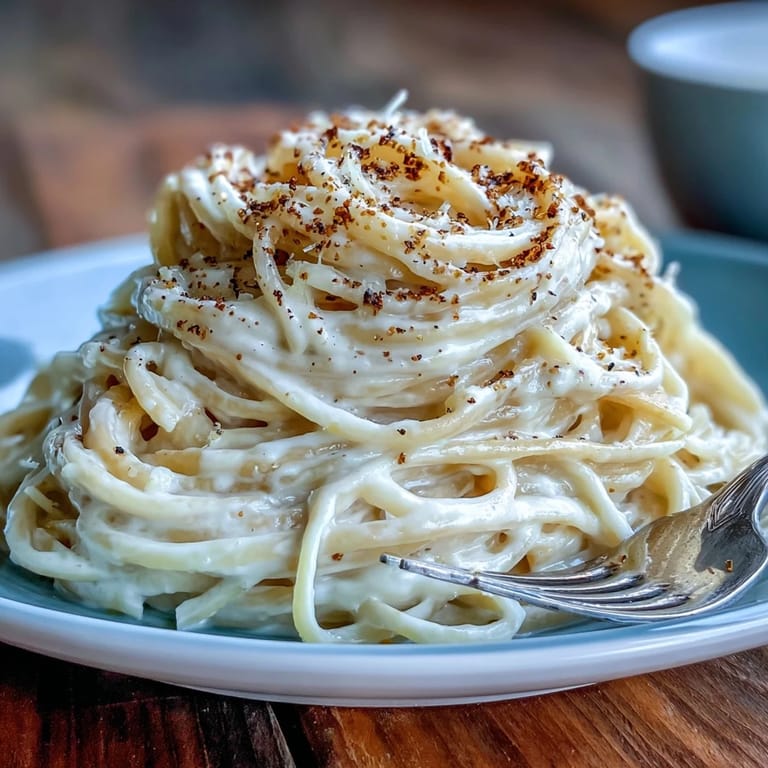
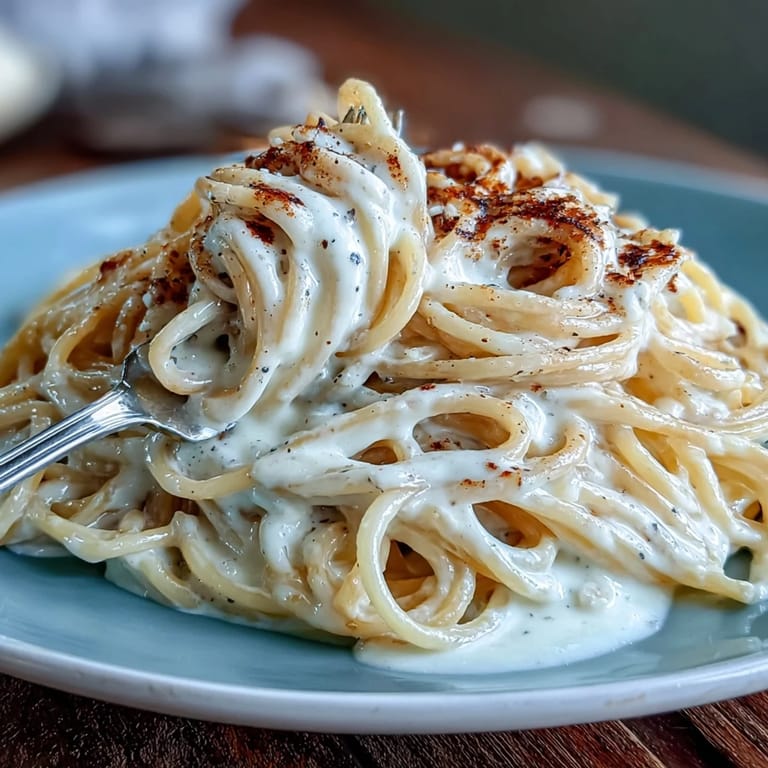
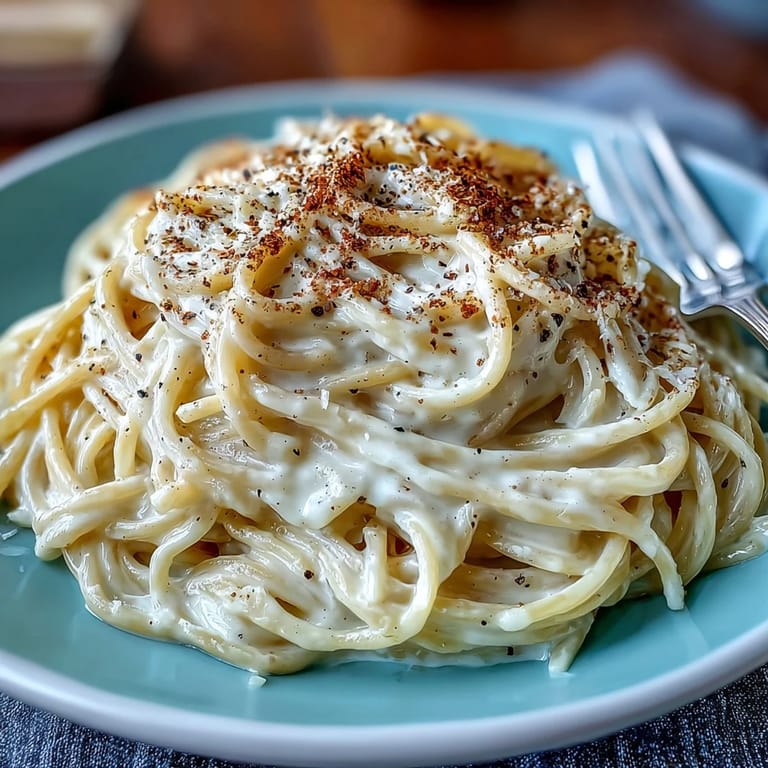
- Pull the pan off the heat completely, then start sprinkling in the grated Pecorino while tossing vigorously with tongs, adding splashes of reserved water as you go to keep everything moving and creamy. The key is constant motion and just enough water to coax the cheese into a silky coating instead of a clumpy mess.
- Finish and serve:
- If you are using butter, add it now and toss until it melts into the sauce, then plate immediately while everything is steaming hot. Top with more cheese and a generous crack of pepper because you have earned it.
 Save
Save There was one evening when I made this for someone who said they did not like simple food, that it always disappointed them. I watched their face change with the first bite, the way their skepticism melted into this quiet surprise, and they asked how something with so few ingredients could taste so complete. We did not talk much after that, just ate and twirled our forks, and I realized that Cacio e Pepe does not need to prove anything, it just needs to be itself.
Choosing Your Pasta
Tonnarelli is the traditional choice in Rome, those thick square-cut strands that grip the sauce like they were born for it, but spaghetti works beautifully and is easier to find. I have also used bucatini when I am feeling fancy, and the hollow center fills with little pockets of cheesy pepper that make each bite exciting. Whatever you choose, look for bronze-cut pasta with a rough texture because that is what holds the sauce instead of letting it slide off into the bowl.
Getting the Cheese Right
Pecorino Romano can be intense, salty and sharp with a slight grassiness that some people find surprising if they are used to milder cheeses. I buy a small wedge and grate it on the finest holes of my box grater right before I cook, and I always grate a little extra because someone always wants more on top. If your Pecorino is very aged and crumbly, it will melt faster, so add it in smaller batches and keep that pasta water flowing to help it emulsify smoothly.
Timing and Temperature
This dish lives and dies in about sixty seconds, the moment when pasta meets cheese and you are tossing like your life depends on it. The pan must be off the heat, your arms must keep moving, and you have to trust that the residual warmth and starchy water will do the work. I have learned to have everything ready, cheese grated, water reserved, pepper toasted, because once you start the final toss there is no time to hunt for anything.
- Serve immediately because the sauce starts to tighten as it cools and reheating never quite brings back that silky magic.
- If the sauce does thicken too much, a splash of hot pasta water and a quick toss over low heat can revive it without breaking the emulsion.
- Warm your serving bowls if you have a spare minute, it keeps everything at the perfect temperature through that first glorious bite.
 Save
Save This is the kind of recipe that makes you feel capable and connected, like you are part of a long line of cooks who understood that the best food does not need to be complicated. Make it once, mess it up if you need to, then make it again and feel the difference.
Saffron Brook Recipe Q&As
- → What makes Cacio e Pepe sauce creamy without cream?
The creaminess comes from emulsifying finely grated Pecorino Romano with starchy pasta cooking water. The starch acts as a natural thickener, creating a smooth sauce when tossed vigorously off the heat.
- → Can I substitute Parmesan for Pecorino Romano?
While Pecorino Romano is traditional and provides a sharper, saltier flavor, you can use Parmigiano-Reggiano or a blend of both. However, the authentic taste relies on Pecorino's distinctive character.
- → Why does my cheese clump instead of creating a smooth sauce?
Clumping occurs when cheese meets water that's too hot. Remove the pan from heat before adding cheese, and add it gradually while tossing constantly. Using finely grated cheese also helps prevent clumping.
- → What pasta shape works best for this dish?
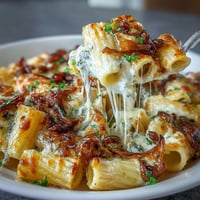
Tonnarelli is the traditional Roman choice, but spaghetti, bucatini, or rigatoni work beautifully. Long pasta allows the sauce to coat each strand, while ridged shapes trap the pepper and cheese.
- → How do I prevent the pasta from drying out?
Always reserve extra pasta cooking water and serve immediately. The dish should be slightly loose when plated, as it continues to thicken. Add splashes of hot pasta water to revive the sauce if needed.
- → Should I toast the peppercorns whole or cracked?
Crack the peppercorns coarsely before toasting to release maximum flavor and aroma. Toasting in a dry skillet for about a minute intensifies their spicy, floral notes without burning.