 Save
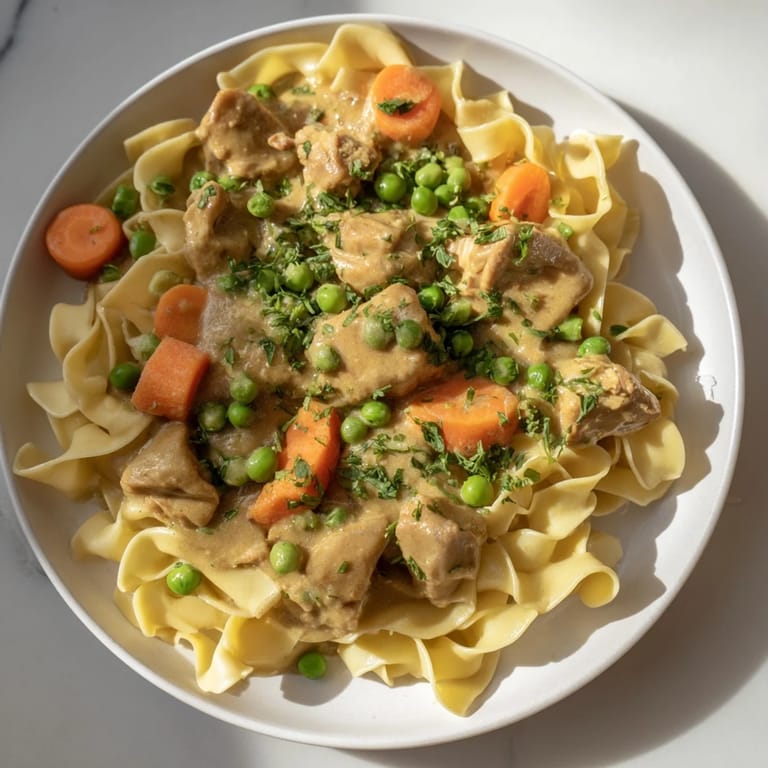
Save There's something about the smell of butter and onions hitting a hot pan that just says home to me. My mom used to make this creamy chicken and noodle dish on Tuesday nights, and I'd hover near the stove waiting for that moment when the sauce would suddenly thicken into something silky and rich. Years later, I realized I was actually making it better than I remembered—not because I'm a better cook, but because I finally understood that the magic was in taking your time with those vegetables and not rushing the roux. This is the kind of meal that makes everyone at the table relax a little, knowing something genuinely comforting is on their plate.
I made this for my partner on a random Thursday when we both needed something warm and uncomplicated. We sat at the kitchen counter with bowls in our laps, and neither of us spoke for a solid five minutes—just ate. That's when I knew it was a keeper. The kind of recipe that doesn't need fanfare, just a spoon and someone you like sitting across from you.
Ingredients
- Chicken breasts or thighs (500 g): Thighs stay more tender if you're not watching the clock like a hawk, but breasts work fine if you don't overcook them—aim for just cooked through, still juicy.
- Butter and olive oil: The butter gives you flavor, the oil keeps it from burning—use both and you've already won half the battle.
- Yellow onion, carrots, and celery: This is your aromatic base, and taking five minutes to soften them properly makes the whole dish deeper and rounder in flavor.
- Garlic: Mince it fresh if you can; jarred works, but fresh makes a real difference in how clean the sauce tastes.
- All-purpose flour: This is your thickener—don't skip it or try to substitute it without knowing what you're doing.
- Chicken broth, milk, and heavy cream: The broth adds savory depth, the milk keeps it from being too heavy, and the cream is what makes you close your eyes on the first spoonful.
- Dijon mustard, thyme, parsley, and paprika: These aren't just seasonings—they're what make this feel intentional, not like something you threw together from a can.
- Egg noodles: Wide ones trap the sauce better than thin ones, and they have this tender texture that actually absorbs flavor instead of just carrying it.
- Frozen peas: They add a little brightness and color without requiring any extra work.
Tired of Takeout? 🥡
Get 10 meals you can make faster than delivery arrives. Seriously.
One email. No spam. Unsubscribe anytime.
Instructions
- Season and sear your chicken:
- Pat the chicken dry, then hit it with salt and pepper while your pan is getting hot with butter and oil. You want color here—golden brown edges mean better flavor, about five minutes total.
- Build your vegetable base:
- Once the chicken is out, add your onion, carrots, and celery to the same pan where all those flavorful browned bits are clinging to the bottom. Let them soften for a few minutes, then add the garlic and give it one minute so it blooms without burning.
- Make your roux:
- Sprinkle the flour over the vegetables and stir constantly for a minute or two—you're cooking out the raw flour taste and creating the thickening base for your sauce. It should smell slightly toasted.
- Build the sauce slowly:
- Pour in your broth while whisking, making sure no lumps form, then add milk and cream gradually. The whisk is your friend here—keep moving it and you'll end up with something silky instead of grainy.
- Season and simmer:
- Stir in the mustard, thyme, parsley, and paprika, then taste and adjust salt and pepper. Let it bubble gently for five minutes, stirring often—you'll feel it thicken under your spoon like magic.
- Cook your noodles separately:
- While the sauce is doing its thing, get water boiling and cook your noodles until they're just shy of completely tender. You want them to keep their shape when they hit that creamy sauce.
- Bring it all together:
- Return the chicken to the sauce along with the peas, let everything warm through for a few minutes, then add your drained noodles and toss until every strand is coated. Finish with fresh parsley if you have it.
 Save
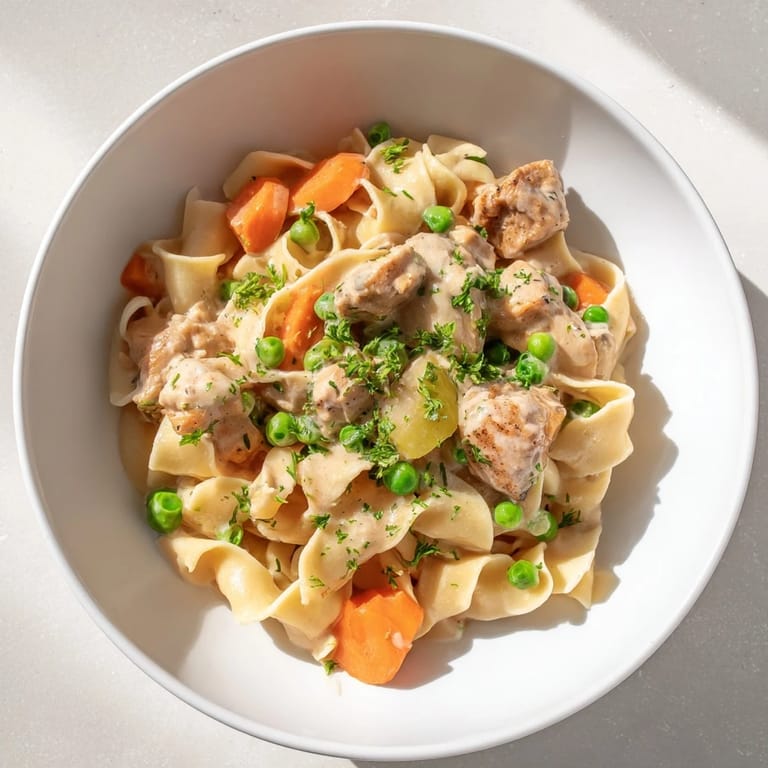
Save There's a moment near the end, when you're stirring the noodles into that creamy sauce and the whole pot comes together into one cohesive, silky thing, where you realize this isn't complicated cooking—it's just careful cooking. That moment reminds me why I keep coming back to recipes like this.
The Secret to a Smooth Sauce
The roux is doing more work than you think. When you cook that flour in butter and vegetables for a full minute or two, you're not just thickening the liquid—you're creating a base that will absorb the cream and broth evenly. I learned this the hard way by rushing it, ending up with a sauce that broke and looked curdled. The whisking matters too. It doesn't take strength, just constant gentle motion while you're pouring in your liquids, and you'll get something restaurant-quality without any stress.
Why This Works as Comfort Food
Creamy pasta dishes work because they hit something primal about wanting warmth and fullness at the same time. The noodles give you substance, the sauce gives you richness, and the chicken gives you protein that actually makes you feel satisfied instead of reaching for a snack an hour later. This isn't health food, but it's honest food—it tastes like someone cared enough to cook it properly.
Making It Your Own
This recipe is flexible in the ways that matter. If you have white wine, add a splash when you're sautéing the vegetables—it adds a subtle brightness that makes the whole dish feel more refined. Mushrooms work beautifully if you sauté them with the onions and carrots. Some people use rotisserie chicken to cut down on cooking time, which is perfectly smart, not cheating. The fresh parsley at the end is optional, but it's worth doing because it adds a little color and freshness that your brain registers as something to look forward to with each bite.
- If your sauce seems too thick, thin it with a splash of broth or milk—it should coat the noodles, not glue them together.
- Taste before serving and adjust the seasonings; salt in particular varies wildly between broths, so trust your palate.
- This keeps well in the fridge for three days and reheats gently on the stovetop with a splash of broth to loosen it up.
 Save
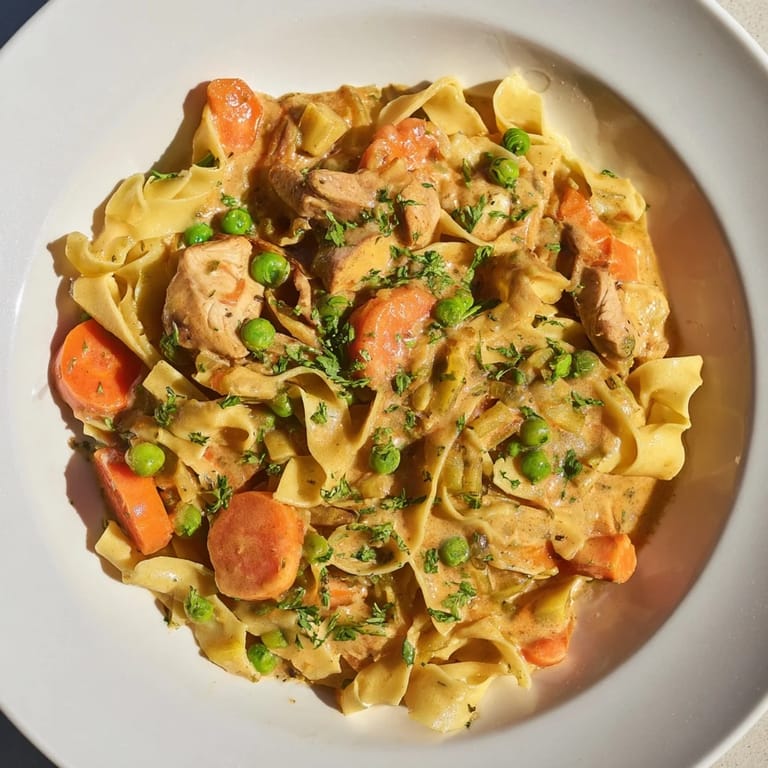
Save This is the kind of recipe that rewards you for paying attention without demanding perfection. Make it once and you'll make it again, probably on a night when you need something that tastes like someone loves you.
Saffron Brook Recipe Q&As
- → What type of chicken works best for this dish?
Boneless, skinless chicken breasts or thighs are ideal for tender, evenly cooked pieces.
- → Can I substitute the egg noodles with another pasta?
Yes, wide noodles or similar pasta like pappardelle work well to hold the creamy sauce.
- → How do I achieve the creamy sauce texture?
Sautéing flour with butter to create a roux before gradually adding broth and dairy helps thicken the sauce smoothly.
- → What vegetables enhance the flavor best?
Onion, carrots, celery, and garlic provide a rich aroma and balanced sweetness to complement the creamy base.
- → Is it possible to add more herbs or spices?
Yes, fresh parsley, dried thyme, paprika, and Dijon mustard can be adjusted to taste for added complexity.