 Save
Save I remember standing in a small Barcelona wine bar on a summer evening, mesmerized by a cheese board arranged like a jeweled mosaic—deep burgundies bleeding into brilliant golds, each color telling its own story. The owner explained that the colors weren't accidental; they were a conversation starter, a visual feast that made people slow down and really taste. That night sparked an obsession with color-blocked platters, and the Crimson & Gold Gala was born from that memory, a dish that turns appetizers into edible art.
I first made this for my sister's engagement party, and what struck me wasn't just the compliments about how beautiful it looked—it was watching people actually pause before eating, pulling out their phones to photograph it, then lingering over the flavors. That moment when food becomes a memory before it even touches someone's tongue, that's when I knew I'd found something special.
Ingredients
- Fresh sweet cherries: The heart of your reds—they should be plump and deeply colored, not those pale ones. I learned the hard way that the quality of your cherries determines whether this platter sings or falls flat.
- Wine-soaked cheese (Drunken Goat or Merlot BellaVitano): This is your secret weapon. The wine infusion adds complexity that regular cheese can't match, and it's what people remember after everything else is gone.
- Dried cranberries: They provide tartness and textural contrast—crispy against creamy, which is essential for keeping each bite interesting.
- Pomegranate seeds: These jewels aren't just decorative; they burst with flavor and add that crucial freshness that prevents the board from feeling too heavy.
- Roasted yellow bell peppers: Roasting transforms them into something entirely different—sweeter, smoother, more refined than raw. This step matters more than you'd think.
- Aged cheddar or gouda: Cube them generously; aged cheese has character and won't disappear into the background next to bold flavors.
- Gold leaf-topped crackers: These anchor your gold section visually and texturally. If you can't find them, apply edible gold leaf yourself—it's easier than it sounds and makes guests feel celebrated.
- Golden raisins: Sweeter and more delicate than regular raisins, they add gentle sweetness that balances the savory elements.
- Yellow cherry tomatoes: Halve them to expose their seeds and juice; they're the bridge between fresh and structured elements.
- Edible gold leaf: Optional but worth it—a single sheet transforms a cracker into something ceremonial and special.
- Fresh basil or microgreens: Don't skip this garnish. The green provides relief for the eye and a hint of herbaceousness that ties everything together.
Tired of Takeout? 🥡
Get 10 meals you can make faster than delivery arrives. Seriously.
One email. No spam. Unsubscribe anytime.
Instructions
- Roast your peppers until they sing:
- Set your oven to 220°C (425°F) and place whole yellow peppers directly on a baking sheet. As they roast for 10–12 minutes, they'll blister and char—this is exactly what you want. The skin will blacken in spots, which means the flesh underneath is caramelizing. Turn them occasionally so they roast evenly. When they're charred on all sides, transfer them to a bowl and cover it tightly. Let them steam for 5 minutes; this step loosens the skin and makes peeling almost effortless. Once cooled, slip the skins right off, remove the seeds, and slice into elegant strips. Drizzle with olive oil and crack black pepper over them. This is where the magic happens—these peppers taste nothing like raw peppers.
- Add gold leaf to your crackers with grace:
- If you're using edible gold leaf, handle it gently. These sheets are tissue-thin and want to cling to everything. Follow the package instructions, but typically you'll use tweezers and a light hand. Apply it just before serving so it stays pristine and catches the light.
- Build your crimson block:
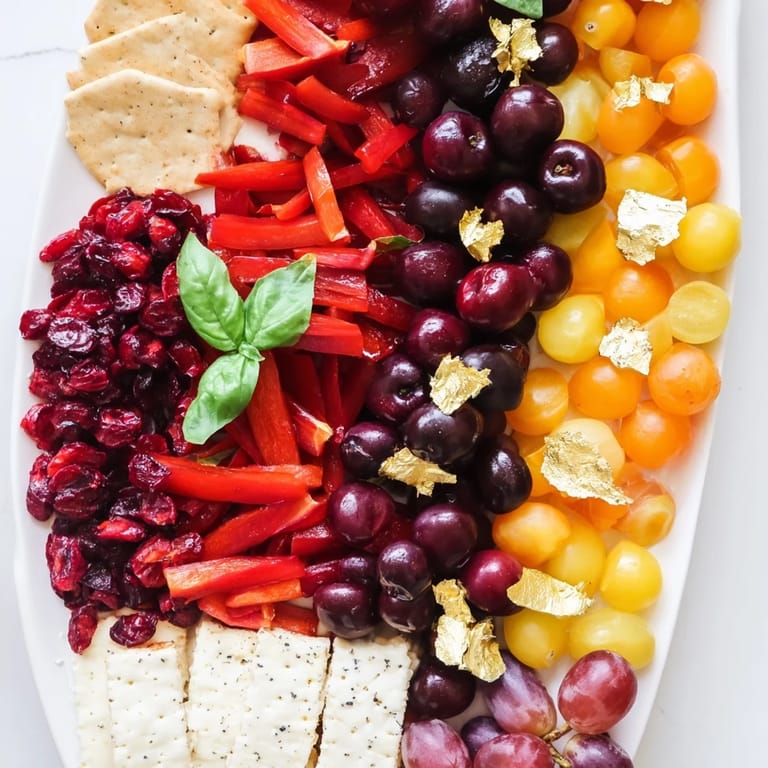
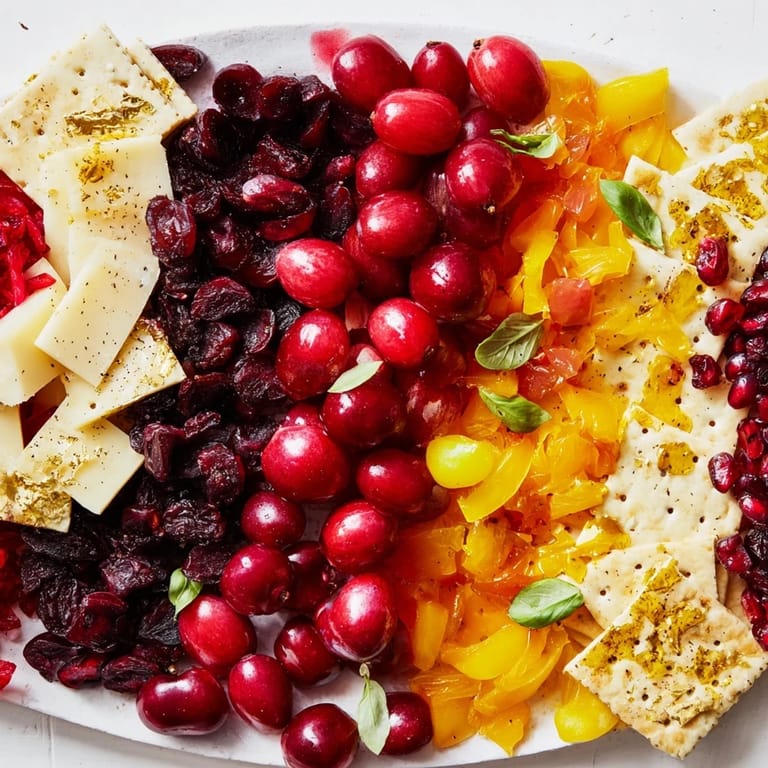
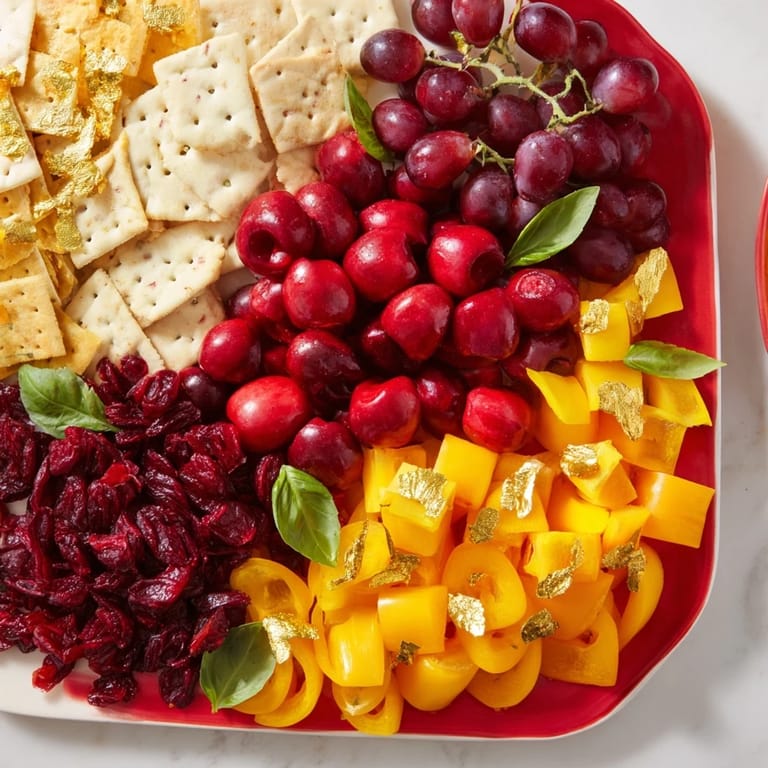
- On one side of your platter or board, arrange all the deep reds in a tight, unified section. Start with the wine-soaked cheese slices as your anchor, then cluster the pitted cherries around them. Add the dried cranberries, halved red grapes, and pomegranate seeds in pockets throughout. The key is density—pack them close enough that the section reads as a solid block of burgundy and ruby from across the table. Leave no white board showing.
- Create your contrasting gold block:
- On the opposite side, mirror that density with your gold elements. Arrange roasted pepper strips in loose bundles, scatter the cheese cubes, place your gold leaf crackers standing slightly upright for visual drama, and tuck golden raisins and halved yellow tomatoes into the spaces. Again, aim for that visual cohesion—someone looking at your platter should see two distinct color territories.
- Finish with flourish:
- Scatter fresh basil leaves or delicate microgreens across the board, letting them spill slightly between the red and gold sections. This breaks up the stark contrast just enough and adds a whisper of freshness. Let guests know this platter is meant to be explored—there's no wrong way to eat it.
- Serve with intention:
- Present this immediately while the roasted peppers are still warm and the colors are vibrant. The entire experience depends on that first visual moment.
 Save
Save There's a moment that happens almost every time I make this—someone reaches for a piece of wine-soaked cheese next to a roasted pepper strip, tastes it with their eyes closed, and says something like 'wow, I didn't expect that flavor.' That's the moment when a platter becomes a memory, when food stops being sustenance and becomes conversation.
The Art of Color in Cooking
Color isn't just visual in cooking; it's a flavor promise. Deep reds suggest richness and slight tartness, which is exactly what wine-soaked cheese and pomegranate deliver. Bright golds suggest sweetness and warmth, and roasted peppers with golden raisins fulfill that promise. When you build a board around color logic, every bite makes sense to the palate before it even reaches the tongue. This principle changes how you think about composition—you're not just making it pretty, you're building flavor architecture.
Wine Pairing and Serving Philosophy
This platter exists in conversation with wine and company. A light white wine—think Sauvignon Blanc or Pinot Grigio—echoes the gold section while contrasting the deep reds. Serve this on a wooden board or ceramic platter that's large enough to give each element breathing room. The generosity of space makes people feel generous in return; they'll linger longer, taste more thoughtfully, and actually connect with each other instead of just consuming.
Adapting Without Apologizing
If edible gold leaf feels precious or unavailable, turmeric or saffron threads will give you the golden hue without the luxury price. For a vegan version, plant-based aged cheeses exist and work beautifully—look for ones that have been aged and developed actual flavor. Honey drizzled lightly over the gold section adds another dimension of sweetness and makes the whole thing feel even more celebratory, especially if you're serving this at a special occasion.
- The beauty of this recipe is flexibility; the structure is what matters, not the exact ingredients
- Shop for cheese at a proper cheese counter where someone can help you find wine-soaked varieties you've never encountered
- Roast your peppers earlier in the day if needed—they're actually better slightly cool, which gives you more time to focus on arrangement
 Save
Save This platter taught me that hospitality isn't about complexity or hours spent cooking; it's about intention and presence. Serve this with genuine delight in feeding people something beautiful, and they'll taste that care in every bite.
Saffron Brook Recipe Q&As
- → How do I roast the yellow peppers for the platter?
Roast whole yellow bell peppers at 220°C (425°F) for 10–12 minutes until skins are charred. Let them steam covered, then peel and slice before seasoning with olive oil and black pepper.
- → What cheeses complement the deep red and gold ingredients?
Wine-soaked cheeses like Drunken Goat or Merlot BellaVitano work wonderfully with the deep reds, while aged cheddar or gouda pairs well with golden elements for balanced flavor.
- → Can I substitute the gold leaf for a different garnish?
Yes, you can replace gold leaf with turmeric or saffron threads to maintain the golden appearance if gold leaf is unavailable.
- → What is the best way to arrange the platter for maximum impact?
Arrange crimson ingredients in a tight block on one side and golden items on the opposite side to create a vivid color contrast and inviting presentation.
- → Are there vegan options for this platter?
Use plant-based cheeses and crackers to create a vegan-friendly version while keeping the contrast of reds and golds intact.