 Save
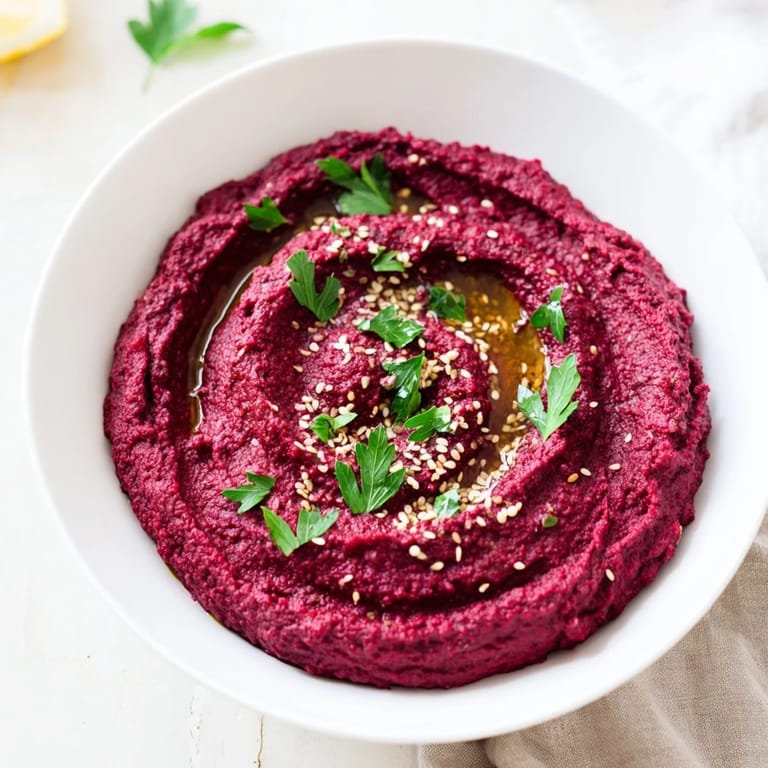
Save The first time I made this, my kitchen looked like a crime scene. I was convinced something had gone terribly wrong. Then I tasted it.
I brought this to a dinner party last fall, and my friend Sarah literally texted me the next morning demanding the recipe. She said her husband ate half the bowl standing at the counter.
Ingredients
- 1 medium beet: Roasting concentrates the natural sugars and gives that earthy sweetness that makes this hummus sing
- 1 small garlic clove: One clove is enough because roasting mellows the harshness
- 400 g chickpeas: Drain and rinse thoroughly to remove the canning liquid which can make hummus gummy
- 3 tbsp tahini: Look for a brand that is well stirred and creamy, not separated
- 2 tbsp fresh lemon juice: Bright lemon cuts through the rich tahini and sweet beet
- 2 tbsp extra virgin olive oil: Use the good stuff here because you can really taste it
- 1/2 tsp ground cumin: This bridges the Mediterranean flavors with the earthy beet
- 1/4 tsp sea salt: Start conservative and add more at the end
- 2 to 3 tbsp cold water: The secret to silky smooth hummus texture
Tired of Takeout? 🥡
Get 10 meals you can make faster than delivery arrives. Seriously.
One email. No spam. Unsubscribe anytime.
Instructions
- Roast the beet:
- Wrap your scrubbed beet tightly in foil and roast at 200°C for about 45 minutes until a fork slides right through. Let it cool enough to handle, then slip off that skin and chop it roughly.
- Blend the base:
- Toss the beet, chickpeas, garlic, tahini, lemon juice, olive oil, cumin, and salt into your food processor. Run it for a good 2 minutes, stopping to scrape down the sides.
- Add cold water:
- With the motor running, drizzle in cold water one tablespoon at a time. Watch how the texture transforms from thick to impossibly creamy.
- Taste and adjust:
- This is the moment that matters. Grab a spoon and decide if it needs more salt, more lemon, or maybe nothing at all.
- Finish with flourish:
- Pile it into your prettiest bowl, make a little well in the center, and drizzle with olive oil like you mean it.
 Save
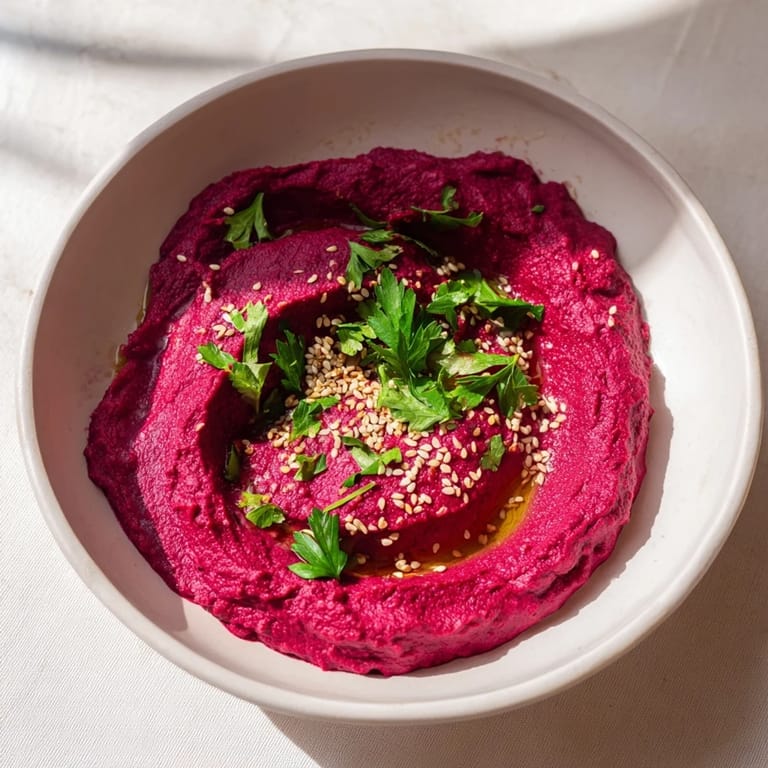
Save My niece asked if it was strawberry frosting at first. She took one tentative bite and proceeded to eat three carrots worth of dipping vegetables without noticing.
Make It Yours
A pinch of smoked paprika transforms this into something entirely different. I have also played with adding fresh herbs like cilantro or parsley right into the blender when I want it green and pink simultaneously.
Serving Ideas
This hummus works as a sandwich spread that makes lunch feel special. I have also thinned it with extra water and used it as a vibrant sauce for grain bowls or roasted vegetables.
Storage Tips
The color actually intensifies overnight as the beet continues to release its pigment. Store it in the coldest part of your refrigerator and give it a good stir before serving.
- Bring it to room temperature for the best flavor and texture
- Add a splash of lemon right before serving leftovers to brighten it up
- The top may oxidize slightly but just stir it back in
 Save
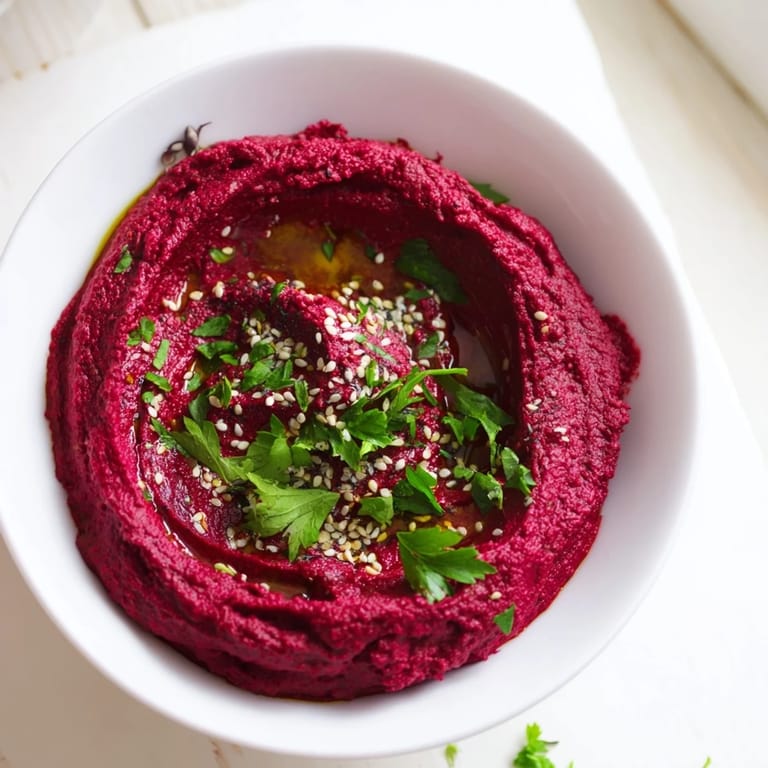
Save Every time I make this now, I think about how something so simple can stop conversation and bring people to the table.
Saffron Brook Recipe Q&As
- → What makes roasted beet hummus different from classic hummus?
Roasted beet hummus gains natural sweetness and a stunning magenta color from the roasted beets. The earthy beet flavor complements the nutty tahini while creating a vibrant, creamy dip that's visually striking and subtly sweeter than traditional chickpea-based versions.
- → Can I use raw beets instead of roasted?
Roasting beets develops their natural sugars and creates a sweeter, more complex flavor. Raw beets would taste earthy and harsh. If short on time, use precooked vacuum-sealed beets, though freshly roasted yields the best depth and sweetness.
- → How long does this keep in the refrigerator?
Store in an airtight container for up to four days. The flavors actually meld and improve over time. The vibrant color may oxidize slightly, but a squeeze of fresh lemon juice before serving helps maintain brightness and prevents browning.
- → What should I serve with beet hummus?
Pita bread or chips, fresh vegetables like carrots and cucumber, crackers, or use as a sandwich spread. The color creates a beautiful contrast with white vegetables like cauliflower or jicama. Also excellent as a base for grain bowls.
- → Can I make this without tahini?
Tahini provides essential creaminess and nutty flavor. Substitute with Greek yogurt for a tangier version, or use extra olive oil and a tablespoon of almond butter. The texture will be slightly different but still delicious and spreadable.
- → Why add cold water during blending?
Cold water thins the hummus to your desired consistency without adding fat. Start with one tablespoon and add more as needed—the mixture should be smooth and creamy but still hold its shape when scooped. Room temperature water works fine too.