 Save
Save The first time I truly understood schnitzel was in a small Vienna kitchen where my grandmother's friend let me watch her pound meat so thin it was almost see-through. She moved with such purpose, tapping the mallet in quick, even strokes, explaining that patience here meant crispy gold later. Years later, I realized schnitzel isn't about the fancy technique—it's about respecting the simplicity of quality meat and giving it the golden crust it deserves.
I made schnitzel for the first time in my own kitchen on a Tuesday night when I had no plan for dinner. The oil hit the pan with a confident sizzle, and suddenly the whole apartment smelled like something from a Viennese restaurant—that moment when you realize you've actually nailed something made me grin at the stove like an idiot. My partner came in wondering what was happening, and within minutes we were cracking jokes with our mouths full, golden breadcrumbs flying everywhere.
Ingredients
- Pork chops or chicken breasts (4, about 150 g each): Pounded thin is the secret—this isn't laziness, it's engineering. Thin meat cooks through while the breading gets crispy, and it stretches further so you feed more people.
- All-purpose flour (100 g): The invisible hero that helps the egg stick and creates the first barrier to crispiness.
- Eggs (2 large): Mixed with milk to create the glue that holds your breadcrumb coat in place—don't skip the milk, it makes the coating adhere better.
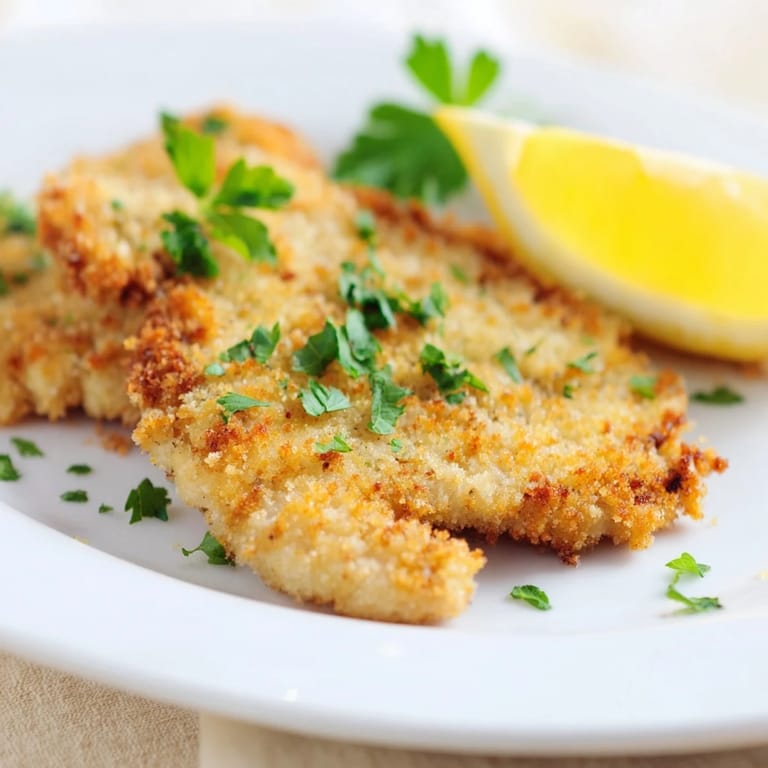
- Fine dry breadcrumbs (150 g): Fine crumbs give you that delicate crust; panko works if that's what you have, but the texture shifts slightly.
- Vegetable oil or clarified butter (120 ml): Clarified butter is traditional and tastes incredible, but vegetable oil works when butter isn't on hand and won't smoke as easily.
- Salt and freshly ground black pepper: Season generously—the meat needs backbone before anything else happens to it.
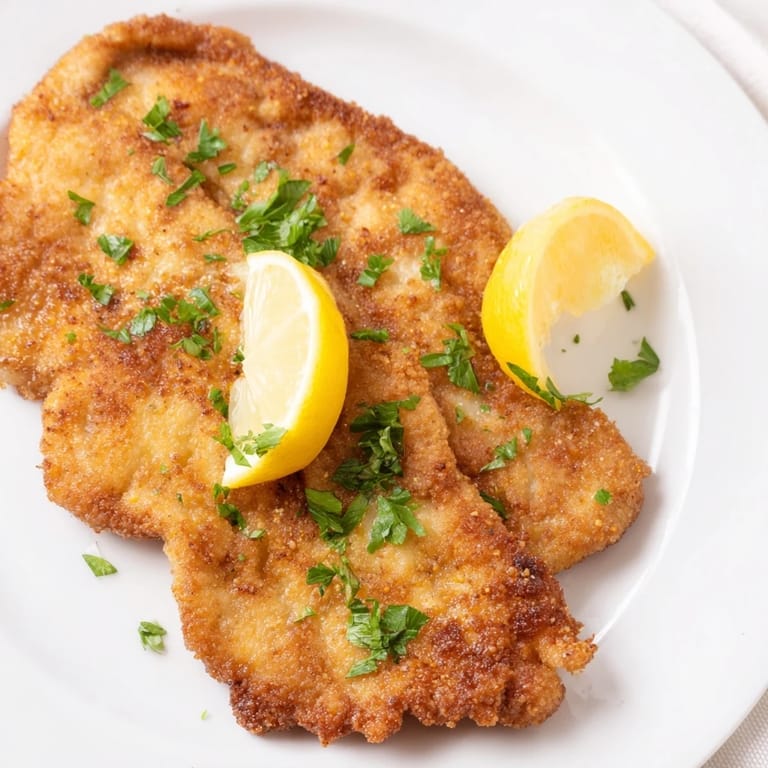
- Lemon wedges and fresh parsley: These aren't garnish; they're the brightness that cuts through the richness and reminds your palate what you're eating.
Tired of Takeout? 🥡
Get 10 meals you can make faster than delivery arrives. Seriously.
One email. No spam. Unsubscribe anytime.
Instructions
- Pound your meat into submission:
- Place each piece between two sheets of plastic wrap and tap with a meat mallet or rolling pin until it's about 1/4 inch thick. Use even strokes and listen for the sound to change—it tells you when the fibers have relaxed and the meat is ready.
- Season with intention:
- Salt and pepper both sides generously right after pounding, before anything else. This is when the meat is most receptive.
- Set up your breading station:
- Three shallow plates in a row: flour in the first, beaten eggs mixed with milk in the second, breadcrumbs in the third. This assembly line matters—no scrambling between steps.
- Coat with care:
- Dredge each cutlet in flour, shake off excess, dip into egg, then press gently into breadcrumbs. The word is gently—you want the crumbs to stick, not compress into a thick shell.
- Get the oil smoking:
- Heat your oil or clarified butter in a large skillet over medium-high heat until it shimmers and moves like water. Test with a breadcrumb corner; it should sizzle immediately.
- Fry with confidence:
- Add cutlets in batches if needed (crowding the pan means steam instead of crust). Cook 2 to 3 minutes per side until golden brown and the meat feels firm when poked. The sizzle should be constant, never apologetic.
- Drain and serve:
- Transfer to a paper towel-lined plate for just a moment—long enough to lose excess oil but not so long the residual heat makes them soggy. Serve immediately with lemon wedges and parsley.
 Save
Save There was a moment when my friend watched me serve schnitzel and said, "You made this?" like I'd announced I'd learned to fly. That look—that split second of surprise before the taste—taught me that simple food done right has a kind of quiet power. It's not complicated enough to feel intimidating, but it feels special anyway.
The Breading Technique That Changed Everything
Early on, I'd press the breadcrumbs into the meat like I was trying to seal a vault. This made sense to me—more adhesion, right? Wrong. What I actually made was a thick, pale, slightly rubbery coating that trapped steam and never crisped properly. The day I learned to just press gently, letting gravity and the egg do the work, the whole dish transformed. Now my schnitzels are delicate enough to shatter at a fork's pressure, golden because the thin coating fries faster than it can absorb oil. It's counterintuitive until you taste it, and then it becomes obvious.
Why Thin Matters More Than You Think
Pounding meat thin isn't just a step—it's the entire philosophy of schnitzel. When the meat is thin, the heat distributes evenly, so the inside is cooked through before the outside burns. It also means the meat stays tender because the fibers break down under the mallet, making every bite tender. I've tried taking shortcuts with thicker pieces and the result is always a dry inside with an aggressively brown outside. Respect the pound, and the meat respects you back.
Building the Perfect Sides
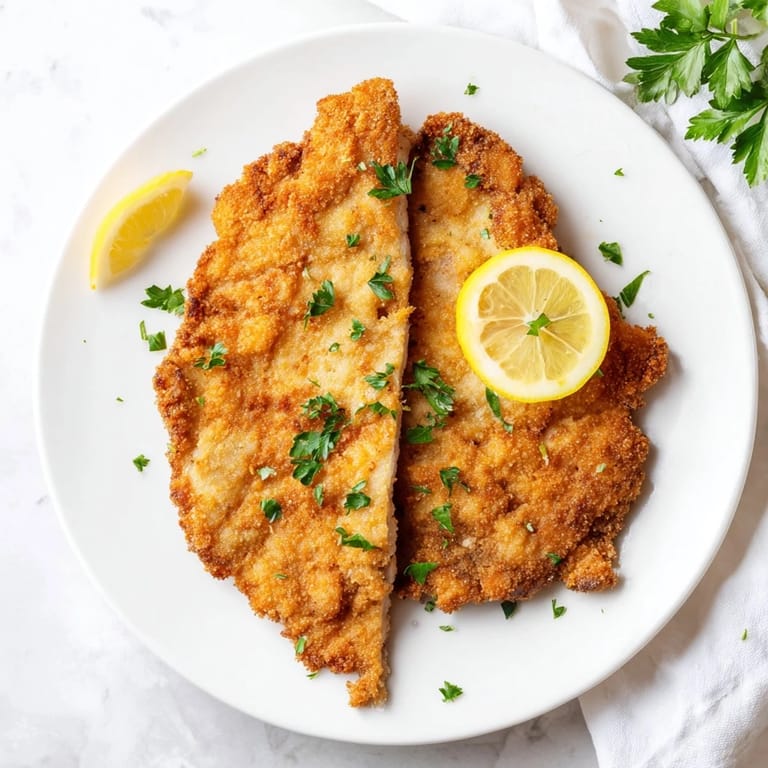
Schnitzel is rarely served alone in Germany—it arrives with something cooling and acidic to balance the richness. A crisp potato salad with vinegar, tangy cucumber salad, or even just fries with a squeeze of lemon become part of the experience, not an afterthought. I've learned that the lemon wedge beside the plate isn't decoration; squeeze it over the schnitzel and suddenly the whole thing feels lighter and brighter, like you've added another dimension.
- Serve with warm potato salad dressed in vinaigrette for authentic tradition and a tangy counterpoint to the richness.
- Cucumber salad (cool, crunchy, vinegary) is the refreshing companion that makes you want another bite.
- Even simple fries and fresh lemon work beautifully if you're building a casual weeknight version.
 Save
Save Schnitzel taught me that the best dishes are often the most forgiving. There's room for mistakes, yet the result still feels special. It's the kind of meal that reminds you why cooking for yourself matters—not because it's complicated, but because it tastes like you cared.
Saffron Brook Recipe Q&As
- → What type of meat is best for this cutlet?
Pork chops or chicken breasts work best when pounded thin for an even, tender texture.
- → How do I achieve a crispy crust?
Use fine breadcrumbs and avoid pressing them too firmly onto the meat before frying.
- → What fat is preferred for frying?
Vegetable oil or clarified butter ensures a golden, crispy finish without burning.
- → Why pound the meat thin?
Pounding ensures uniform thickness for even cooking and tender results.
- → What sides complement this dish?
Traditional accompaniments include potato salad, cucumber salad, or fries, enhancing the flavor balance.
- → How to serve for best flavor?
Serve immediately with lemon wedges to add a fresh, zesty touch to the crisp cutlets.