 Save
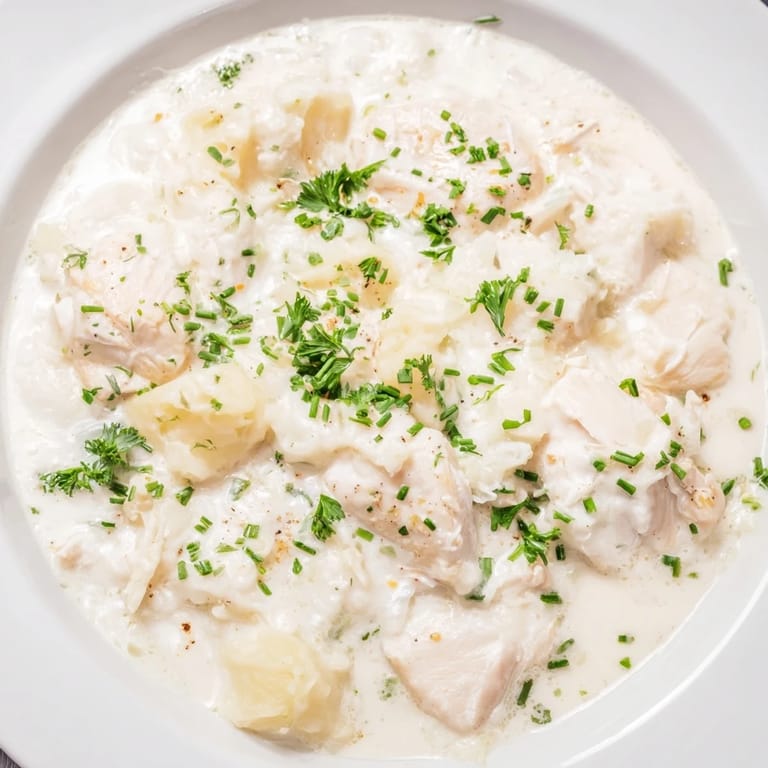
Save My first encounter with this stew happened on a grey Icelandic afternoon when a friend's grandmother ladled it into bowls with the kind of practiced ease that only comes from decades of kitchen work. The aroma—creamy, briny, touched with fresh herbs—filled her small kitchen near Reykjavik so completely that the outside world seemed to disappear. I watched her add the milk with such care, barely letting it simmer, and thought how something so simple could taste so deeply comforting. That bowl changed how I thought about what a meal could be.
I made this for my partner on a particularly difficult winter evening, the kind where the sky goes dark by four o'clock and everything feels a bit too heavy. They sat at the kitchen counter while I cooked, and the smell alone seemed to lift something. When they took that first spoonful, their whole face softened, and they didn't say much—just asked quietly for seconds. Sometimes the most meaningful meals are the ones that arrive exactly when they're needed most.
Ingredients
- Cod or haddock fillets (500 g): Use skinless, boneless fillets from a reliable fishmonger; the gentle poaching method means quality matters, and a day-old fillet will be noticeably less delicate than fresh.
- Butter (60 g): Don't skimp here—good butter adds a sweetness that makes the whole stew taste more alive.
- Whole milk (500 ml): The backbone of the stew's creaminess; whole milk contributes both richness and the right body.
- Heavy cream (100 ml): This is what transforms good into luxurious, so measure it properly.
- Potatoes (500 g): Floury or waxy potatoes work best; I prefer a mix so some mash slightly while others hold their shape.
- Onion (1 medium): Finely chopped onion softens into sweetness and becomes nearly invisible in the final stew.
- Fresh parsley (2 tbsp): This is your brightness and contrast; fresh herbs matter far more here than in heavier dishes.
- Fresh chives (2 tbsp): A gentler onion flavor that finishes the bowl without overwhelming anything.
- Bay leaf (1): Used only for poaching the fish, it flavors the cooking liquid subtly.
- Salt and white pepper: White pepper dissolves invisibly and keeps the stew's pale color pure.
- Nutmeg (pinch, optional): A whisper of nutmeg rounds out the cream if you choose to use it.
Tired of Takeout? 🥡
Get 10 meals you can make faster than delivery arrives. Seriously.
One email. No spam. Unsubscribe anytime.
Instructions
- Prep your potatoes first:
- Peel and dice your potatoes into roughly ¾-inch pieces—smaller than you might think, since they'll soften further as the stew cooks. Pop them in a pot of salted water and bring to a boil, then let them cook until completely tender, about 12 to 15 minutes. You want them soft enough to fall apart slightly when you mash them, but not so mushy they become grainy.
- Poach the fish gently:
- In a separate saucepan, cover your fish fillets with water, add the bay leaf and a pinch of salt, then let it simmer very gently—barely a whisper of bubbles—for 6 to 8 minutes until the fish turns opaque and flakes easily at the gentlest touch. Pour off the liquid into a measuring cup (you'll use about a third of a cup later) and let the fish cool slightly before breaking it into large, tender pieces.
- Build your base with butter and onion:
- Melt butter in your large pot over medium heat and add the finely chopped onion, stirring often until it becomes soft and translucent, roughly 5 minutes. You'll smell when it's ready—sweet and fragrant, without any sharpness left.
- Bring potatoes and fish together:
- Drain your potatoes well and add them to the onion and butter, then gently mash with a potato masher, leaving plenty of chunks for texture. Fold in the flaked fish and pour in that reserved poaching liquid, stirring very carefully so the fish stays in pieces.
- Add the cream and milk:
- Pour in the milk and cream slowly, stirring constantly over low heat, until the stew is heated through and creamy. This is crucial: keep the heat low and never let it boil, or the cream will separate and the stew will taste grainy rather than silky.
- Season thoughtfully:
- Taste as you go, adding salt and white pepper in small amounts. If you're using nutmeg, just a tiny pinch—you should smell it before you taste it. Stir in half your fresh parsley and chives, reserving the rest for garnish on each bowl.
- Finish and serve:
- Ladle into warm bowls and top each with a sprinkle of the remaining fresh herbs. If you have dark rye bread and good butter on hand, serve it alongside; something about that combination feels essential to the whole experience.
 Save
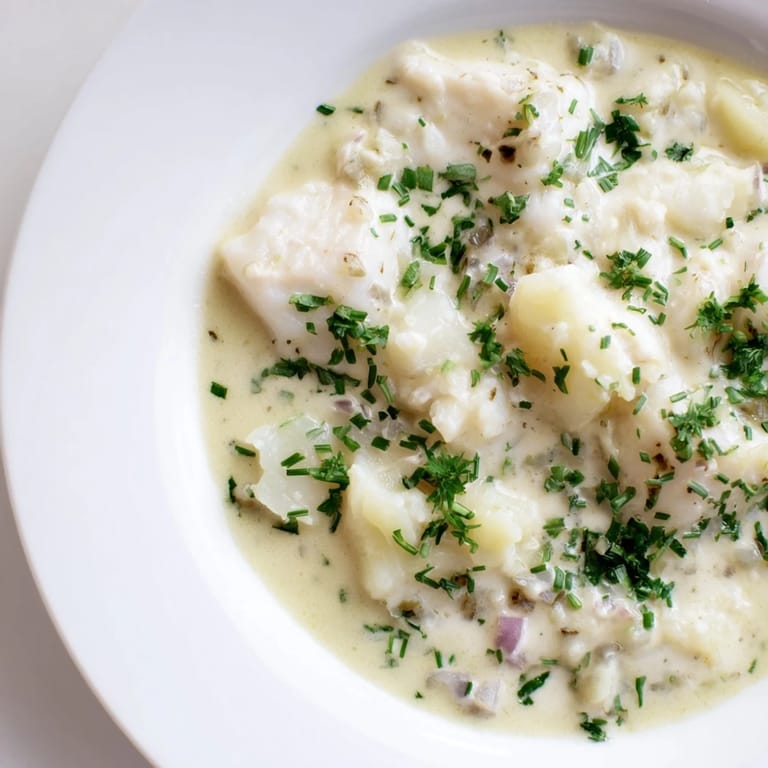
Save There's something almost sacred about sitting down to this stew with someone you care about, the bowl warming your hands, the spoon moving slowly because you want it to last. It tastes like what comfort actually means—not flashy or impressive, but deeply, quietly nourishing in a way that fills more than just your stomach.
Why This Stew Works
The magic here isn't in any secret ingredient; it's in how the potato starch thickens the milk into something creamy without any cream at all—well, almost. The gentle poaching of the fish keeps it tender and delicate rather than dense or flaky, and the butter-softened onion dissolves into the background, adding sweetness without presence. Every element in this stew has learned to play its part without trying to steal the spotlight, which is maybe why it feels so balanced and right.
How to Make It Your Own
This is a very forgiving recipe, and Icelandic cooks have been tinkering with it for generations. If you prefer something lighter, you can skip the cream entirely and lean on the potato starch to give you body instead. Smoked fish, if you can find good quality, adds a completely different character—not better, just different. Some people add a handful of frozen peas in the last minute of cooking, which brightens everything up, while others believe the stew should be purely white and creamy with no additions. There's no right answer here, only what tastes right to you.
Serving and Storage
This stew is best eaten the day you make it, when the herbs are brightest and the cream hasn't started to separate. That said, it does keep in the refrigerator for a couple of days if you must—just reheat it very gently, never letting it come to a boil, and add a splash of milk if it seems too thick. Leftovers are honestly as good as fresh, just treated with a little care.
- Dark rye bread with butter is the traditional companion, though good crusty bread works just as well.
- A crisp white wine or a light beer pairs beautifully alongside, cutting through the richness without overpowering anything.
- Serve in warm bowls, and don't skip the fresh herbs on top—they're your final flourish.
 Save
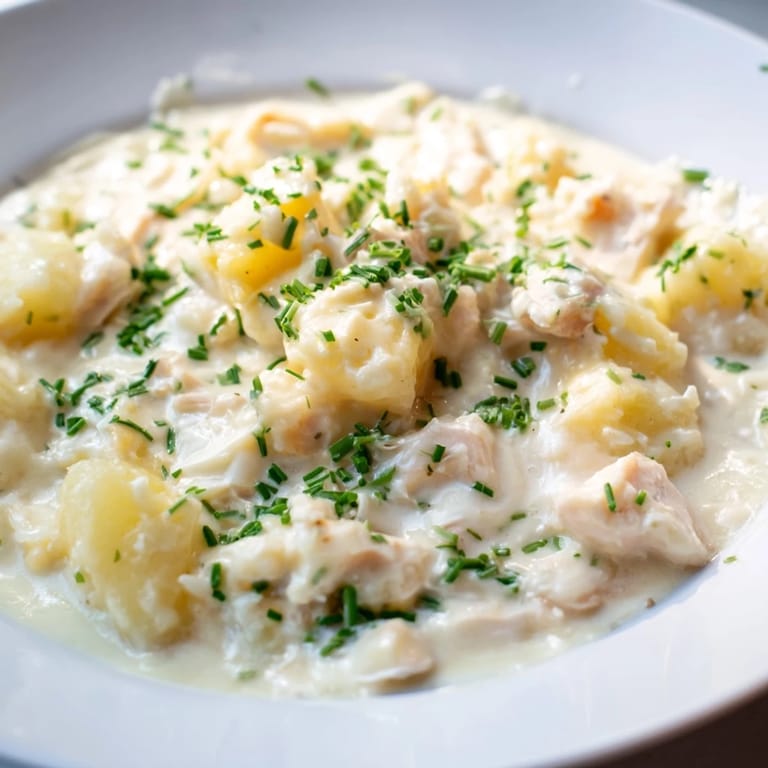
Save This stew has a way of becoming a regular in your kitchen once you make it the first time. It's the kind of meal that asks very little of you and gives back warmth, comfort, and the quiet satisfaction of having made something that tastes like home.
Saffron Brook Recipe Q&As
- → What type of fish is best for this dish?
Cod or haddock fillets work well due to their mild flavor and flaky texture when cooked gently.
- → Can I use a different cooking liquid instead of milk and cream?
Milk and cream create the characteristic creaminess, but a mixture of milk with a bit less cream achieves a lighter texture without losing flavor.
- → How do the herbs affect the final flavor?
Fresh parsley and chives add a bright, fresh contrast to the rich, creamy base, enhancing the overall balance of flavors.
- → Is poaching the fish necessary?
Poaching gently with a bay leaf ensures tender, flaky fish that doesn't overpower the dish while infusing subtle herbal notes.
- → Can this dish be prepared ahead of time?
It can be made in advance and reheated gently, stirring occasionally to maintain creaminess and prevent separation.