 Save
Save I stumbled onto this bowl on a rainy Tuesday when my fridge was half-empty and I had leftover rice going stale. I threw together what I had—some salmon, a lone chicken thigh, half an avocado—and it turned into something I now crave weekly. The ice cube trick came later, born from reheating a bowl at work and watching my sad, dry rice transform into something fluffy again. Now I meal prep these every Sunday and actually look forward to leftovers.
The first time I made this for friends, someone asked if I ordered it from the Japanese spot downtown. I didn't correct them right away. Watching everyone dig in, quiet except for the scrape of chopsticks, felt better than any compliment. One friend scraped her bowl clean and asked for the recipe before she even set down her spoon.
Ingredients
- Skinless salmon fillets: I use wild-caught when I can find it on sale; it holds up better and doesn't fall apart as easily in the pan.
- Boneless, skinless chicken thighs: Thighs stay juicier than breasts and soak up the marinade like a sponge, plus they're more forgiving if you accidentally overcook them.
- Soy sauce: The backbone of both the marinade and the sauce; I keep a bottle of low-sodium on hand so I can control the saltiness.
- Mirin: This sweet rice wine adds a subtle glaze and balancing sweetness that regular sugar just can't replicate.
- Sake: If you don't have sake, dry white wine works fine, but sake gives it that authentic izakaya flavor.
- Sesame oil: A little goes a long way; too much and it overpowers everything, but just a teaspoon makes the whole bowl smell incredible.
- Honey: Helps the proteins caramelize slightly and balances the salty-savory marinade.
- Japanese short-grain rice: This is non-negotiable for texture; long-grain rice won't give you that sticky, satisfying bite.
- Avocado: I wait until it's just ripe, when it yields slightly to pressure but isn't mushy, then slice it right before serving so it doesn't brown.
- Cucumber: Adds a cool, crisp contrast to the warm proteins; I like English cucumbers because they have fewer seeds.
- Carrot: Julienned thin, they add color and a slight crunch that breaks up the soft textures.
- Scallions: Both the white and green parts; they add a sharp, fresh bite that cuts through the richness.
- Toasted sesame seeds: I toast them myself in a dry pan for about two minutes until they smell nutty and turn golden.
- Nori: Optional but recommended; the strips add a hint of the ocean and make it feel more complete.
- Rice vinegar: Brightens the sauce and keeps it from tasting too heavy or one-note.
- Sugar: Just enough to round out the sauce and help the vinegar mellow.
- Ice cubes: The secret weapon for reheating; they melt slowly and steam the rice from the inside without drying it out.
Tired of Takeout? 🥡
Get 10 meals you can make faster than delivery arrives. Seriously.
One email. No spam. Unsubscribe anytime.
Instructions
- Rinse and cook the rice:
- Run cold water over the rice in a fine-mesh strainer, swishing it around with your hand until the water runs clear, not cloudy. This removes excess starch and keeps the rice from turning gummy. Cook it in your rice cooker or a covered pot, then let it sit off the heat for five minutes before fluffing it with a fork so every grain stays separate and fluffy.
- Marinate the proteins:
- Whisk the soy sauce, mirin, sake, sesame oil, and honey together until the honey dissolves completely. Split the marinade between two shallow dishes, add the salmon to one and the chicken to the other, and let them sit for at least ten minutes so the flavors soak in.
- Cook the chicken:
- Heat a nonstick skillet over medium heat without any oil since the marinade has sesame oil already. Lay the chicken thighs flat and cook them for four to five minutes per side until they're golden brown and the juices run clear. Let them rest for a few minutes, then slice them against the grain into bite-sized pieces.
- Cook the salmon:
- Using the same pan, add the salmon fillets skin-side up if there's any skin left, or just flat if they're skinless. Cook for two to three minutes per side until the flesh turns opaque and flakes easily with a fork. Don't overcook or it'll turn dry and chalky.
- Prep the toppings:
- While the proteins rest, slice the avocado, cucumber, and carrot into thin, even pieces. Thinly slice the scallions, including both the white and green parts, and set everything aside in little piles so assembly goes quickly.
- Make the sauce:
- Whisk together the soy sauce, rice vinegar, sesame oil, and sugar in a small bowl until the sugar dissolves completely and the sauce looks glossy. Taste it and adjust if you want it sweeter or tangier.
- Assemble the bowls:
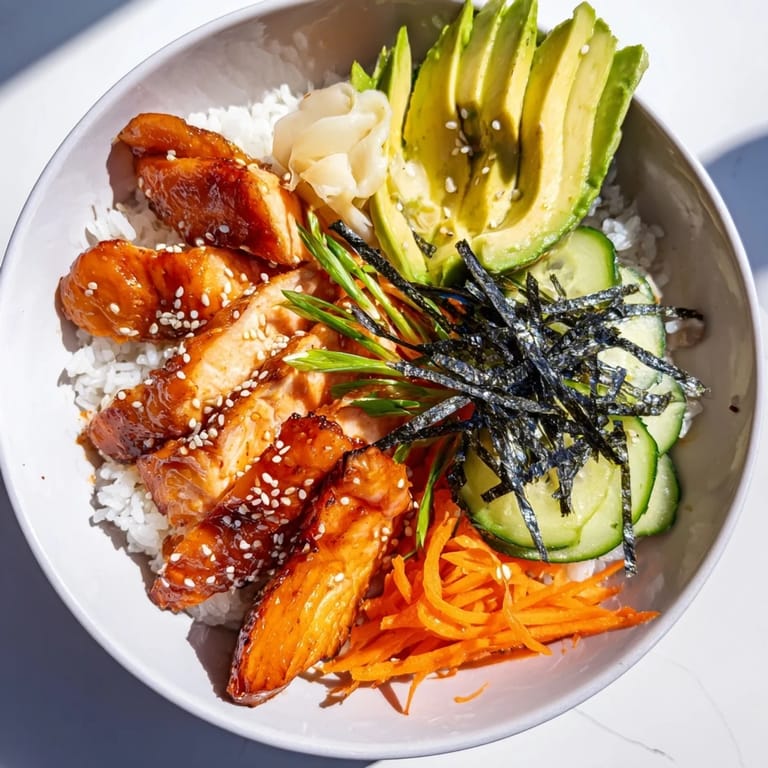
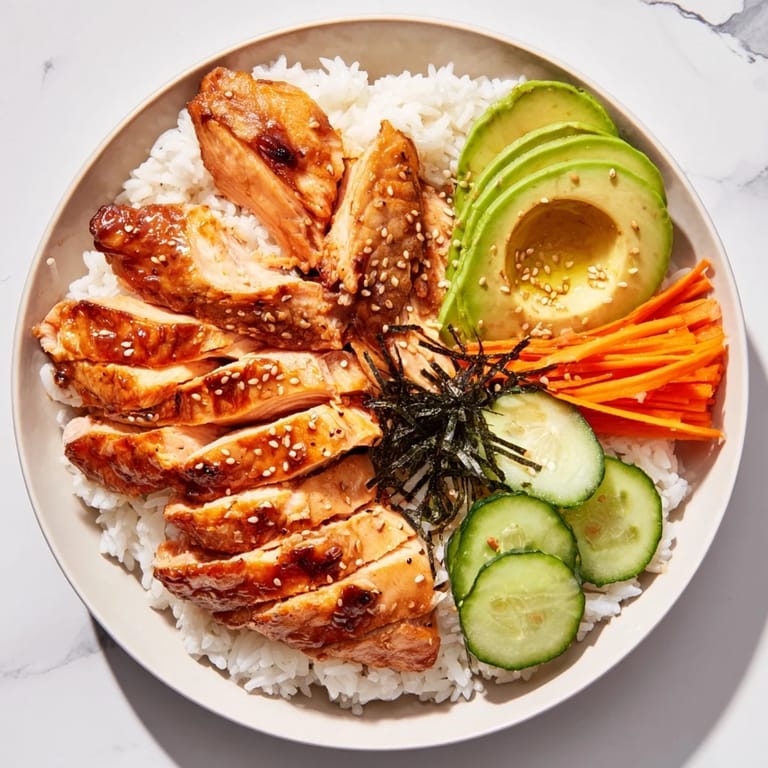
- Divide the fluffy rice among four bowls, then arrange the sliced chicken, flaked salmon, avocado, cucumber, carrot, and scallions over the top in separate sections so it looks like a colorful wheel. Drizzle the sauce over everything, then sprinkle with toasted sesame seeds and nori strips if using.
- Reheat with the ice cube hack:
- If you're reheating a pre-assembled bowl, place one ice cube right in the center of the rice, cover the bowl with a microwave-safe lid or damp paper towel, and microwave on high for one to two minutes. The ice melts slowly and steams the rice back to life without making it soggy or dry.
 Save
Save One Sunday I made five of these bowls for the week ahead, stacking them in the fridge like little treasure boxes. By Thursday, the last bowl tasted just as good as the first, maybe better because I knew the ice cube trick by heart. My partner walked in, saw me microwaving rice with an ice cube on top, and thought I'd lost it until I handed him a forkful. He never questioned my methods again.
Swaps and Variations
I've swapped avocado for edamame when I'm out, and honestly the pop of green beans is just as satisfying. Steamed broccoli works too, especially if you toss it in a little sesame oil first. For a vegetarian version, crispy pan-fried tofu marinated the same way holds up beautifully and soaks up all that savory goodness. I've also used leftover grilled shrimp instead of chicken when I had some in the freezer, and it turned the bowl into something almost celebratory.
Serving Suggestions
I like to serve this with a small dish of pickled ginger on the side, the kind you get with sushi, because the sharp tang cuts through the richness. A drizzle of sriracha or chili crisp adds heat without overpowering the delicate flavors. Green tea is my go-to drink, but a cold glass of sake or even a light lager works if you're in the mood. Sometimes I'll add a soft-boiled egg with a jammy yolk right in the center, and it turns the whole thing into a full meal that feels indulgent.
Storage and Reheating
These bowls keep in the fridge for up to four days if you store them in airtight containers. I usually keep the sauce separate and drizzle it on right before eating so the vegetables don't get soggy. The ice cube trick is a game changer for reheating, just one cube per bowl and you get fluffy, steamy rice that tastes freshly cooked. If you're freezing them, skip the avocado and cucumber and add those fresh when you reheat, otherwise they turn to mush.
- Store sauce separately to keep vegetables crisp and fresh.
- Use one ice cube per bowl when reheating in the microwave for perfectly steamed rice.
- Add avocado and cucumber fresh if reheating from frozen to avoid mushy textures.
 Save
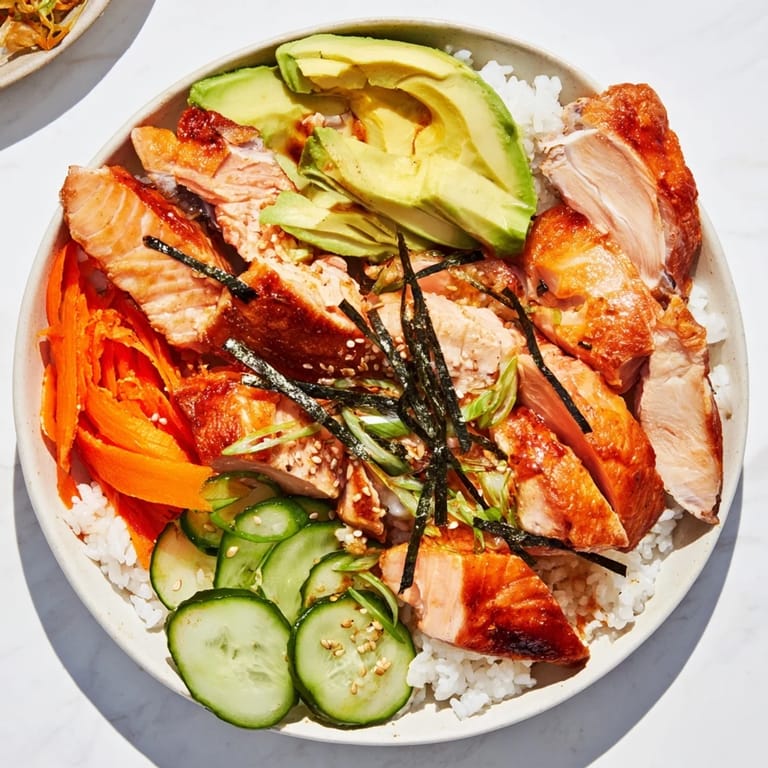
Save This bowl has become my weeknight safety net, the thing I make when I want something nourishing without thinking too hard. It's proof that good food doesn't have to be complicated, just thoughtful and a little bit clever.
Saffron Brook Recipe Q&As
- → What is the purpose of the ice cube in reheating?
The ice cube melts slowly during microwaving, steaming the rice to keep it moist and prevent dryness.
- → Can I substitute the proteins with other options?
Yes, tofu or other plant-based proteins work well for a vegetarian alternative.
- → What type of rice is best for this bowl?
Japanese short-grain rice is ideal as it becomes sticky and tender, perfect for bowl dishes.
- → How long should the proteins marinate?
Marinate salmon and chicken for at least 10 minutes for full flavor absorption.
- → Can I prepare components in advance?
You can cook and marinate proteins ahead, slice vegetables beforehand, and reheat with the ice cube method for freshness.