 Save
Save I'll never forget the moment I discovered that a cheese board could be a work of art. It was at a gallery opening in the city, where a monochrome spread caught my eye before any painting on the walls. The cheeses, crackers, and fruits were all shades of gray and black, arranged so deliberately on slate that it felt like walking into a minimalist dream. That night, I realized that restraint and intentionality could make something more elegant than abundance ever could. When I got home, I started gathering ash-rinded cheeses and dark ingredients, determined to recreate that moment in my own kitchen.
I served this board at my sister's dinner party last month, and watching people pause before eating it, just to take photographs, made me smile. Someone said it looked like something from a Scandinavian design magazine, and honestly, that's the highest compliment a cheese board could receive.
Ingredients
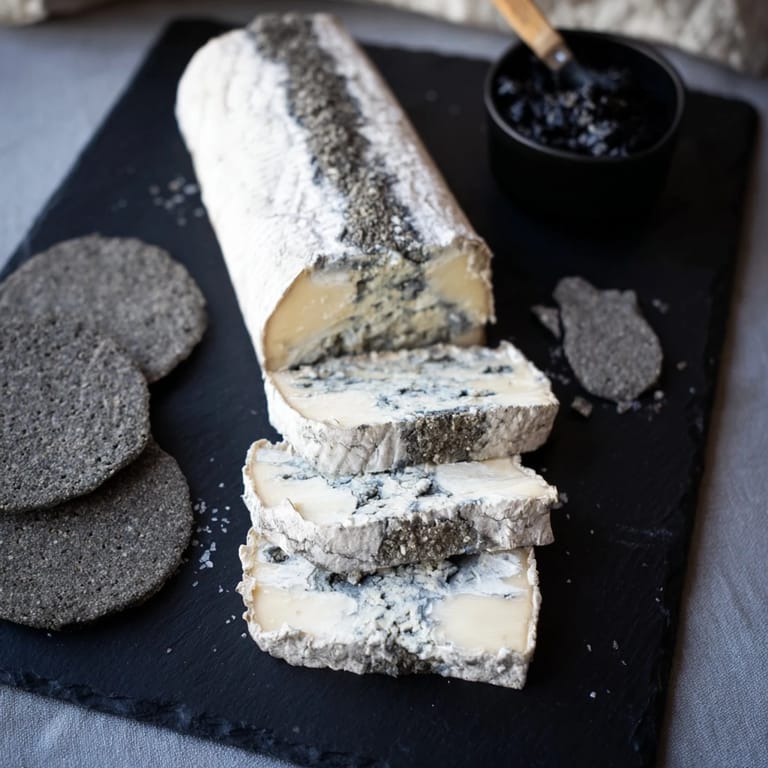
- Morbier or ash-rinded semi-soft cheese (150 g): This is the showstopper with its distinctive dark layer running through the middle. It's creamy and approachable, and that built-in stripe gives you instant sophistication without trying. Look for it at a good cheese counter where they can tell you about the maker.
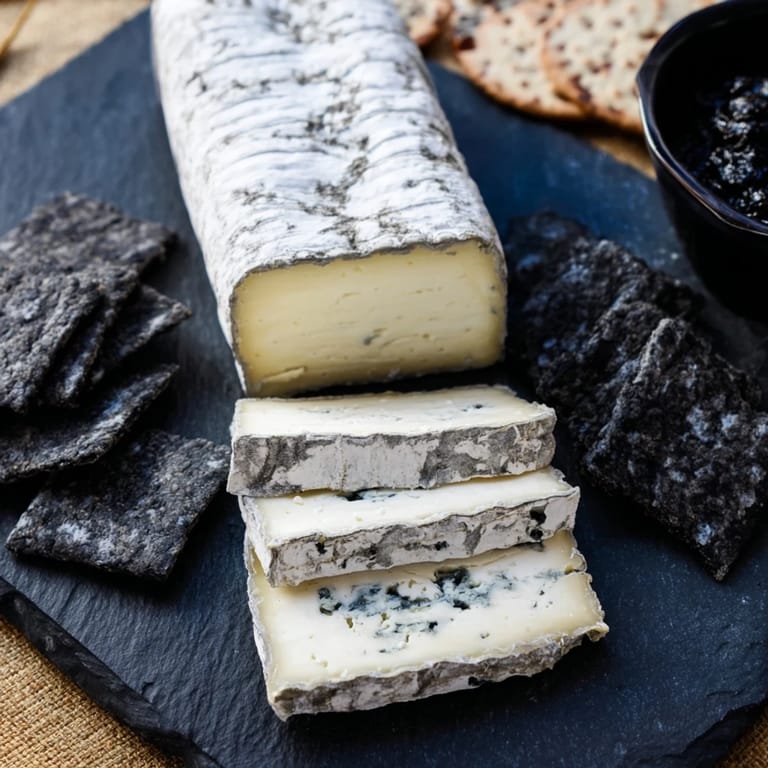
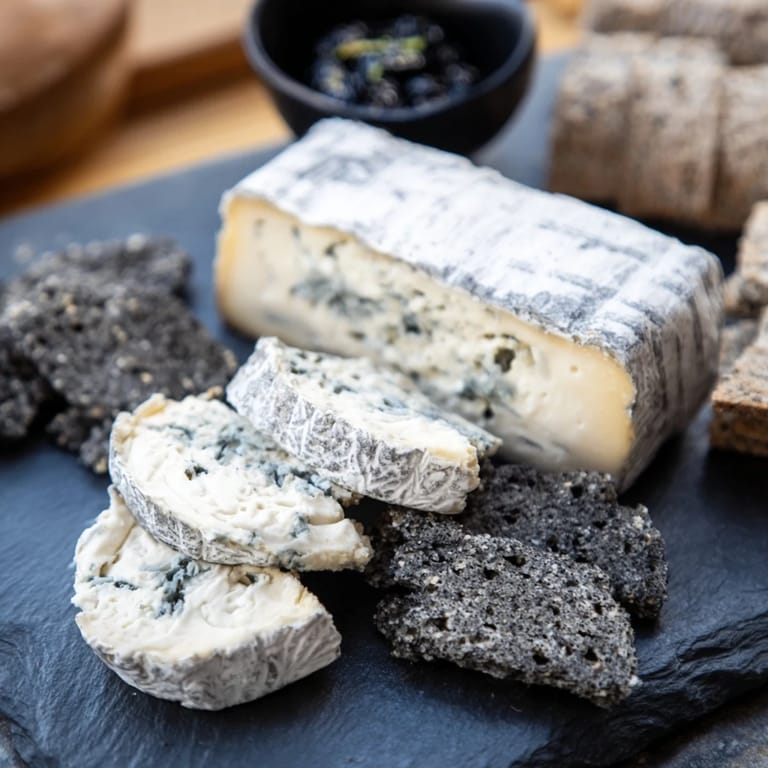
- Humboldt Fog or ash-ripened goat cheese (120 g): The delicate ash coating on this cheese is what makes it visually perfect for this board. It has a subtle tanginess that surprises people in the best way, and it slices cleanly if you chill it well beforehand.
- Valdeon blue cheese or similar gray-veined blue (100 g): This is your bold statement. The deep blue-gray veining is exactly what ties the whole monochrome story together. It's pungent and unforgettable, so a little goes a long way.
- Slate-colored charcoal crackers (8-10 pieces): These aren't just pretty, they have a subtle smokiness that complements the cheeses without overwhelming them. If you can't find charcoal crackers, black sesame ones work beautifully.
- Dark rye or pumpernickel bread (6-8 slices): Slice these thick enough that they have presence on the board. The dense, earthy flavor grounds the whole arrangement and gives people something substantial to build bites with.
- Black grapes or dark plums: These provide juicy sweetness and visual weight. The deep color is essential to the palette, so skip the green grapes entirely. I like to halve or slice them so people can easily add them to their bites.
- Blackberries or blueberries (small handful): These fill the gaps and catch the light beautifully. They're like tiny jewels in a monochrome setting, and they add a bright tartness that cuts through the rich cheeses perfectly.
- Black olive tapenade (2 tbsp): A small bowl of this gets people excited. It's salty, briny, and adds another flavor dimension that feels unexpected on a cheese board. Make sure it's a deep, dark variety to stay true to the palette.
- Edible charcoal salt: Just a whisper of this on the cheeses adds mystery and a hint of mineral flavor. It's the finishing touch that says you really thought about every detail.
- Fresh rosemary or thyme sprigs (optional): If you use these, they provide the only green on the board, and that contrast makes them pop. Use them sparingly, just a few sprigs tucked in strategically.
Tired of Takeout? 🥡
Get 10 meals you can make faster than delivery arrives. Seriously.
One email. No spam. Unsubscribe anytime.
Instructions
- Start with your canvas:
- Place your dark stone or slate board on a clean work surface where you have plenty of room to move around. Take a moment to appreciate the surface, imagining how the cheeses will look against it. This is your chance to be thoughtful about placement, so don't rush it.
- Arrange the cheeses with intention:
- Slice each cheese into pieces that feel right for how you want to eat it. The Morbier cuts into beautiful wedges that show off that dark line. The ash-ripened goat cheese can be sliced thinner, more delicate. The blue cheese in crumbly chunks or thin shards. Leave space between each cheese so people can see and taste them individually. Think of them as three distinct characters in a story you're telling.
- Create textural layers with bread and crackers:
- Fan out the charcoal crackers in small stacks, angling them slightly so they catch the light. Arrange the pumpernickel slices in their own area, leaning them against each other casually. These aren't just vehicles for cheese, they're part of the visual composition, so think about balance as you place them.
- Nestle in the fruits:
- Scatter the black grapes and plum slices into the gaps, letting them cluster naturally around the cheeses. Add the blackberries and blueberries last, like you're placing tiny precious stones. Don't make it look too arranged, though. The best boards have a sense of abundance within control.
- Add the tapenade moment:
- Pour the olive tapenade into a small dark bowl, or if you're feeling bold, spoon it directly onto the board in a beautiful swoosh. This is your chance to add a glossy, dark accent that grounds the whole arrangement. It should look inviting and ready to be scooped.
- Dust with intention:
- Sprinkle a tiny pinch of edible charcoal salt over the cheeses. This is about finesse, not coverage. You want people to notice it, not taste predominantly of salt. It should look like magic dust that adds both flavor and intrigue.
- Garnish with restraint:
- If you're using fresh herbs, tuck just a few sprigs of rosemary or thyme into the board, maybe near the cheeses. The green should feel like a surprise, not the main event. Less is more here.
- Bring to the table with confidence:
- Set out small plates and cheese knives alongside the board. This is the moment to step back and admire what you've created. You've built something that looks intentional and beautiful, and now it's ready to be shared.
 Save
Save I served this board to my mother-in-law, who has very strong opinions about everything, including cheese. She went quiet when she saw it, then quietly said, 'This is the most beautiful thing you've ever made.' She meant it as a compliment to my thoughtfulness, and I realized that day that feeding people isn't just about taste, it's about showing them they matter enough for you to create something intentional.
The Art of Monochrome Entertaining
There's something deeply satisfying about embracing a single color story. It removes the pressure of mixing and matching and instead asks you to think about depth, texture, and nuance within a limited palette. A monochrome board teaches you to see differences in shade and tone that you might otherwise miss. The Morbier's dark streak, the ash coating on the goat cheese, the silvery bloom on the blue, the black of the olives, the deep plum of the fruit. It's all one conversation in grayscale, and that conversation is surprisingly eloquent.
Pairing This Board with Wines and Moments
This board is built for wine. The ash-rinded cheeses, with their subtle earthiness, sing alongside a cool white like an Albariño or a crisp Sancerre. But if you want to lean into the moody aesthetic, a Malbec or smoky Pinot Noir feels right. The minerality of a natural wine would be stunning, too. I've learned that the board doesn't dictate the wine so much as it creates a canvas for whatever you choose to pour. The right beverage just makes the cheeses taste more like themselves, and that's when the magic happens.
Making It Your Own
This is a blueprint, not a prison. If you have access to a different ash-rinded cheese that speaks to you, use it. Local cheese makers often have beautiful alternatives that will honor the same spirit. The key is commitment to the palette. Once you decide that you're staying in the grayscale world, every choice becomes easier. You're not looking for the best of everything, just the best gray things. And somehow, that constraint creates something more beautiful than anything unrestricted could be.
- If charcoal crackers feel impossible to find, check farmers markets or specialty cheese shops first, they almost always have them
- Black sesame crackers, black lentil crackers, or even thinly sliced dark chocolate (yes, really) can work as visual substitutes if you're stuck
- Prepare the board no more than 30 minutes before serving to maintain the cheeses' texture and the fruits' firmness
 Save
Save A good cheese board is an act of care disguised as simplicity. Every time you make this one, you're saying something to the people eating it: I took time, I paid attention to detail, and I wanted to create a moment worth remembering. That's what makes people come back.
Saffron Brook Recipe Q&As
- → What types of cheeses are used for the ash-rinded effect?
Morbier and Humboldt Fog are excellent choices, both featuring ash-rinds that provide a unique visual and flavor profile.
- → Can I substitute the dark breads and crackers?
Yes, dark rye, pumpernickel, or charcoal-based crackers work well to maintain the monotone aesthetic and complement the cheeses.
- → What fruits pair best with this board?
Black grapes, plums, blackberries, and blueberries add a subtle sweetness and juicy texture without overpowering the flavors.
- → How does the olive tapenade contribute to this platter?
The black olive tapenade adds a savory depth and moist texture that balances the creaminess and saltiness of the cheeses.
- → Are fresh herbs necessary for garnish?
Fresh rosemary or thyme sprigs provide an aromatic contrast and visual freshness, enhancing both flavor and presentation.