 Save
Save My grandmother kept a ritual every December that felt almost sacred—five days before Christmas, she'd retrieve a wrapped package of dried cod from the back of her pantry and begin the patient work of transforming it into lutefisk. I watched her change the soaking water with the precision of someone tending to something alive, and when she finally pulled that fish from the oven, the kitchen filled with this gentle, mineral-rich aroma that meant the holidays had truly arrived. Now, when I make this dish, I'm transported to her kitchen, but I'm also discovering it anew each time—the way the fish becomes silky and delicate, how that mustard sauce brings brightness to something so austere.
The first time I made this for friends who'd never heard of lutefisk, there was this delicious moment of skepticism around the table, followed by quiet surprise when they tasted it. No one expected something so elegant, so tender. A few minutes in, someone asked for seconds, and I realized this dish had done what it's done for centuries—it brought people together around something worth slowing down for.
Ingredients
- Dried cod (lutefisk): One kilogram is the traditional amount for four people; this isn't something to skimp on, and buying from a Scandinavian market or trusted supplier ensures quality that matters when the ingredient list is this spare.
- Cold water: You'll need enough to completely submerge the fish, and patience to change it daily—this step is non-negotiable and turns the dried fish into something almost alive again.
- Coarse salt: One tablespoon, used after soaking to draw out any remaining moisture and bring the fish to its final texture.
- Unsalted butter: Two tablespoons for the sauce base, keeping it clean so the mustard flavors can shine.
- All-purpose flour: Two tablespoons to thicken the sauce gently; swap for gluten-free flour without hesitation if you need to.
- Whole milk: Three hundred milliliters, and cold from the fridge—this prevents lumps better than warmed milk ever will.
- Dijon mustard: Two tablespoons of the real thing, not the bright yellow kind; this brings sophistication and a subtle tang.
- Whole-grain mustard: One tablespoon for texture and a hint of earthiness that rounds out the sauce.
- Sugar: One teaspoon to balance the mustard's sharpness—this tiny amount teaches you how seasoning works.
- Salt and white pepper: To taste; white pepper keeps the sauce visually pure, though black works just fine.
- Boiled potatoes: Four small ones, waxy varieties if you can find them, to anchor the plate with something comforting.
- Crispbread or flatbread: Four slices, for wiping up sauce and adding texture.
- Fresh parsley: Optional but worthwhile, a green whisper at the end.
Tired of Takeout? 🥡
Get 10 meals you can make faster than delivery arrives. Seriously.
One email. No spam. Unsubscribe anytime.
Instructions
- Begin the long transformation:
- Rinse your dried cod under cold running water, letting the stream wash away years of preservation. Place the fish in a large container—something you won't mind taking up refrigerator space for nearly a week—and cover it completely with cold water, leaving a few inches of clearance at the top because this fish will expand and soften as it rehydrates.
- Keep the faith through five to six days:
- Change the water every single day, and yes, this means opening the fridge and committing to this ritual; the water will go from cloudy to clear as the fish gradually remembers what it was before it was dried. By day six, the fish should feel tender when you gently press it, and the water should be relatively clear.
- Give it one last salting:
- Drain the fish completely, scatter that coarse salt across it, and let it sit for thirty minutes while the salt continues its work of drawing out moisture and perfecting the texture. Rinse it gently afterward and pat everything dry with paper towels—this dryness matters when it hits the heat.
- Heat the oven and prepare the stage:
- Preheat to 200°C (390°F), and while it warms, arrange your fish pieces in a baking dish with enough room that they're not crowded. Cover loosely with foil to keep moisture in without trapping steam too aggressively.
- Bake until the fish becomes velvet:
- Twenty-five to thirty minutes is what the fish needs, and you'll know it's ready when it looks opaque and flakes gently when you touch it with a fork. The smell at this point is worth savoring—delicate, clean, quietly luxurious.
- Begin the sauce base:
- Melt your butter in a saucepan over medium heat, then whisk in the flour and let it cook for exactly one minute, stirring constantly so it stays pale and doesn't brown. This creates the roux that will hold everything together.
- Coax in the milk with patience:
- Add the cold milk slowly while whisking constantly, pouring it in a steady stream and letting each addition incorporate before adding more; this is the secret to a lump-free sauce. Keep whisking for about three to four minutes as it simmers and thickens, watching for the moment when it coats the back of a spoon.
- Marry in the mustards and seasonings:
- Stir in both mustards along with the sugar, salt, and white pepper, tasting as you go because you're the final judge here. The sauce should taste bright and savory, never harsh, with just enough sweetness to balance the mustard's personality.
- Plate with intention:
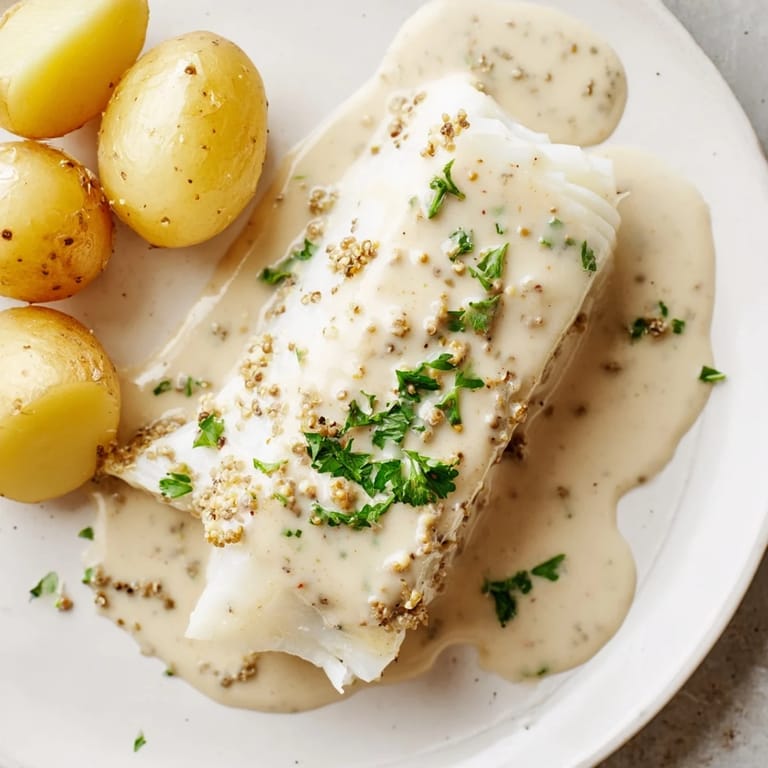
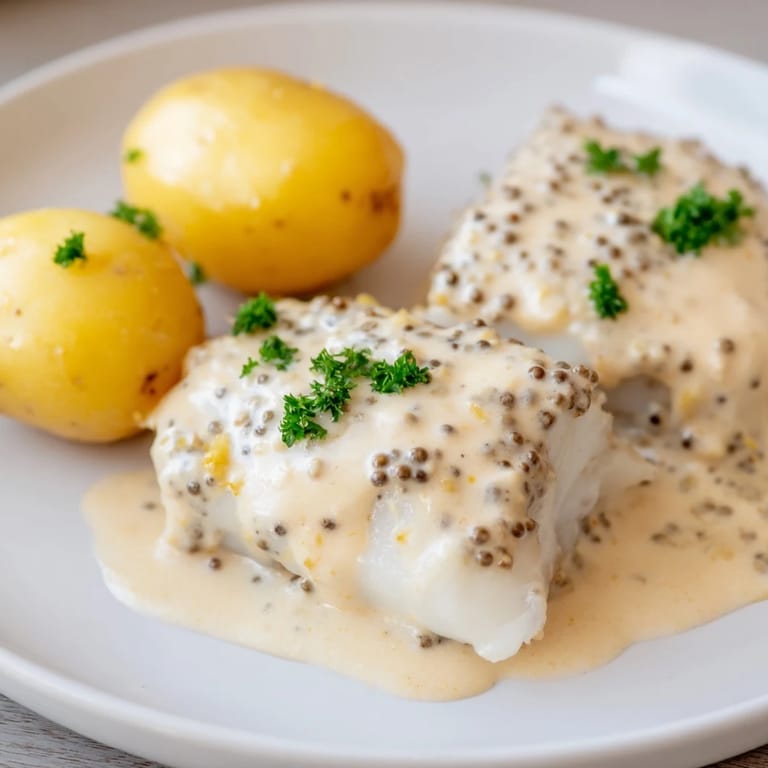
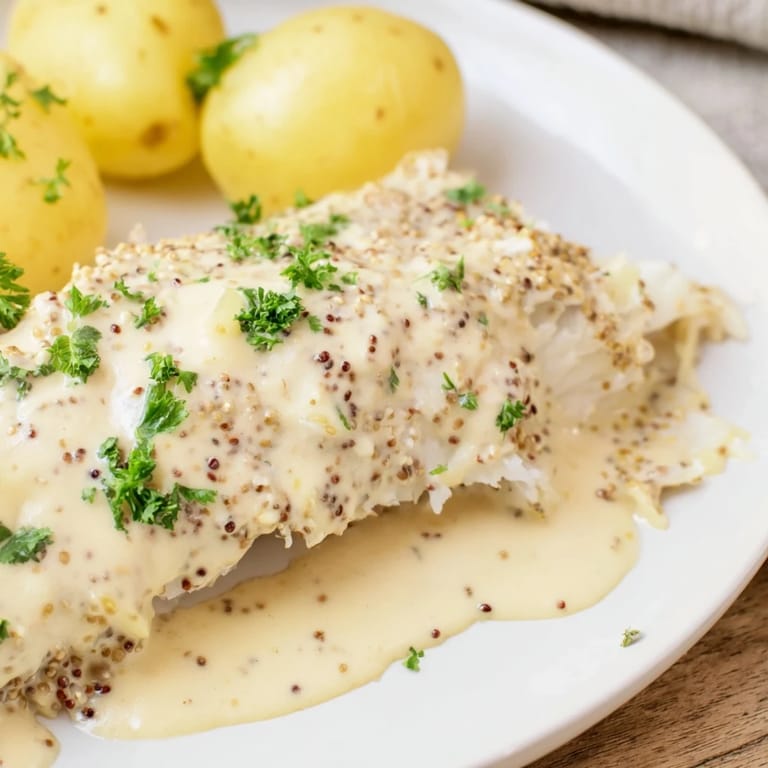
- Arrange hot fish, boiled potatoes, and bread on each plate, then spoon the warm mustard sauce generously over everything. A scatter of parsley if you have it, a moment of appreciation, and then dinner begins.
 Save
Save There's a moment when someone who's never had lutefisk tastes it and understands that sometimes the most beautiful foods are the ones that require patience and faith. That's when you know this dish has done its job—it's not about flavor alone, it's about witnessing transformation.
The Story Behind Lutefisk
Lutefisk emerged centuries ago as necessity disguised as tradition—a way to preserve fish through long Scandinavian winters when fresh food was a luxury. The same lye that cured the fish eventually got washed away, leaving behind something almost otherworldly in texture and subtlety. It's become the centerpiece of holiday meals across Norway, Sweden, and beyond, a dish that carries generations in every bite. Making it today is still an act of connection to that history, a way of saying that some traditions are worth the time they demand.
Building Flavors Around the Fish
The mustard sauce is the true partner here, bringing acidity and brightness that prevents the fish from feeling one-note. Some families add bacon bits or green peas to their plates, creating little pockets of flavor around the mild, tender fish. Traditionally, a crisp lager or chilled aquavit comes alongside, and that pairing makes sense—the mustard sauce and the bread create enough richness that you want something bright to cut through. The potatoes ground everything, turning a delicate plate into something substantial and satisfying.
Making It Your Own
While this recipe honors tradition, it's flexible enough for your own kitchen's rhythm. Some people butter their fish heavily instead of baking it dry, others add a whisper of horseradish to the sauce for extra punch, and gluten-free versions work beautifully with a simple swap. The constant is the five-day soaking and the gentle baking—those steps are what make lutefisk truly itself.
- If you can't source proper dried cod, some Scandinavian markets sell pre-soaked frozen lutefisk that skips the week-long wait without losing much in translation.
- The sauce benefits from a touch of dry white wine whisked in near the end, adding complexity that feels subtle until you notice it's there.
- Leftovers—if there are any—are oddly wonderful the next day, gently warmed and plated with toast instead of potatoes.
 Save
Save Every time I make lutefisk, I'm reminded that some of the best meals require patience, an openness to something unusual, and the willingness to cook something that takes a week before the oven even heats. That's where the real magic is—in showing up day after day for something you believe in.