 Save
Save The first time I tried folding beef like origami, I was standing in my kitchen at midnight, prepping for a dinner party I'd probably overcommitted to. My friend had casually mentioned she wanted something "unexpected and elegant" for her birthday, and instead of ordering catering like a normal person, I decided to fold tissue-thin beef slices into geometric shapes. Watching those delicate folds come together felt like solving a puzzle I didn't know I needed to solve, and when guests arrived, their faces at that first bite told me everything—this wasn't just appetizer, it was theater on a plate.
I remember my partner watching me practice the folds on a random Tuesday, skeptical that thin beef could hold a shape. When I finally nailed the fan fold and showed them, they asked why restaurants charge so much for things that look this delicate. That's when it clicked—it's not just technique, it's confidence wrapped in simplicity, and once you nail it once, you become the person who brings this to every gathering.
Ingredients
- Beef carpaccio or very thinly sliced roast beef (300 g): The thinner it is, the easier it folds and the more elegant the presentation becomes, so ask your butcher to slice it paper-thin or freeze it slightly before slicing at home.
- Extra virgin olive oil (2 tbsp): Quality matters here because it carries flavor into every bite alongside the other marinade components.
- Soy sauce (1 tbsp, gluten-free if needed): This adds umami depth that makes the beef taste richer and more intentional than it would alone.
- Lemon juice (2 tsp): Brightness that cuts through the richness and keeps the dish from feeling heavy.
- Dijon mustard (1 tsp): A whisper of sharpness that gives the marinade personality without overpowering the beef.
- Freshly ground black pepper (1/2 tsp) and sea salt (1/4 tsp): Season assertively because these flavors need to stand up on such a minimal canvas.
- Baby arugula (40 g): The bed that cradles your folds and adds peppery contrast with every bite.
- Toasted sesame seeds (2 tbsp): These add a nutty crunch and visual texture that makes each piece feel substantial.
- Finely chopped chives (1 tbsp): Use them both as garnish and as gentle anchors if your folds need a little help holding their shape.
- Shaved Parmesan cheese (50 g): The umami amplifier that ties everything together and adds a salty finish.
Tired of Takeout? 🥡
Get 10 meals you can make faster than delivery arrives. Seriously.
One email. No spam. Unsubscribe anytime.
Instructions
- Mix your marinade with intention:
- Whisk together olive oil, soy sauce, lemon juice, Dijon mustard, pepper, and salt in a small bowl until it tastes balanced—not too salty, not too sharp. Taste it on your finger; this is your flavor template for the entire dish.
- Prepare your beef canvas:
- Lay each beef slice flat on a clean surface and brush lightly with marinade using a pastry brush, saving about a third of it for final drizzling. The beef should glisten but not be swimming in liquid.
- Fold with confidence:
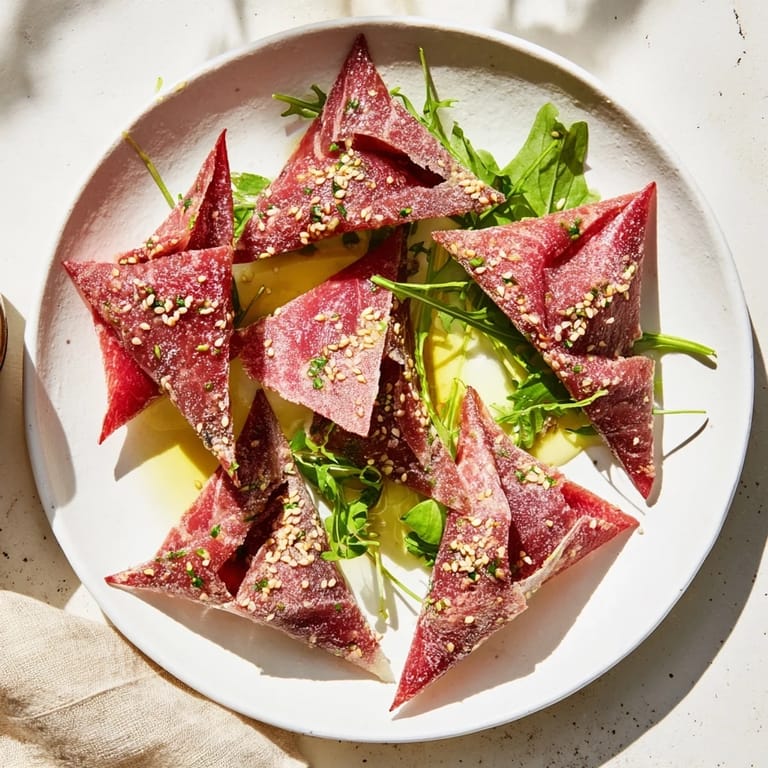
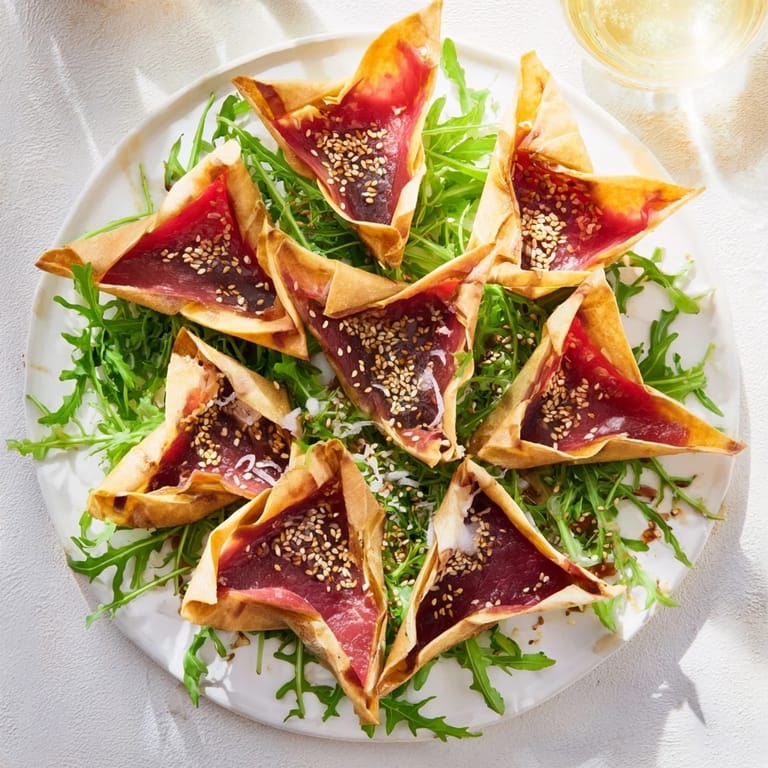
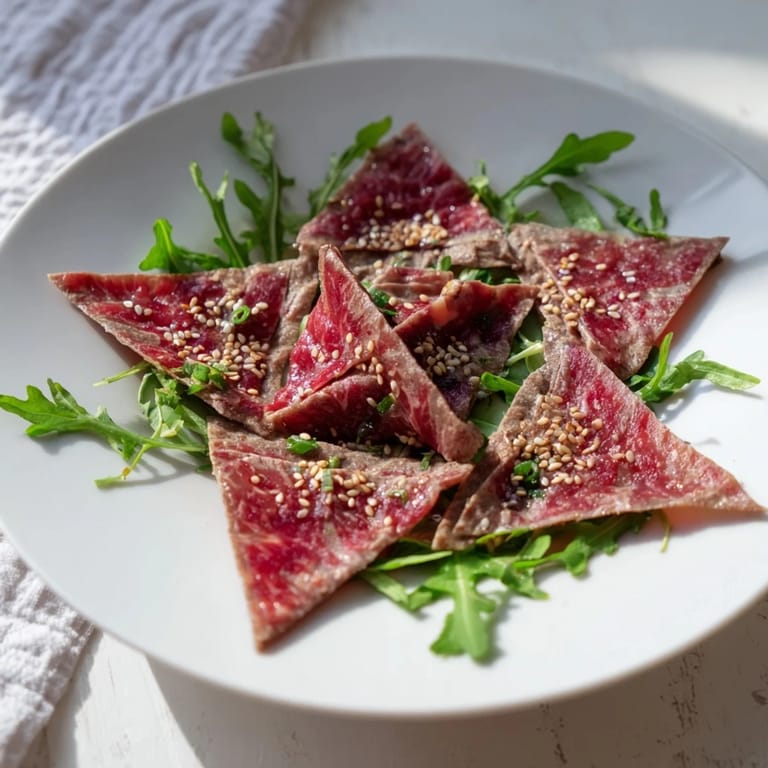
- Pick up one marinaded slice and fold it into a triangle, square, or origami-style fan, using gentle pressure to hold the shape. If a fold feels unstable, secure it with a chive stem or cocktail pick—this isn't cheating, it's smart plating.
- Build your base:
- Arrange the folded beef pieces on a platter lined with baby arugula, leaving enough space between each fold so they're the stars, not crowded extras.
- Layer your garnishes:
- Sprinkle toasted sesame seeds first, then chopped chives and shaved Parmesan, so each element is visible and contributes to the visual story.
- Finish with precision:
- Drizzle the reserved marinade across the platter just before serving, so the flavors are fresh and the presentation stays sharp.
 Save
Save I served this at a potluck once and watched someone pick one up with their fingers, hesitate, then ask if they were supposed to eat it or hang it on their wall. That question made me realize the real magic wasn't just the taste—it was that moment of pause, that instinct to treat it as art before remembering it was food.
The Geometry of Flavor
The fold isn't just about looks; it's about surface area and texture. When you fold beef, you create pockets and edges that catch the marinade differently than a flat slice would, so every fold reveals a slightly different flavor note. The outer edges caramelize slightly under the arugula, the inner folds stay tender and juicy—it's controlled complexity that happens naturally once you understand why you're folding in the first place.
Timing and Temperature
This dish lives in the space between cold and room temperature, which is exactly where beef carpaccio wants to be. If you pull it from the fridge too early, the marinade warms and dilutes; too late, and the beef gets soft instead of holding its shape. The sweet spot is about ten minutes before guests arrive—enough time for the beef to relax slightly without losing its structure, but not so long that condensation ruins your presentation.
Variations and Personal Touches
Once you nail the beef version, you start seeing possibilities everywhere. I've made this with thinly sliced tuna for a pescatarian friend, and the sesame seeds suddenly make complete sense because they echo Asian flavors. With salmon, the earthiness of the arugula becomes the real star. The formula works because it's built on balance, not on beef specifically.
- Add one drop of truffle oil to the marinade if you want to signal "this is special" without being obvious about it.
- Serve alongside thinly sliced baguette or rice crackers so guests have options but aren't obligated to use them.
- Pair with crisp Sauvignon Blanc or dry rosé to echo the brightness of the lemon and mustard.
 Save
Save This appetizer taught me that impressive food doesn't require complicated technique or endless ingredients—sometimes it just requires seeing something familiar differently and having the confidence to fold it into something new. That's the real skill, and once you have it, you can fold anything.
Saffron Brook Recipe Q&As
- → What cut of beef works best for folding?
Use very thinly sliced beef carpaccio or roast beef for easy folding and tender texture.
- → Can I prepare the marinade in advance?
Yes, preparing the marinade ahead helps deepen flavors but apply it fresh to avoid sogginess.
- → How do I keep the folded shapes intact?
Gently fold the slices and secure with chive stems or cocktail picks if needed for stability.
- → Are there suitable substitutions for beef?
Thinly sliced tuna or salmon work well as pescatarian-friendly alternatives maintaining the folding technique.
- → What garnishes complement the folded beef?
Baby arugula, toasted sesame seeds, chopped chives, and shaved Parmesan add fresh, nutty, and savory notes.