 Save
Save I discovered the magic of color-coordinated platters during a spring brunch at my friend's garden overlooking blooming magnolias. She'd arranged a board entirely in shades of pink and coral, and watching guests' faces light up as they realized it was edible art rather than decoration changed how I think about appetizers. That afternoon taught me that food could be a visual conversation starter, a moment of pause before the first bite. The Pink Petal Watercolor Wash platter became my love letter to that memory—a way to recreate that feeling of gathered beauty every time I entertain.
I'll never forget plating this for my partner's parents' anniversary celebration, watching his mother genuinely pause before eating because the platter was too beautiful to disturb. That hesitation, that moment of admiration, reminded me why I love feeding people—it's not just about nourishing bodies, it's about creating memories that linger in the space between visual joy and flavor satisfaction.
Ingredients
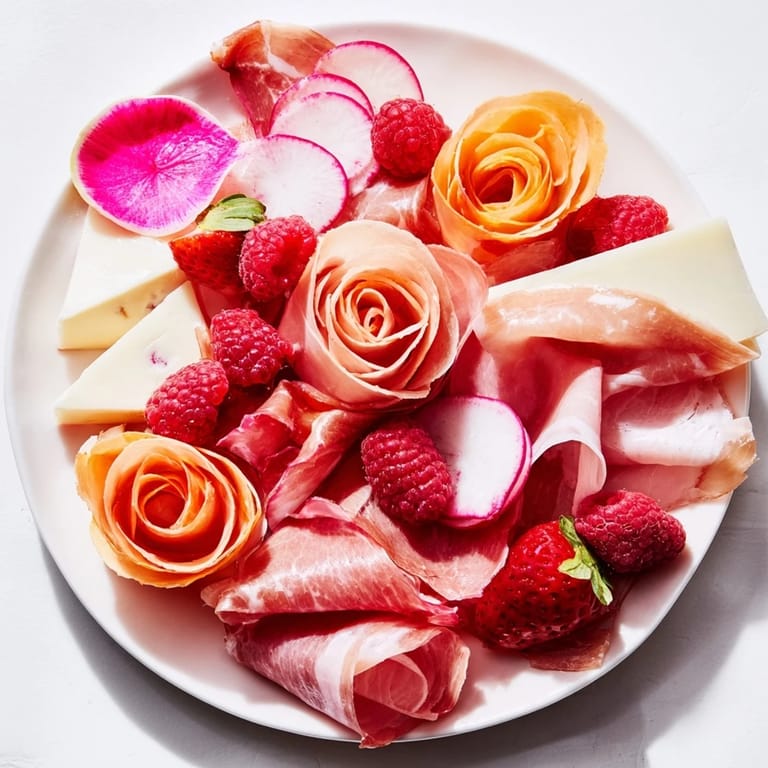
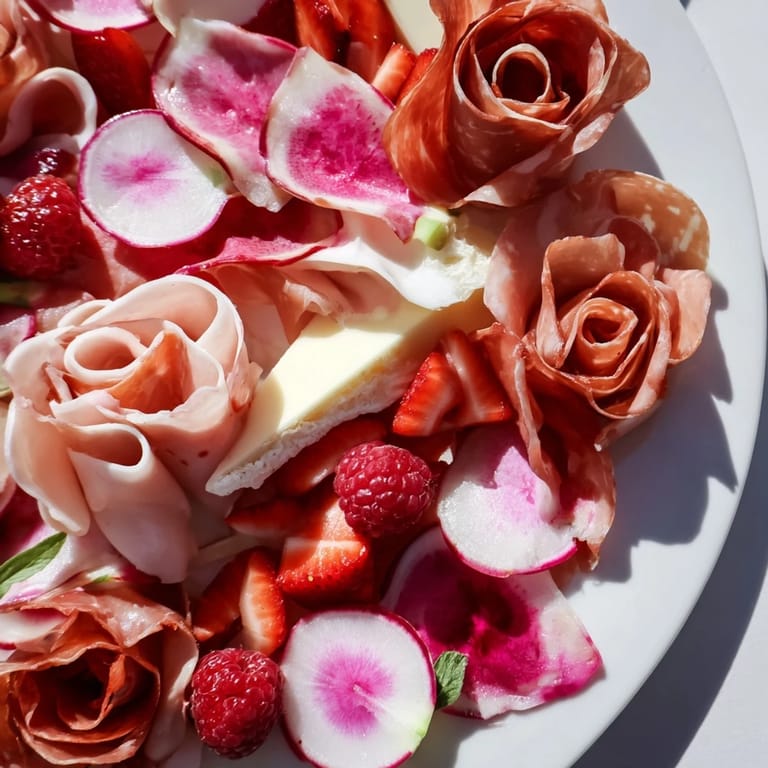
- Prosciutto, thinly sliced (100 g): This becomes your pinkest, most delicate element. Rolling it into loose roses takes practice but transforms thin slices into sculptural forms—I learned to let my fingers work gently, almost like handling tissue paper
- Mortadella, sliced thin (100 g): Softer than prosciutto with a pale, almost blush tone. I arrange these in loose folds rather than strict rolls because they catch light differently and create natural texture
- Pink radishes, thinly sliced (6-8 small): These provide that first crisp crunch and a peppery bite that livens up the richness of the meats and cheeses
- Watermelon radish, thinly sliced (1): The surprise element—slice it open and discover that stunning coral interior. It's almost too beautiful not to showcase prominently
- Beet, cooked and thinly sliced (1 small): The deepest, richest red in your palette. Pre-cooking ensures tender slices that don't bleed aggressively onto neighboring ingredients
- Pink-hued cheese like port wine Derby or rosé goat cheese (100 g): These artisanal cheeses are why this platter works—they bring intentional color that feels elevated without being pretentious
- Brie or camembert, cut into wedges (100 g): The creamy counterpoint that melts on crackers and bridges every other flavor
- Baguette, sliced (1 small) or gluten-free crackers: Your vehicle for combining elements—I learned to slice slightly thicker than you'd think so pieces hold up under toppings
- Rice crackers (1 package): These add delicate crunch without competing for attention with the visual palette
- Fresh strawberries, halved (1 cup): Sweet, juicy, and undeniably pink—place these where the eye needs to rest
- Raspberries (1 cup): Fragile little jewels that add both color complexity and a subtle tartness that cuts through richness
- Edible rose petals or microgreens for garnish (optional): These feel optional until that moment when they catch the light and suddenly elevate everything
Tired of Takeout? 🥡
Get 10 meals you can make faster than delivery arrives. Seriously.
One email. No spam. Unsubscribe anytime.
Instructions
- Prepare your canvas:
- Find a large platter or board—I prefer white or natural wood that lets colors sing. Imagine you're about to paint, because that's exactly what you're doing. Take a breath before you start. This is where intention matters.
- Sculpt the prosciutto roses:
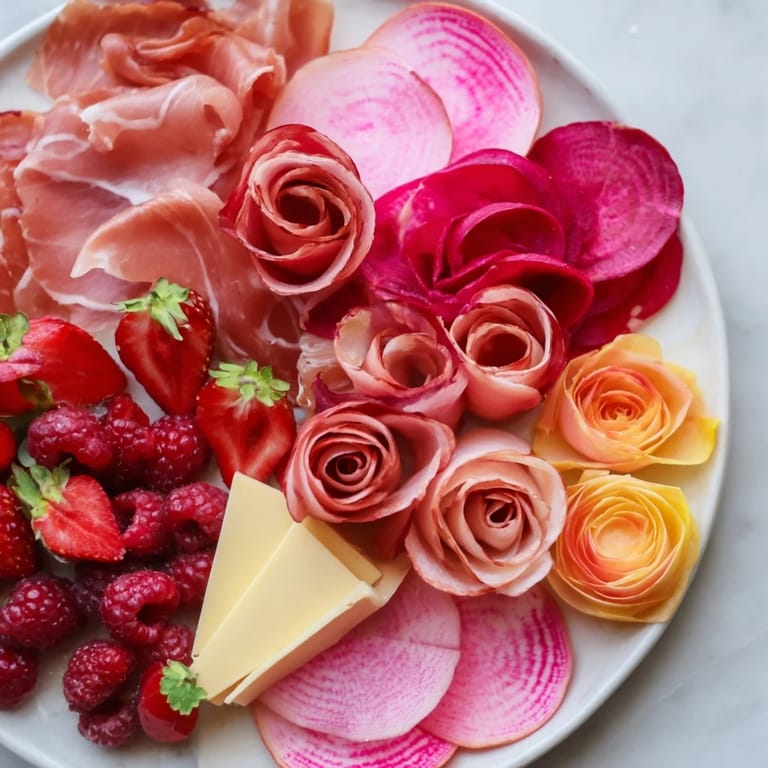
- Take each slice and curl it loosely around your finger, gently folding until it resembles a partially opened rose. Place these in small clusters across your platter, leaving breathing room. The first few feel awkward; by slice four or five, your hands understand the movement.
- Layer the mortadella:
- Rather than rolling, drape these softer slices in gentle, loose folds beside your prosciutto roses. Let them catch the light—the way they fold is part of the visual story.
- Create watercolor strokes with vegetables:
- This is the meditative part. Take your radish slices and arrange them in overlapping, slightly fanned patterns as though you've just swept a wet brush across the platter. The goal isn't perfection—it's the impression of movement. Watercolor paintings aren't rigid, and neither is this.
- Introduce the beet and watermelon radish:
- These deeper reds and coral tones add dimension. Slice the watermelon radish and let that gorgeous interior show—it's the moment when guests lean in and say 'wait, what is that?'
- Position your cheeses thoughtfully:
- Cut pink cheeses into thin slices and brie into small wedges. Cluster them where they'll bridge colors and flavors—between the reds and the pale pinks, creating visual harmony and ensuring every combination of bites works.
- Add bread and crackers in gentle curves:
- Rather than dumping a pile, arrange these along one flowing edge or woven through the arrangement. Think of them as the frame around the painting.
- Scatter fruit as the finishing touch:
- Strawberries halved and raspberries whole, placed in small piles. These provide both color punctuation and a sweet surprise that catches your palate off guard.
- Crown with garnish:
- Edible rose petals or microgreens, if using, go down last. Just a few strategic placements—you want elegance, not decoration overload.
- Serve with presence:
- Step back. Look at what you've created. Then bring it to the table and watch people pause before they eat. That pause is everything.
 Save
Save My favorite moment comes when someone who claimed they weren't hungry reaches across the platter for their third piece of prosciutto rose paired with strawberry and brie, realizing that this beautiful arrangement sparked conversations that last longer than the food itself. That's when I knew I'd done something right—when the platter became an excuse to linger together.
The Art of Color Harmony
The entire success of this platter depends on understanding that pinks, corals, and pale reds are not boring neutrals—they're sophisticated, subtle tones that play beautifully together when given space to breathe. I used to overthink color balance, arranging everything symmetrically until a more experienced friend showed me that the best arrangements mimic nature's patterns, which are never perfectly balanced but always visually restful. The slight irregularity is what makes your eye travel and discover each element.
Flavor Architecture
What makes this platter work beyond aesthetics is that every flavor category is represented and intentionally positioned. Salty meats anchor creamy cheeses, which anchor crisp vegetables, which anchor sweet fruit, which anchors it all back to the starch of bread and crackers. The peppery bite of radishes becomes essential—they're not just color, they're the palate cleanser between bites. When building your platter, think of it as composing a symphony where every instrument has a moment to be heard.
Serving and Sharing Moments
This platter is best served at the moment when your guests are gathered but not yet seated, when they can stand around and graze, when conversation flows naturally from one combination to the next. I've learned that the beauty of a composed platter like this is that it encourages interaction and mixing—everyone builds their own perfect bite, and suddenly everyone's tasting the same ingredients in slightly different orders, creating different conversations.
- Pair this with rosé wine as suggested in the original notes, or with sparkling water infused with fresh berries for a non-alcoholic option
- If making this vegetarian, add more cheese varieties, marinated artichoke hearts, and roasted beets to maintain that color saturation
- Remember that this is forgiving—there's no wrong way to arrange it, only your way, which is the point
 Save
Save This platter taught me that sometimes the most elegant entertaining is about seeing what you already have and choosing to arrange it with intention. It's honest food, presented beautifully, designed to bring people together. That's really all any of us are trying to do.
Saffron Brook Recipe Q&As
- → How do you create the rose shapes with prosciutto?
Slice the prosciutto thinly and gently roll or fold each slice into small rose-like forms before arranging them on the platter.
- → What cheeses work best for this pastel platter?
Choose pink-hued cheeses like port wine Derby or rosé goat cheese and soft cheeses such as brie or camembert for creamy texture and visual appeal.
- → Can this platter be adapted for vegetarian guests?
Yes, simply omit the meats and increase the variety of cheeses and vegetables to maintain rich flavors and colors.
- → What garnishes enhance the overall presentation?
Edible rose petals or microgreens add a delicate finish that complements the pink and pale red palette beautifully.
- → Which fruits complement the flavors on this platter?
Fresh strawberries and raspberries provide natural sweetness and a vibrant pop of color to balance savory elements.