 Save
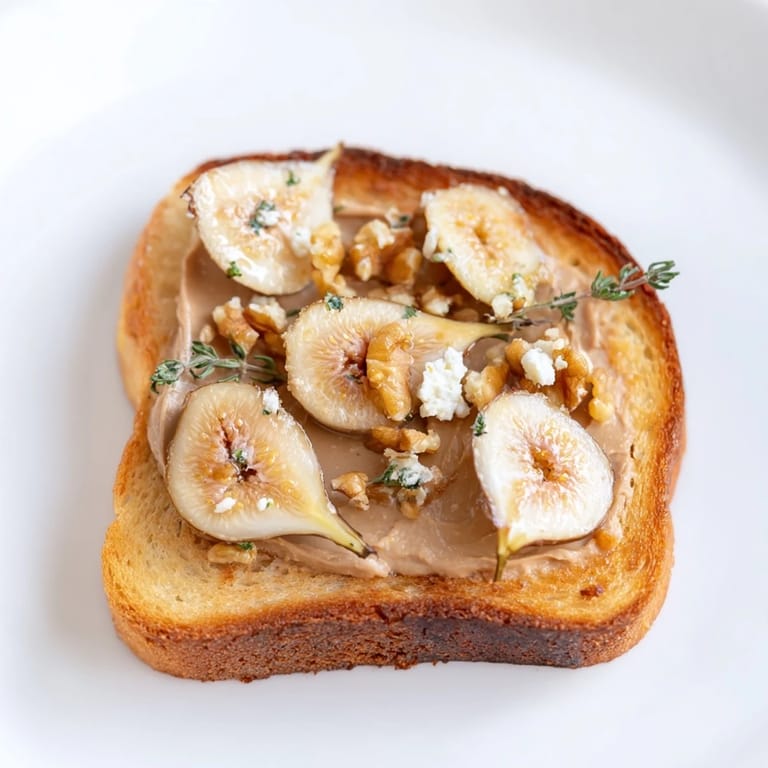
Save I discovered this arrangement at a tiny bistro in Lyon, where the chef arranged her charcuterie board like she was composing a still life painting. The way the figs caught the light against the creamy pâté stuck with me, and I realized you didn't need hours in the kitchen to feel luxurious. A few quality ingredients, a little patience with layering, and suddenly you're serving something that tastes like a French holiday.
The first time I made this for a dinner party, I was nervous about the pâté—something about it felt intimidating, like I was playing with ingredients meant for someone more sophisticated. My friend Sarah took one bite, closed her eyes, and said it tasted like she'd just landed in France. That's when I realized elegant doesn't mean complicated; it just means intentional.
Ingredients
- Duck or chicken liver pâté (200 g): This is your foundation, so find one you actually like the taste of—no need to suffer through something you don't enjoy just because it sounds fancy.
- Dried figs (120 g), thinly sliced: The natural sweetness cuts through the richness of the pâté and adds color; if your figs are too dry, give them a gentle soak in warm water for five minutes.
- Soft goat cheese (80 g), room temperature: Cold cheese won't spread smoothly, so pull it from the fridge twenty minutes before you start; the tanginess balances everything beautifully.
- Toasted brioche or gluten-free crackers (12 slices): The toasting step matters—it adds structure so the platter doesn't get soggy and gives a subtle nuttiness.
- Toasted walnuts (40 g), roughly chopped: Toasting them yourself releases their oils and transforms them from a simple nut into something with real presence on the plate.
- Fresh thyme sprigs: A small garnish that whispers herbal elegance and shows you cared about the details.
- Fig jam (2 tbsp, optional): This bridges the sweet and savory notes, but only use it if you have good quality jam—mediocre jam will cheapen the whole thing.
Tired of Takeout? 🥡
Get 10 meals you can make faster than delivery arrives. Seriously.
One email. No spam. Unsubscribe anytime.
Instructions
- Create your canvas:
- Arrange the toasted brioche or crackers on your serving platter in an overlapping pattern that feels almost architectural—this is your stage. Dense, thoughtful placement makes the whole thing look intentional and gathered, not rushed.
- Spread the pâté:
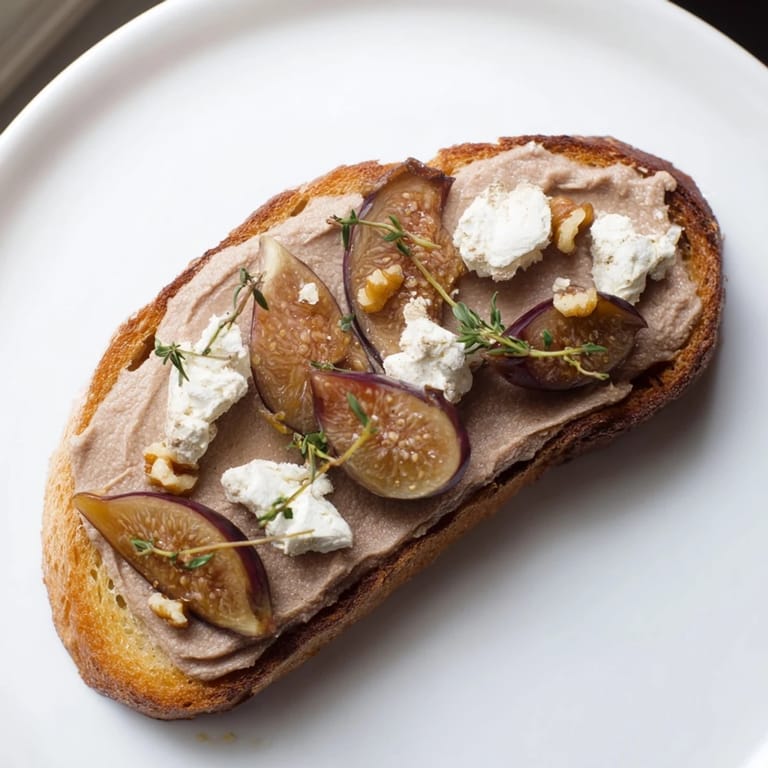
- Use a small butter knife or offset spatula to give each piece a generous but even layer; you want to taste it in every bite. A bit of pâté sliding slightly over the edges of the bread actually looks more inviting, not messy.
- Layer the figs:
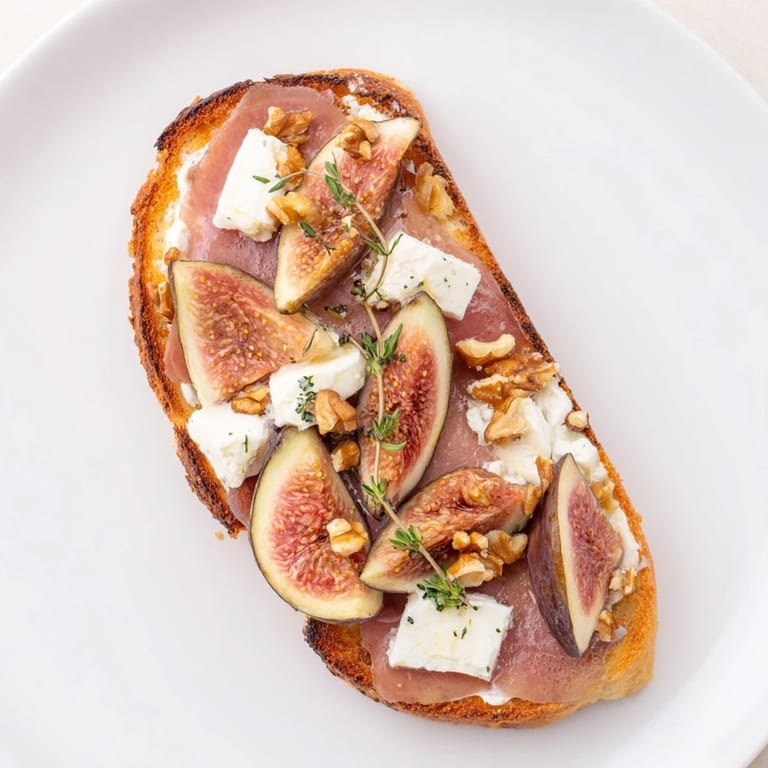
- Place thin slices of fig across the pâté, letting some overlap slightly and leaving just a hint of the pâté showing through. The color contrast is half the appeal here, so don't hide your work.
- Scatter the goat cheese:
- Dollop small spoonfuls of chèvre in a scattered, organic way—tuck them into pockets between figs and pâté rather than spreading them like frosting. This creamy moment adds a cool, tangy interruption to the richness.
- Add the walnuts:
- Sprinkle the toasted pieces over the whole platter with a light hand; they're about texture and a whisper of earthiness. A few clusters and a few scattered pieces feel more natural than uniform coverage.
- Final touches:
- If you're using fig jam, drizzle it sparingly in thin streams across the board—restraint is your friend. Tuck fresh thyme sprigs into gaps and on top for a final flourish of color and aroma.
- Serve with intention:
- Bring it to the table while everything is still cool and the cheese is still set; encourage people to taste the layers together rather than just grabbing a single piece. This isn't something to nibble mindlessly—it's something to pause and experience.
 Save
Save Watching people approach this platter for the first time is when I knew this recipe had something special—they pause, they look at it, they actually slow down. It stops being about hunger and becomes about appreciation, which is the whole point of serving food to people you care about.
Wine Pairings That Make Sense
Sauternes is the classic choice because the wine's slight sweetness echoes the figs while its acidity cuts through the pâté's richness. A fruit-forward red like a young Beaujolais works too if you prefer red wine; the tannins are soft enough not to overpower the delicate goat cheese. Even a dry rosé brings out the figs beautifully and keeps things feeling light rather than heavy.
Making It Your Own
This framework invites playing around. I've subbed mushroom pâté for vegetarian guests and honestly, the earthiness of cooked mushrooms pairs even better with the figs than you'd expect. Blue cheese instead of goat cheese gives it an entirely different personality—sharper, more assertive, less delicate.
Timing and Prep
Since there's no cooking involved, assembly is everything, and it happens right before serving so everything stays at its best temperature and texture. You can prep components an hour ahead—slice your figs, toast your walnuts, arrange your bread—but do the final assembly just as people are arriving. Rushing the last steps usually shows, and there's no reason to stress when this comes together so fast.
- Pull your goat cheese out of the fridge twenty minutes before serving so it spreads like silk.
- If you're making this for a crowd, you can assemble it on two smaller platters instead of one large one for easier passing.
- Have your thyme sprigs washed and ready to grab at the very end—they're your confidence move.
 Save
Save This is one of those appetizers that reminds you why people gather around food in the first place. It's simple enough that you can focus on your guests instead of the stove, yet elegant enough that everyone leaves feeling a little bit special.
Saffron Brook Recipe Q&As
- → What type of pâté works best in this appetizer?
Duck or chicken liver pâté provides a rich, smooth texture that pairs excellently with sweet figs and creamy goat cheese.
- → Can I substitute the goat cheese with something else?
Yes, blue cheese can be used for a bolder flavor, or you can omit it for a milder taste.
- → Is there a gluten-free option for the base?
Gluten-free crackers are a perfect alternative to toasted brioche, maintaining the textural contrast.
- → How should I serve this appetizer for best presentation?
Arrange the layers densely on a large platter and garnish with fresh thyme sprigs for an appealing visual effect.
- → Can this be prepared ahead of time?
It’s best assembled shortly before serving to maintain the crispness of the toasted base and freshness of the toppings.
- → What drinks pair well with this dish?
A chilled glass of Sauternes or a fruity red wine complements the rich and sweet flavors beautifully.