 Save
Save I'll never forget the first time I encountered a wine-stained cheese board at a tiny bistro in Lyon. The way the deep burgundy hues seemed to have seeped into every ingredient—the cheeses blushed pink, the grapes glistening like jewels—it felt less like appetizers and more like edible art. That evening sparked an obsession, and after years of experimentation in my own kitchen, I've finally cracked the code to recreating that magic at home. This Ruby Red Wine Stain Board is my love letter to that unforgettable moment.
Last spring, I assembled this board for my sister's book club, and watching eight women gather around it like it was a precious artifact still makes me smile. One guest actually gasped when she saw the wine bottle rising from the center, surrounded by those jewel-toned cheeses and grapes. That reaction—pure delight without pretension—is exactly why I keep making this.
Ingredients
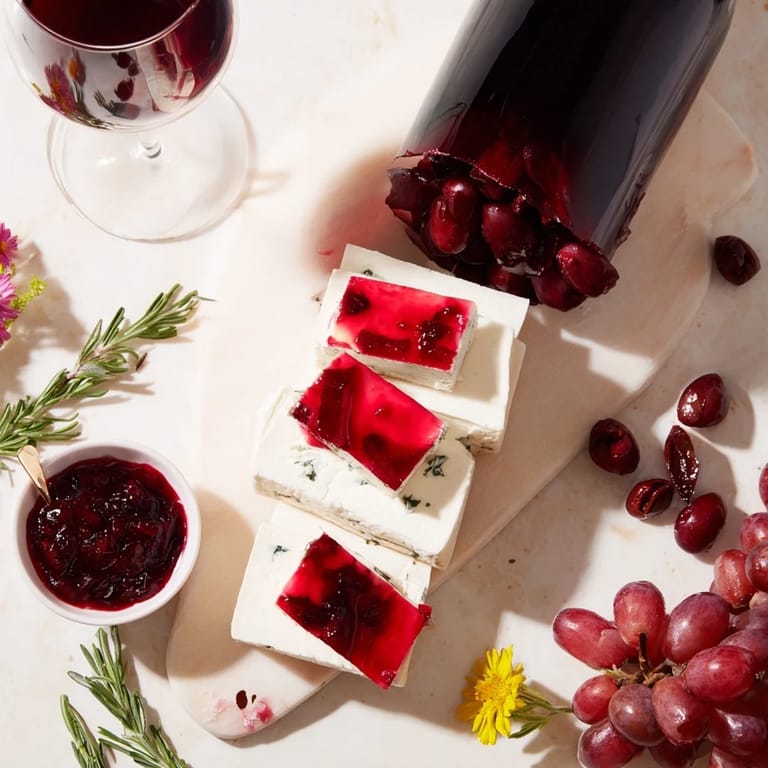
- Drunken goat cheese (200 g, red wine-soaked and sliced): This is the soul of the board. The tangy goat cheese softened by red wine becomes almost buttery. I learned to slice it when it's slightly cold but not frozen, so the slices hold their shape but still feel delicate on the tongue
- Red Wine BellaVitano or similar red wine-soaked hard cheese (150 g, cubed): Its firm texture holds up beautifully against softer elements, and the wine infusion adds unexpected depth. Ubriaco Rosso works wonderfully if you can't find BellaVitano
- Red wine-cured salami (100 g, thinly sliced): The wine curing process gives this a subtle sweetness that balances the earthiness of the board
- Prosciutto (80 g, torn into ribbons): The delicate ribbons add elegance and create visual contrast with heavier elements
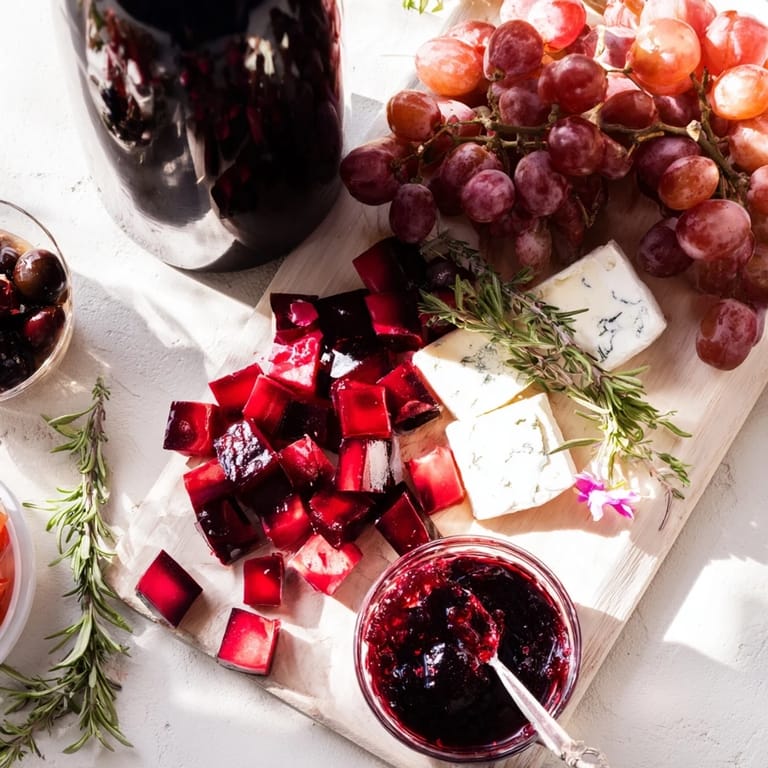
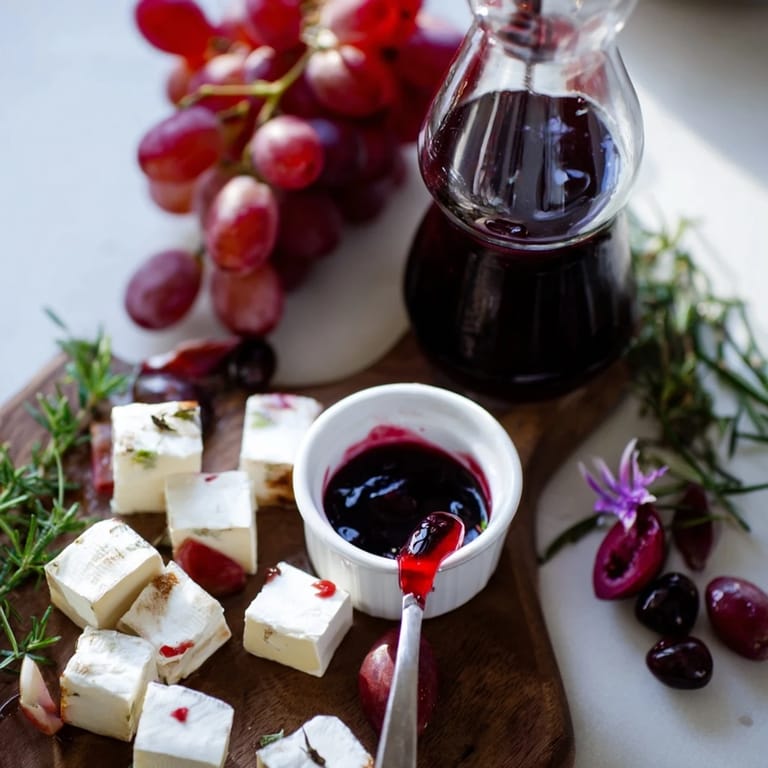
- Red wine jelly (1/2 cup): This glossy jewel catches the light and provides bursts of sweet-tart flavor. A small spoonful on cheese is pure luxury
- Red wine-poached grapes (1/2 cup): They become tender, concentrated in flavor, and develop a sophisticated depth that fresh grapes simply cannot achieve
- Red wine-infused dried cherries (1/4 cup): These add chewy texture and a mysterious complexity that keeps people guessing
- Red wine-marinated olives (1/3 cup): Kalamata or green, marinated in wine transforms them into something transcendent—briny, slightly sweet, utterly addictive
- Baguette (1 small, sliced): Toast these lightly if you prefer crunch, or leave them soft for a more delicate contrast with the cheeses
- Red wine and rosemary crackers (1 cup): These echo the theme and add textural variety. Look for artisanal brands if possible
- Fresh rosemary sprigs: More than garnish—they perfume the entire board and hint at what's to come flavor-wise
- Edible flowers (optional): A single handful adds color and reminds guests this is as much about beauty as taste
Tired of Takeout? 🥡
Get 10 meals you can make faster than delivery arrives. Seriously.
One email. No spam. Unsubscribe anytime.
Instructions
- Set your stage with intention:
- Place your clean, empty wine bottle in the absolute center of your wooden board. This becomes your anchor, so choose a board large enough that everything radiates outward naturally—roughly 16 to 18 inches minimum. I like to remove the label and let the glass shine, or keep a beautiful label as your focal point
- Build your cheese foundation:
- Arrange the sliced drunken goat cheese and cubed BellaVitano in a loose circle around the bottle's base. Let some pieces lean casually against the glass—this imperfection is what makes it feel authentic. You're not creating rigid geometry; you're creating a landscape where things naturally belong together
- Layer your cured meats with elegance:
- Fan out the salami slices in small piles as if you're shuffling a deck of cards. Tear the prosciutto into ribbons and create small nests with your fingers—these ribbons will catch light and add movement to your composition
- Nestle your jewels:
- Transfer the red wine jelly into a small ceramic bowl, something with low sides so the deep color shows. Tuck it into a gap between cheeses. Now scatter the wine-poached grapes, dried cherries, and marinated olives in small clusters. Think of these as precious gems you're positioning for maximum visual impact
- Add your foundation:
- Arrange baguette slices and wine crackers in gentle arcs or loose lines, leaving space for guests to easily reach them. Slightly overlapping them creates visual rhythm
- Finish with flourish:
- Tuck fresh rosemary sprigs between items—not just scattered, but placed with purpose. If using edible flowers, add them last, in small groupings so they create pockets of color without overwhelming the composition. Step back and look. Does it feel balanced? If one side feels heavy, redistribute slightly
- Serve with intention:
- Bring this to the table as your guests arrive. Encourage them to taste combinations—a bit of drunken goat cheese with a wine-poached grape and a rosemary cracker is a moment of pure discovery. Stand back and watch their faces
 Save
Save There's a moment that happens, always, when someone who doesn't think they're a cheese person takes a piece of drunken goat cheese with a poached grape and something shifts in their face. That's when I know this board has done exactly what I intended—it's become a conversation starter, a moment of connection, a reason to pause and taste something beautiful with people you care about.
The Wine-Infusion Technique
The magic of this board lies in understanding wine infusion as more than just marinating. When wine soaks into cheese, it changes the structure slightly, making it more tender and introducing complex flavor notes that can't be rushed. For the grapes specifically, the gentle heat of poaching opens them up, concentrating the natural sugars while the wine tannins settle into every fiber. It's the difference between drunk ingredients and transformed ones. I've experimented with different wine styles—a Pinot Noir creates subtler notes, while a fuller Cabernet creates more assertive flavors. Choose based on what wines you'll be serving alongside.
Building Your Wine Pairing Strategy
This board was born from wine, so serving it without intentionality around wine feels like missing the point entirely. A medium-bodied red wine with bright acidity—think Pinot Noir, Merlot, or even a Côtes du Rhône—echoes the flavors already present in the cheeses and accompaniments. I once served this with an unexpected Rosé and discovered that the delicate fruit notes actually created beautiful harmony with the wine-poached elements. The key is avoiding anything too heavy or too light; you want the wine and food to have an equal conversation, neither overpowering the other.
Personalization and Flexibility
While I've specified exact cheeses and elements, the true joy of this board is adapting it to what you find and what speaks to you. Can't locate red wine BellaVitano? Ubriaco Rosso or even a good aged Gouda treated with wine works beautifully. Don't eat meat? Double the cheese and add candied nuts roasted with red wine reduction, or incorporate roasted beets marinated in balsamic for that deep burgundy visual. Vegetarian guests attending? This naturally accommodates them without extra effort. The structure remains the same; only the details shift. After making this dozens of times, I've discovered that the most memorable boards are the ones where I trusted my instincts about what to include.
- Always check cheese labels for authentic wine infusion rather than artificial flavoring
- Source your wine jelly from a quality producer, or make it yourself by reducing red wine with gelatin for ultimate control
- Toast your baguette slices lightly under the broiler just before serving for texture and to prevent sogginess
 Save
Save Every time I make this board, I'm transported back to that bistro in Lyon and the moment I realized that food can be art, that gathering around something beautiful feeds more than just hunger. This Ruby Red Wine Stain Board carries that intention every single time it reaches a table.
Saffron Brook Recipe Q&As
- → How do you create red wine-poached grapes?
Simmer seedless red grapes in dry red wine with sugar and a cinnamon stick for 10 minutes, then let them cool.
- → Can this board be made vegetarian?
Yes, simply omit the meats and add extra cheese or roasted nuts to maintain variety and flavor.
- → What cheeses work best soaked in red wine?
Soft cheeses like drunken goat and hard options like BellaVitano soaked in red wine add depth and color to the board.
- → How should the board be arranged for the best presentation?
Place a clean empty wine bottle in the center, arrange cheeses around its base, add meats, then scatter accompaniments like grapes, cherries, and olives for visual balance.
- → What wine pairs well with this board?
Fruity, medium-bodied reds such as Pinot Noir or Merlot complement the infused ingredients beautifully.