 Save
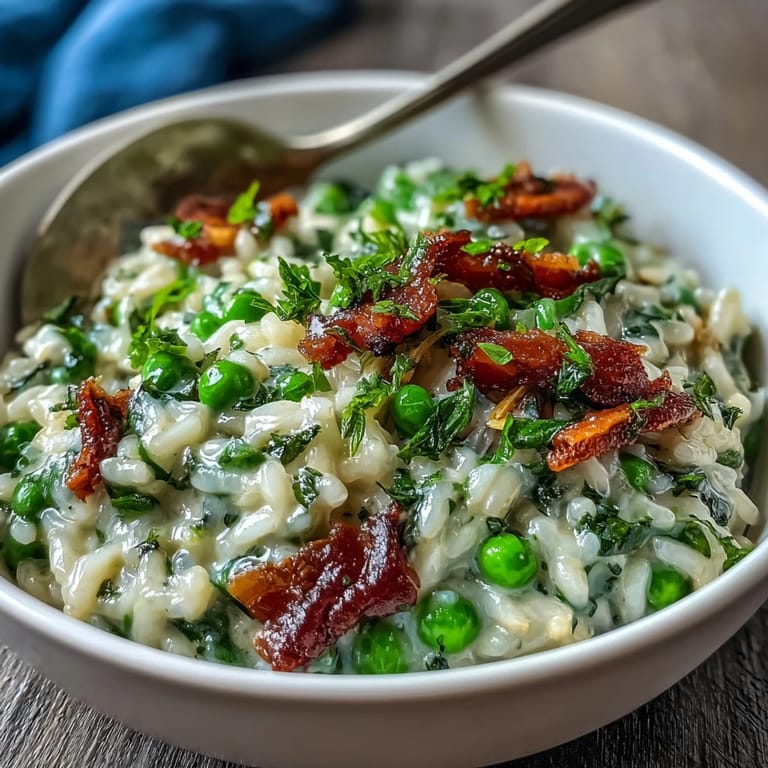
Save Steam curled up on my glasses as I hovered above the pan, listening to the satisfying pop and sizzle of spring peas hitting hot olive oil. Making risotto with the windows open on a breezy afternoon, I found myself coaxed along by the mingling aromas of mint and garlic. The fresh zest of lemon lingered on my fingertips, a scent that instantly said springtime in my kitchen. With each ladle of broth, I felt more at ease, stirring toward the kind of comforting meal that makes the most of the season's best. It was less a ritual and more a gentle invitation to slow down and savor.
Last April, I served this risotto for a friends-and-board-games night, and the laughter only paused for that first mouthful. Someone tried guessing all the fresh flavors, savoring the brightness of peas and the unexpected lift of lemon. The kitchen was warm, our glasses foggy from the steam, but every plate came back practically licked clean. That evening made me realize there’s genuine magic in a dish that’s simple but feels celebratory. Ever since, it’s a requested dinner when the days start getting longer.
Ingredients
- Spring peas (1 1/2 cups): Use fresh for the sweetest pop, but frozen works—just add a minute or two to cooking if using straight from the freezer.
- Shallot (1 medium, finely chopped): Its gentle flavor is essential—avoid over-browning for the best risotto base.
- Garlic (2 cloves, minced): Adds a mellow depth; I always mince mine just before adding for maximum aroma.
- Fresh mint leaves (2 tablespoons, finely chopped): You only need a little for that unmistakable lift—add more if you adore mint.
- Lemon zest (from 1 lemon): Zest only the yellow skin for vibrant aroma, avoiding the bitter white pith.
- Arborio rice (1 1/2 cups): This short-grain rice is non-negotiable for that trademark creamy texture.
- Low-sodium vegetable broth (4 cups): Warming it first helps achieve the perfect risotto consistency.
- Dry white wine (1 cup): Choose a wine you’d enjoy sipping; it truly reveals itself in the finished dish.
- Olive oil (2 tablespoons): Use extra virgin for fruity notes that play well with the peas.
- Unsalted butter (3 tablespoons): Stirred in at the end, it creates that luscious finish.
- Aged Parmesan cheese (3/4 cup, finely grated): Adds savory richness—use a microplane for the finest shower of cheese.
- Kosher salt (1/2 teaspoon, plus more to taste): Season repeatedly as you taste at the end.
- Freshly ground black pepper (1/4 teaspoon): A gentle heat that balances the creaminess.
Tired of Takeout? 🥡
Get 10 meals you can make faster than delivery arrives. Seriously.
One email. No spam. Unsubscribe anytime.
Instructions
- Warm the Broth:
- Set your saucepan over low heat and let the vegetable broth gently steam; this encourages silky rice later.
- Sauté the Aromatics:
- In a wide, heavy pan, swirl in olive oil, followed by the shallot and garlic—stir as their perfume fills the kitchen, watching for just-soft edges.
- Toast the Rice:
- Pour in the Arborio and stir thoroughly, each grain quickly coated and shimmering; listen for a faint crackle as you toast for two minutes.
- Add the Wine:
- Tip in the white wine, stirring as ribbons of aroma lift up, and watch as the liquid disappears into the rice.
- Stir in the Broth:
- Add broth one ladleful at a time, letting it soak in before each addition, stirring gently and patiently to coax out the creaminess.
- Add the Peas:
- After about 15 minutes, scatter in the peas, their bright green color sharp against the creamy rice; keep stirring and adding broth until the rice is just al dente and the texture is luxuriously creamy—20 to 25 minutes in total.
- Finish with Flavor:
- Slide the pan off the heat, tossing in butter, Parmesan, mint, and lemon zest. Season with salt and pepper, then stir until everything is gleaming and velvety.
- Serve:
- Spoon immediately onto warm plates, shower with extra Parmesan and a touch more mint if you wish.
 Save
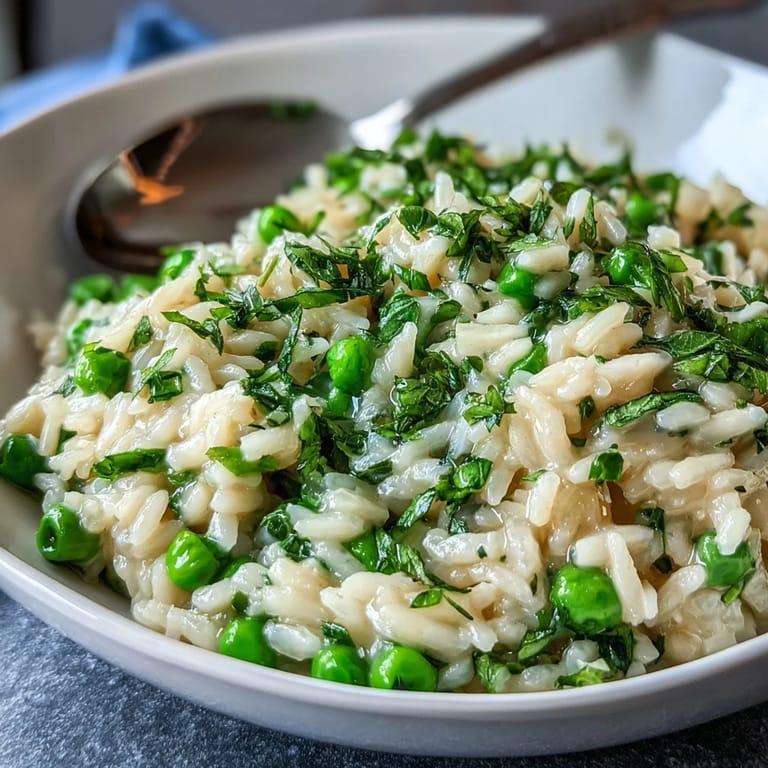
Save I’ll never forget the first spring evening when the risotto bowl was passed around the table and met with a chorus of appreciative sighs. Watching my friends savor that creamy, green comfort reminded me that some of the best moments come in spoonfuls.
Making Risotto Feel Easy
At first, I worried about the constant stirring, but it quickly became soothing—almost meditative—especially as the kitchen fills with soft aromas. If you’re new to risotto, don’t let the myth of difficulty stop you; it's just a series of gentle steps and patient tending.
Ingredient Swaps When You Need Them
One evening, I realized I was out of Parmesan and tried pecorino—its saltier bite gave the dish a lovely new edge. Frozen peas, swapped in for fresh, worked beautifully too and took almost no prep.
Serving and Enjoying With Friends
No matter who arrives at my table, I garnish generously and serve with a chilled glass of Sauvignon Blanc. Leftovers are rare, but on lucky days, a quick steam with a splash of broth brings yesterday’s risotto marvelously back to life.
- Save extra mint to freshen up the plating right before serving.
- Pair with a crisp salad to balance the richness.
- Don’t skip tasting as you go—it’s the risotto-maker’s privilege.
 Save
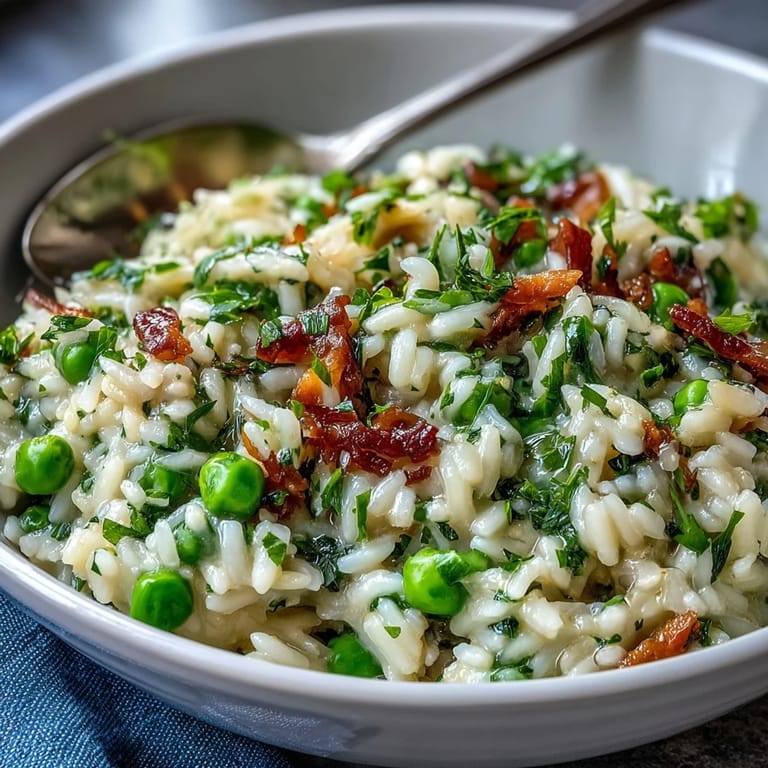
Save Here’s to slow stirring, bright peas, and meals where friends linger just a little longer. May your spring risotto bring as much joy to your table as it has to mine.
Saffron Brook Recipe Q&As
- → Can I use frozen peas?
Yes—add frozen peas straight from the bag when called for; they’ll thaw and warm in the simmering rice, retaining bright color and texture. If frozen in large lumps, give them a quick rinse before adding.
- → How do I achieve a creamy texture?
Use warm broth, stir frequently, and add liquid gradually so the rice releases starch. Finish off heat with cold butter and aged Parmesan to enrich and bind the grains into a silky finish.
- → Can I skip the wine?
Yes—substitute an extra cup of warm broth plus a splash of lemon juice for brightness. The wine adds acidity and depth but the gradual-stir technique is the key to texture.
- → When should I add the peas?
Stir peas in after about 15 minutes of cooking so they heat through and stay tender and vibrant rather than turning mushy.
- → How can I keep risotto warm without overcooking it?
Serve immediately for best texture. If holding briefly, keep covered off direct heat and stir occasionally; a splash of warm broth will revive creaminess if it firms up.
- → What can I use instead of Parmesan?
Pecorino Romano is a good substitute for a sharper finish—reduce added salt slightly since it’s saltier than aged Parmesan.