 Save
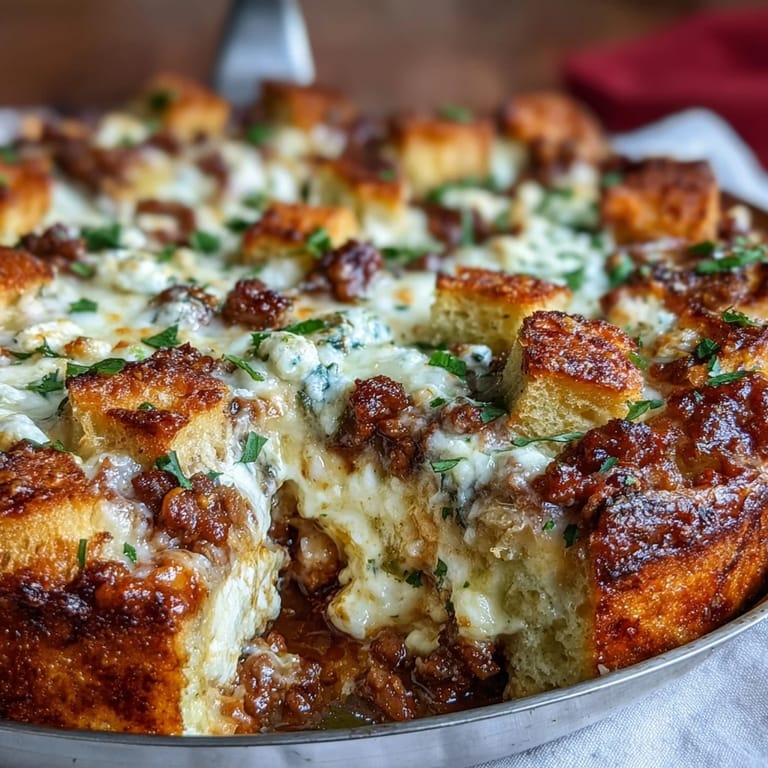
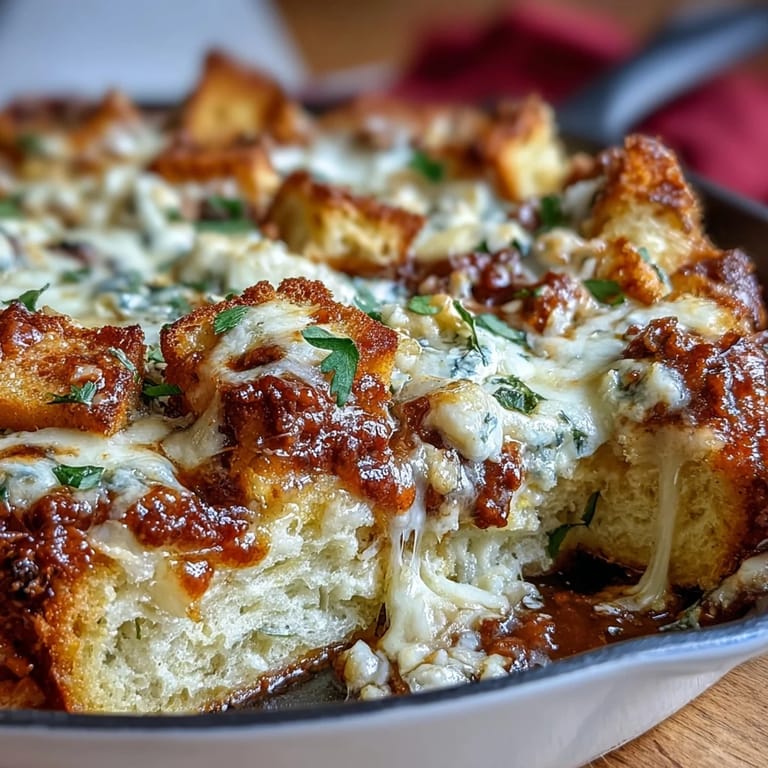
Save My cast-iron skillet sat on the stovetop one Tuesday evening, and I was stuck between two cravings: the gooey, comforting layers of lasagna and the crispy, buttery allure of garlic bread. Instead of choosing, I decided to marry them together, and what emerged from the oven was pure magic—a bubbling, golden masterpiece that somehow felt both indulgent and entirely unexpected. The kitchen smelled like every Italian dinner I'd ever wanted to cook, and by the time my family gathered around, I knew this skillet was going to become a regular visitor to our table.
I'll never forget watching my friend's face light up the first time she tasted it—she took one forkful and immediately asked for the recipe, which is when I realized I'd stumbled onto something special. There's something about serving food directly from a sizzling cast-iron skillet that makes people feel like they're part of something genuine, not just another weeknight dinner.
Ingredients
- 1 large baguette or Italian loaf, cut into 2-inch cubes: These bread pieces become the foundation of your dish, soaking up sauce while developing those irresistible crispy-edged surfaces—don't slice them too thin or they'll turn to mush.
- 4 tbsp unsalted butter, melted: Melted butter is your key to golden, flavorful bread; using unsalted lets you control the saltiness of the entire dish.
- 3 cloves garlic, minced: Mince it fresh rather than using jarred, as the brightness makes a real difference in the garlic bread coating.
- 2 tbsp fresh parsley, chopped: This adds a fresh finish and prevents the whole thing from feeling heavy, even though it's genuinely rich.
- 1/4 tsp salt: A modest amount here since your cheese and sauce will add their own saltiness.
- 1 lb ground beef or Italian sausage: Ground beef is straightforward and forgiving, but Italian sausage brings an herbaceous note that's equally stunning if you're feeling adventurous.
- 1 small onion, diced: Dice it small so it integrates into the sauce rather than staying chunky and obvious.
- 2 cloves garlic, minced: These go into the meat sauce, building layers of garlic flavor without it becoming overwhelming.
- 1 (24 oz) jar marinara sauce: Use a quality sauce you actually enjoy eating plain, because it's the backbone of everything else.
- 1 tsp dried oregano: Oregano and beef are old friends; this amount keeps things classically Italian without dominating.
- 1/2 tsp black pepper and 1/2 tsp salt: Season as you go with the meat, tasting before you commit to the full amounts.
- 1 cup ricotta cheese: Ricotta is lighter than you'd expect and creates pockets of creaminess throughout the layers.
- 1 large egg: This binds the ricotta mixture so it holds together rather than sliding around during baking.
- 1/4 cup grated Parmesan cheese: Freshly grated Parmesan has a sharper bite than pre-grated; it's worth the thirty seconds it takes.
- 2 cups shredded mozzarella cheese: Use whole milk mozzarella if possible, as it browns better and tastes noticeably creamier.
Tired of Takeout? 🥡
Get 10 meals you can make faster than delivery arrives. Seriously.
One email. No spam. Unsubscribe anytime.
Instructions
- Preheat and Prepare Your Garlic Bread Coating:
- Set your oven to 375°F and let it warm while you work. In a large bowl, whisk together the melted butter, minced garlic, fresh parsley, and salt until it smells absolutely amazing, then toss your bread cubes until every surface glistens with the coating.
- Brown the Meat and Build Your Sauce:
- Get your cast-iron skillet hot over medium heat and add your beef, breaking it up as it cooks until it's no longer pink and the onions are soft and golden, about five to six minutes. Pour off any excess fat (there will likely be some), then stir in the garlic, marinara sauce, oregano, pepper, and salt, letting it simmer gently for five minutes while the flavors get to know each other.
- Mix Your Creamy Ricotta Layer:
- While the sauce simmers, combine your ricotta, egg, and Parmesan in another bowl, stirring until it's smooth and unified—this mixture is what creates those luxurious pockets of creaminess.
- Remove Half the Sauce and Start Layering:
- This step feels a bit unconventional, but trust it: scoop out half of your meat sauce and set it aside. This technique ensures you get sauce distribution throughout rather than all the richness settling at the bottom.
- Build Your Skillet Layers:
- Over the remaining sauce in the skillet, layer half of your garlic bread cubes in an even-ish layer. Dollop half of the ricotta mixture over the bread and sprinkle with one cup of mozzarella, then spoon the reserved meat sauce over top. Finish with the remaining bread cubes, ricotta mixture, and mozzarella, layering with the intention of getting some in every bite.
- Bake Until Golden and Bubbling:
- Cover the skillet loosely with foil and bake for twenty minutes so the interior stays moist, then remove the foil and bake another ten to fifteen minutes until the cheese is bubbling at the edges and the top turns golden brown. Let it rest for ten minutes before serving so everything sets and you don't end up with molten cheese splashing everywhere.
 Save
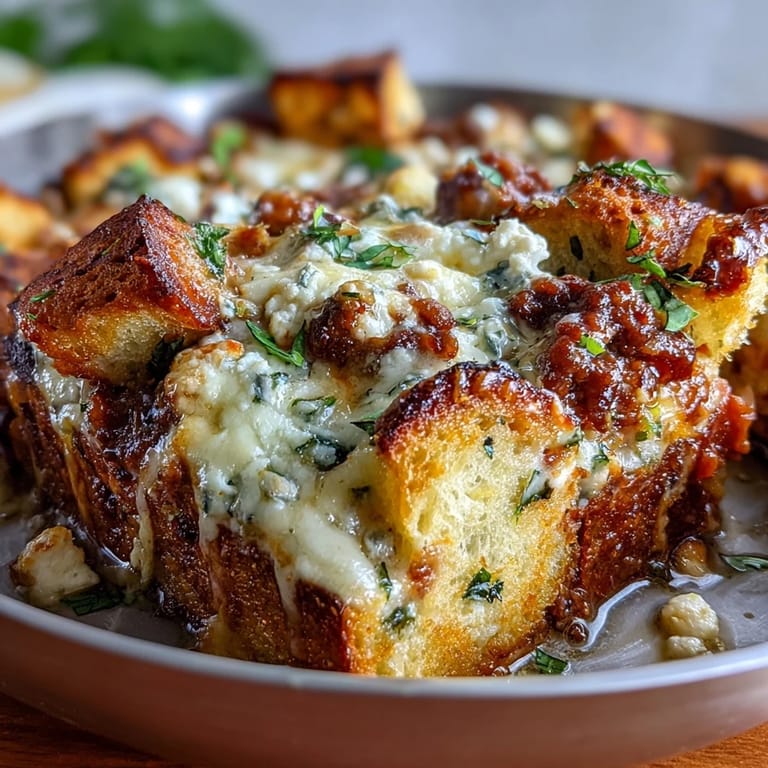
Save There was a moment during that first dinner when everyone went quiet, just quietly eating and occasionally making small, satisfied sounds, that I understood why people gather around food. This skillet had transformed an ordinary weeknight into something that felt intentional and celebratory, and nobody even needed dessert afterward.
Why Cast-Iron Makes This Special
A cast-iron skillet doesn't just cook this dish—it becomes the serving vessel, which means it stays hot throughout the meal and the bottom layer of bread gets to cook in direct contact with that seasoned surface, creating a slightly crispy, almost focaccia-like texture that you won't get anywhere else. The heat distribution is so even that you don't end up with burnt edges and an undercooked center, which happens more often than you'd think with regular baking dishes.
Making It Your Own
The beauty of this dish is how forgiving it is to substitution and adaptation, so don't hesitate to swap in Italian sausage if beef feels too predictable, or use sautéed mushrooms and plant-based ground meat if you're cooking vegetarian. I once added fresh spinach to the ricotta mixture on a whim, and it elevated the whole thing without making it feel like a completely different recipe.
Serving and Storage Wisdom
Serve this with a simple green salad to cut through the richness, and a crisp white wine or Chianti to echo those Italian flavors you've built into every layer. Leftovers actually improve slightly as the flavors meld, and you can reheat gently in a 300°F oven until warmed through, keeping the bread from getting too hard.
- A pinch of red pepper flakes stirred into the meat sauce adds subtle heat without announcing itself loudly.
- Fresh basil scattered over the top just before serving brings brightness that complements the garlic bread beautifully.
- Don't skip the ten-minute rest period—it gives the structure time to set so you can actually get clean portions instead of scoops.
 Save
Save This recipe lives in the space where comfort food and intentional cooking meet, and once you've made it, you'll understand why cast-iron skillets have been passed down through generations. It's the kind of dish that makes your kitchen smell like you actually know what you're doing, even if this is the first time you're making it.
Saffron Brook Recipe Q&As
- → Can I make this garlic bread lasagna ahead of time?
Yes, assemble the entire skillet up to 24 hours in advance and refrigerate covered with foil. When ready to bake, add 10-15 minutes to the covered baking time since it will be cold.
- → What type of bread works best for the garlic bread cubes?
A day-old baguette or Italian loaf with a sturdy crust holds up beautifully. Fresh bread can become too soft during baking, while very dense breads may not absorb enough sauce.
- → Can I substitute the ground beef?
Italian sausage adds excellent flavor, or use plant-based crumbles for a vegetarian version. Sautéed mushrooms or lentils also work well as meat alternatives.
- → How do I know when the skillet is done baking?
The dish is ready when the mozzarella is bubbly and beginning to brown, and the bread cubes on top feel crispy to the touch. The center should be hot throughout.
- → What should I serve with this skillet dish?
A crisp green salad with vinaigrette balances the richness. Roasted vegetables or steamed broccoli work well too. Crusty bread for soaking up extra sauce is always welcome.
- → Can I freeze leftovers?
Portion leftovers into airtight containers and freeze for up to 3 months. Thaw overnight in the refrigerator and reheat covered at 350°F until hot throughout.