 Save
Save My neighbor showed up at my door one freezing January evening with a pot of chili, and I realized right then that comfort food doesn't need to be complicated. That simple gesture sparked my obsession with making the perfect chili bowl at home—something warm enough to chase away the cold, hearty enough to feel like a real meal, and flexible enough that I could make it my own. Now whenever someone asks what I'm cooking on a tough day, it's usually this: a big pot of chili simmering on the stove, filling the kitchen with that unmistakable spice-and-tomato smell that just makes everything feel manageable.
I made this for my book club last fall, and what started as a casual weeknight dinner turned into people asking for seconds and thirds. Someone brought homemade cornbread, someone else added their own jalapeños, and by the end of the night, we'd somehow created five different variations of the same bowl. That's when I knew this recipe had staying power—it brings people together without demanding perfection.
Ingredients
- Olive oil: Two tablespoons creates the base for sautéing without burning, and honestly, it makes a noticeable difference in flavor compared to vegetable oil.
- Onion and garlic: These are your aromatic foundation—don't skip them or rush through chopping, as the sweetness they develop is what makes people say your chili tastes like it simmered all day.
- Bell peppers (red and green): The red ones add natural sweetness while the green brings a subtle earthiness; together they keep the chili from tasting one-dimensional.
- Ground beef: One pound goes a long way when combined with beans, and using a 80/20 blend gives you enough fat for flavor without greasiness.
- Tomato paste: This concentrated umami bomb is what separates homemade chili from the canned stuff—brown it slightly in the pot first for deeper flavor.
- Canned tomatoes and beans: Quality matters here; San Marzano tomatoes and low-sodium beans let the spices shine instead of competing with salt.
- Corn kernels: Fresh corn in summer is magical, but frozen works beautifully year-round and honestly saves you cleanup time.
- Chili powder, cumin, smoked paprika, and oregano: This spice blend is forgiving enough that slight variations won't ruin anything, but together they create that authentic chili taste without tasting like a spice jar exploded.
- Cayenne pepper: Keep it optional at first—you can always add heat, but you can't take it out once it's in.
- Broth: Beef broth is traditional but vegetable broth works perfectly if you're going meatless, and the liquid keeps everything from turning into paste during cooking.
Tired of Takeout? 🥡
Get 10 meals you can make faster than delivery arrives. Seriously.
One email. No spam. Unsubscribe anytime.
Instructions
- Build your flavor foundation:
- Heat that oil in your pot over medium heat and let the onions cook until they're translucent and soft—this takes about two to three minutes and you'll know it's right when the smell shifts from raw to sweet. Add the garlic and bell peppers next, giving them another three to four minutes so the peppers start to soften and everything becomes fragrant.
- Brown the meat:
- Push the vegetables to the side and add your ground beef, breaking it into small pieces as it cooks. You're looking for that moment when there's no pink left and the meat starts to stick slightly to the pot—that's when you know the flavor has concentrated enough.
- Wake up the spices:
- Stir in the tomato paste and let it cook for just a minute, almost until it darkens slightly; this step is small but it intensifies everything that comes next.
- Bring it together:
- Add the tomatoes, beans, corn, and all your spices at once, stirring well so nothing sticks to the bottom. Pour in the broth slowly, which helps you avoid lumps and lets you control the consistency.
- Let it simmer:
- Bring everything to a gentle simmer, then lower the heat and cover the pot—you want it bubbling quietly on the edges but not aggressively boiling. Stir every now and then over the next twenty-five to thirty minutes, which is just enough time to tidy up the kitchen or start your rice.
 Save
Save My five-year-old nephew once told me my chili was 'spicy good, not mean spicy,' and I've been using that exact rating system ever since. That moment reminded me that this dish isn't about impressing anyone—it's about making something so satisfying that people feel taken care of when they eat it.
Building Your Perfect Bowl
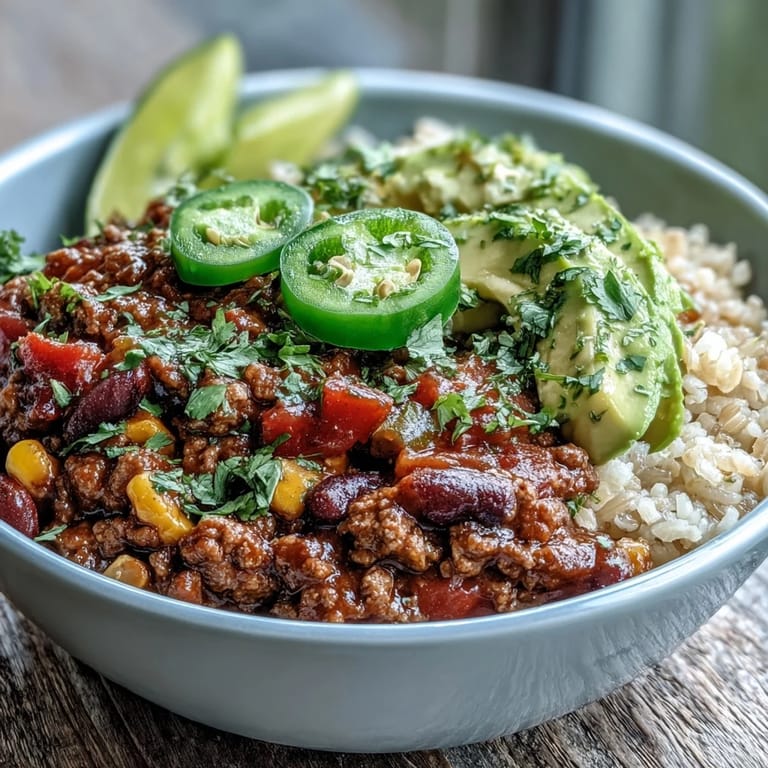
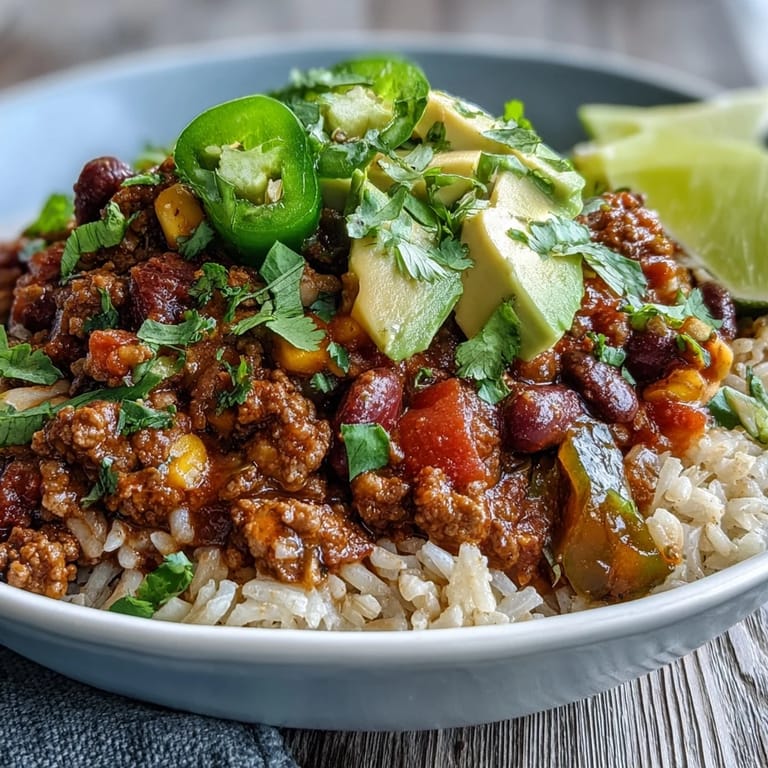
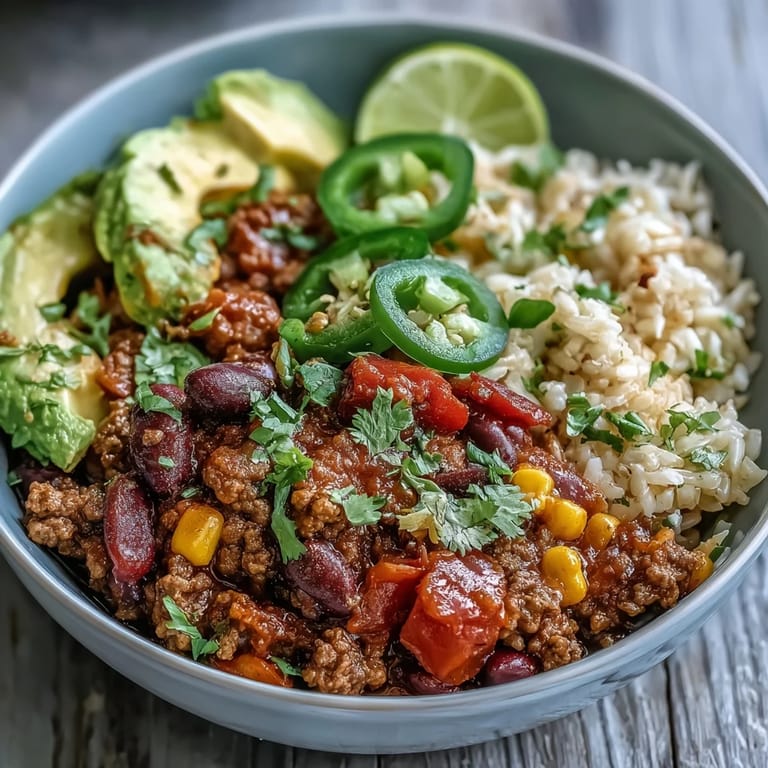
The magic of this recipe lives in the assembly—a simple base of rice or grains becomes something special the moment you ladle the chili over it and add your toppings. I learned early on that presenting options rather than deciding for people makes everyone happier. Set out small bowls of cheese, sour cream, green onions, cilantro, and avocado and let people build exactly what they want.
Grain Choices That Change Everything
White rice is classic and neutral, but brown rice adds a nutty depth that complements the chili's warmth, while quinoa brings an unexpected protein boost and slight earthiness. I've had the best luck with grains that have a little texture to them—farro and barley both hold their structure under the weight of the chili instead of turning mushy. The grain you choose shapes the whole eating experience, so it's worth experimenting to find your favorite.
Making It Your Own
This recipe welcomes creativity in a way few dishes do—swap the ground beef for ground turkey to lighten it, use lentils and extra beans for a vegetarian version, or add diced jalapeños directly into the pot if you want consistent heat throughout. Some people swear by adding a tablespoon of cocoa powder or a splash of coffee for depth, while others layer in extra heat with habaneros or ghost peppers. The foundation is strong enough that it can handle your experiments without falling apart.
- Add a splash of lime juice just before serving to brighten the whole dish and cut through the richness.
- If your chili ends up too thin, let it simmer uncovered for the last ten minutes or stir in a tablespoon of cornstarch mixed with water.
- Leftover chili freezes beautifully for up to three months, making this one of the smartest make-ahead dinners you can have on standby.
 Save
Save This chili bowl has become my answer to almost everything—a tough day, a gathering of friends, a request from someone who needs comfort, or just a Tuesday night when I want something that tastes like care. Once you make it, you'll understand why.
Saffron Brook Recipe Q&As
- → What grains work best for serving?
White rice, brown rice, quinoa, farro, bulgur, and barley all work beautifully. Choose based on preference and what you have available. Brown rice and quinoa add extra protein and fiber.
- → Can I make this vegetarian?
Absolutely. Replace the ground beef with plant-based crumbles or simply add an extra can of beans. The flavor remains delicious and satisfying without any meat.
- → How can I adjust the spice level?
Reduce or omit the cayenne for milder flavor. Add more chili powder and cayenne if you enjoy heat. You can also include diced jalapeños in the chili or as a topping.
- → How long does this keep in the refrigerator?
Store cooled chili in an airtight container for up to 4 days. The flavors often improve after a day or two. Reheat gently on the stove, adding a splash of broth if needed.
- → Can I freeze this chili?
Yes, freeze cooled chili in freezer-safe containers for up to 3 months. Thaw overnight in the refrigerator before reheating. Prepare fresh rice when serving.
- → What other toppings work well?
Beyond cheese and sour cream, try crushed tortilla chips, pickled red onions, hot sauce, fresh salsa, or a squeeze of fresh lime juice. Cornbread on the side makes it extra special.